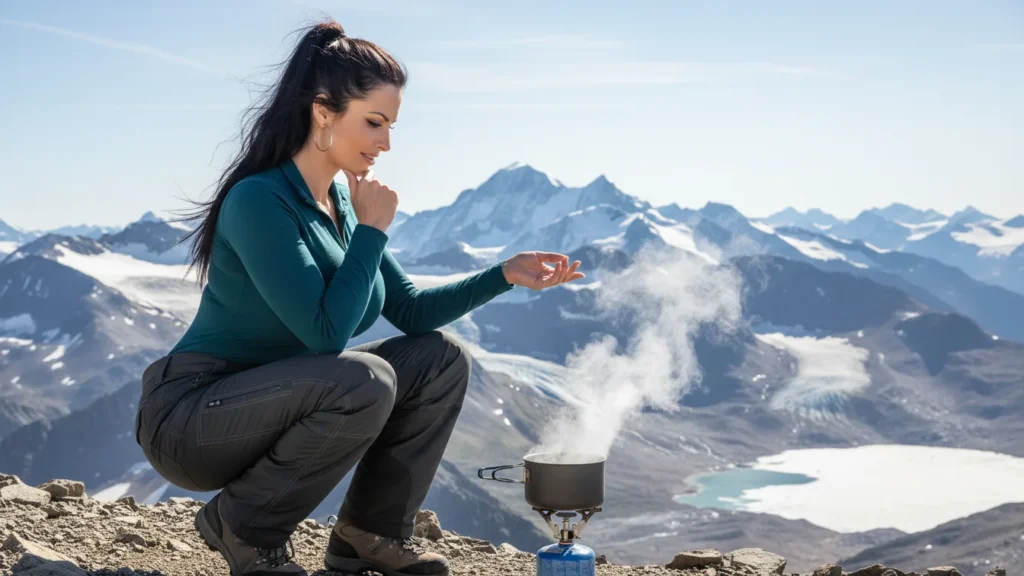
“The Strange Boil You Notice in the Mountains”
If you’ve ever boiled water in a mountain town, you may have noticed something odd.
The water starts bubbling faster.
Steam rises sooner.
Yet cooking still takes longer.
It feels contradictory.
If water boils faster, shouldn’t everything cook quicker too?
This everyday puzzle has nothing to do with stoves, pots, or heat sources.
It’s all about air pressure — something you can’t see, but your water can feel.
What “Boiling” Really Means (Not What Most People Think)
Many people think boiling happens when water gets “hot enough.”
That’s only half the story.
Boiling occurs when:
The pressure inside water bubbles equals the pressure pushing down from the air above.
At sea level, that balance happens at about 100°C (212°F).
Change the pressure — and the boiling point changes too.
Air Pressure: The Weight of the Atmosphere Above You
Air isn’t empty.
It has mass.
That mass presses down on everything on Earth — including water in a pot.
At lower elevations:
- More air sits above you
- Air pressure is higher
- Water needs more heat to boil
As you climb higher:
- There’s less air above you
- Air pressure drops
- Water boils more easily
This change happens gradually as altitude increases.
Why Pressure Drops as Altitude Increases
Imagine stacking blankets.
At the bottom of the stack, the weight is heavy.
At the top, it’s light.
The atmosphere works the same way.
At sea level, you’re at the bottom of the “air stack.”
On a mountain, you’re much closer to the top.
Less air above = less pressure pushing down.
Why Lower Pressure Makes Water Boil Faster
Inside heating water, tiny vapor bubbles are constantly forming and collapsing.
At high pressure:
- Air pushes hard on the water
- Bubbles collapse before escaping
- More heat is needed
At low pressure:
- Air pushes less on the water
- Bubbles expand more easily
- They escape sooner
So the water reaches its boiling condition earlier, even though it’s not as hot.
The Key Point Many People Miss
Water boils earlier, but at a lower temperature.
That’s the crucial distinction.
Boiling doesn’t mean “maximum heat.”
It means “pressure balance reached.”
At high altitudes, that balance happens sooner.
A Simple Comparison Table
| Location | Air Pressure | Boiling Point of Water |
|---|---|---|
| Sea level | High | ~100°C (212°F) |
| 1,500 meters | Lower | ~95°C (203°F) |
| 3,000 meters | Much lower | ~90°C (194°F) |
| High mountains | Very low | Even lower |
So yes — water boils faster, but it boils cooler.
Why Food Still Takes Longer to Cook
This is where the confusion comes in.
Cooking depends on temperature, not boiling bubbles.
At lower boiling temperatures:
- Water can’t get as hot
- Heat transfer is less intense
- Chemical changes in food slow down
That’s why:
- Pasta feels undercooked
- Rice takes longer
- Beans stay firm
The boil looks active, but the heat level is lower.
Everyday Example: Why a Lid Changes Boiling
You may have noticed water boils faster with a lid on.
That’s not magic — it’s pressure again.
A lid:
- Traps steam
- Slightly increases pressure
- Raises the boiling point
- Allows higher temperature
This shows how sensitive boiling is to pressure — even small changes matter.
Common Misunderstanding: “Boiling Means the Same Heat Everywhere”
This is one of the most widespread myths.
Boiling is not a fixed temperature event.
It’s a pressure-dependent process.
That’s why:
- Water boils differently on mountains
- Pressure cookers change cooking behavior
- Industrial systems control pressure carefully
Temperature and pressure always work together.
Why You See Bigger Bubbles at High Altitudes
At lower pressure:
- Vapor bubbles expand more easily
- They grow larger before escaping
- Boiling looks more dramatic
This visual effect makes it feel like the water is hotter — even though it’s not.
Your eyes see action.
Your thermometer would tell a different story.
Why This Matters Today
Understanding boiling at altitude explains many everyday experiences:
- Why mountain cooking feels tricky
- Why travel affects familiar routines
- Why pressure matters in engineering and science
It’s a reminder that simple kitchen observations reflect deep physical laws.
The same principle governs:
- Weather systems
- Industrial boilers
- Engines
- Even how planets hold atmospheres
Frequently Asked Questions (FAQ)
1. Does water always boil faster at higher elevations?
Yes. As long as air pressure is lower, boiling happens sooner.
2. Can water boil at room temperature?
Yes, if air pressure is low enough — such as in a vacuum.
3. Why doesn’t turning up the heat fix slow cooking?
Once water boils, extra heat escapes as steam instead of raising temperature.
4. Is boiling water less “strong” at high altitude?
It’s less hot, not less effective for boiling itself.
5. Do all liquids behave this way?
Yes. Every liquid has a pressure-dependent boiling point.
Key Takeaways
- Boiling depends on pressure, not just heat
- Air pressure drops at high altitudes
- Lower pressure lowers boiling temperature
- Water boils faster but at cooler temperatures
- Cooking slows even though boiling starts sooner
- Pressure and temperature always work together
Conclusion: A Faster Boil That Isn’t Hotter
When water boils faster at high altitudes, it’s not breaking the rules of physics.
It’s following them perfectly.
Less air above means less pressure pushing down — and water needs less heat to push back.
So the next time you see water boiling early in the mountains, you’re witnessing an invisible shift in Earth’s atmosphere.
A quiet reminder that even simple bubbles carry big science.
Disclaimer: This article explains scientific concepts for general educational purposes and is not intended as professional or medical advice.