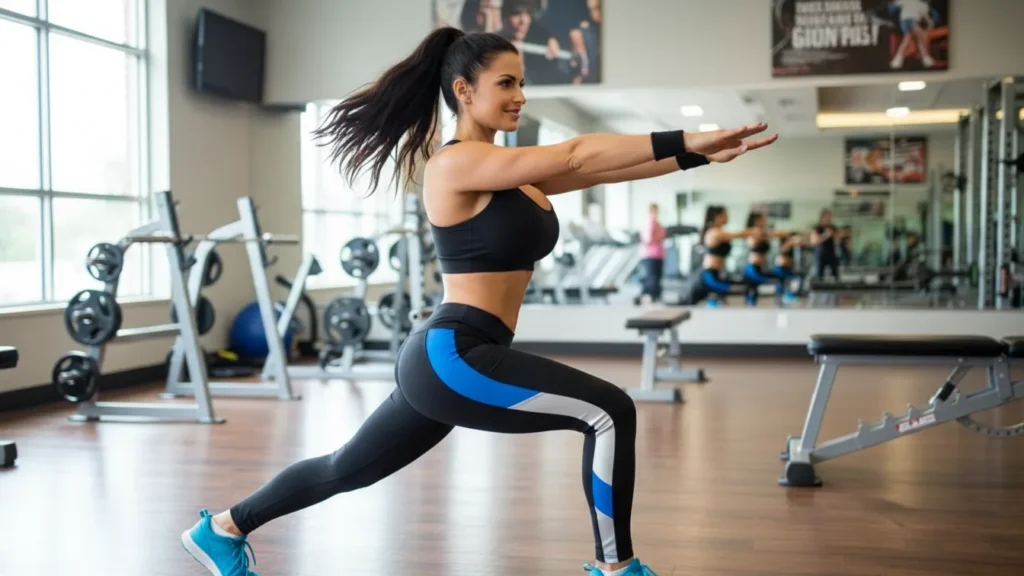
The First Move That Changes Everything
You step into motion after being still.
The first few movements feel stiff.
Coordination feels slightly off.
Power doesn’t arrive instantly.
Then, a few minutes later, everything feels smoother — stronger, more controlled, more confident.
That shift isn’t psychological.
It’s physical.
A warm-up quietly transforms how your body handles force, speed, and load. And in doing so, it dramatically lowers the chance of sudden strain or injury.
Injury Isn’t Just About Force — It’s About Readiness
A common belief is that injuries happen because forces are too high.
In reality, many injuries happen because tissues aren’t ready to absorb the force applied to them.
Cold, inactive tissues behave differently than warm, prepared ones. They stretch less smoothly, respond more slowly, and distribute stress less evenly.
Warming up doesn’t remove force from movement.
It changes how force travels through the body.
What “Cold” Really Means Inside the Body
“Cold” doesn’t mean low temperature in the everyday sense.
It means tissues that are:
- Less elastic
- Less hydrated
- Less responsive to signals
- Slower to coordinate
After inactivity, muscles, tendons, and connective tissues exist in a more rigid state. Asking them to suddenly handle fast or strong movement increases the chance of uneven loading.
Warming up reverses that rigidity.
How Warmth Changes Tissue Behavior
As tissues warm:
- Elasticity increases
- Internal friction decreases
- Stretch becomes smoother
- Force spreads more evenly
Think of bending a cold rubber band versus a warm one. The warm band stretches predictably. The cold one resists — then snaps suddenly.
Your tissues follow the same physics.
Circulation: The Body’s Preparation Network
Movement increases circulation.
That matters because circulation delivers:
- Oxygen
- Energy molecules
- Fluid to connective tissues
Better circulation makes tissues more resilient and responsive. It also helps remove stiffness created by stillness.
A warm-up isn’t about exhaustion — it’s about distribution.
Why Joints Need Time to Adjust
Joints aren’t dry hinges.
They rely on fluid movement to reduce friction and guide motion.
During inactivity:
- Joint fluid pools unevenly
- Surfaces are less evenly coated
Gentle movement spreads this fluid again, improving glide and reducing resistance.
This lowers stress on cartilage and surrounding structures during larger movements later.
The Nervous System Needs a Warm-Up Too
Injury prevention isn’t only mechanical.
It’s neurological.
Movement depends on precise timing between nerves and muscles. After rest:
- Signal timing is slower
- Coordination is less sharp
- Reflexes are less tuned
Warming up sharpens communication.
Signals travel faster. Responses become more predictable. Muscles engage in better sequence.
This reduces awkward, mistimed movements that often lead to strain.
Why Sudden Movements Are Riskier Without a Warm-Up
Many injuries occur not during sustained effort, but during sudden transitions:
- Quick direction changes
- Unexpected loads
- Rapid acceleration
Without a warm-up, tissues respond stiffly and late.
With a warm-up, tissues respond smoothly and early.
That difference — milliseconds and millimeters — matters.
Strength Isn’t Enough Without Preparation
Another misconception is that strength alone prevents injury.
Strength helps.
But strength applied to unprepared tissue can still cause problems.
Prepared tissue handles force better because:
- Load spreads across fibers
- Timing is coordinated
- Resistance increases gradually
Warming up doesn’t increase strength instantly — it makes existing strength safer to use.
Why Slow Movements Come First
Warm-ups usually begin with slower, controlled movements.
This allows the body to:
- Increase temperature gradually
- Restore range of motion
- Reestablish coordination
Jumping straight into high-intensity movement skips these steps, forcing tissues to adapt too quickly.
The body prefers ramps — not cliffs.
A Simple Comparison of Unprepared vs. Warmed-Up Movement
| Feature | Without Warm-Up | After Warm-Up |
|---|---|---|
| Tissue elasticity | Lower | Higher |
| Signal timing | Slower | Sharper |
| Joint movement | More resistant | Smoother |
| Force distribution | Uneven | Even |
| Injury risk | Higher | Lower |
Why Warm-Ups Reduce Both Big and Small Injuries
Warm-ups don’t just prevent dramatic injuries.
They also reduce:
- Minor strains
- Joint irritation
- Muscle pulls
- Coordination slips
These smaller issues accumulate over time. Preventing them helps maintain consistency and confidence in movement.
The Body’s Internal Safety Margin
Think of warm-ups as expanding your safety margin.
Instead of operating near tissue limits, you create extra buffer — more stretch, better timing, smoother force transfer.
This buffer allows for small errors without consequences.
Without it, even a minor misstep can overload a structure.
Common Misunderstandings About Warming Up
“I don’t need a warm-up if I feel fine.”
Readiness isn’t always felt — it’s mechanical and neurological.
“Warming up wastes energy.”
Warm-ups improve efficiency; they don’t drain it.
“Stretching alone is enough.”
Preparation involves movement, circulation, and coordination — not just length.
Clearing these misunderstandings highlights why warm-ups are protective, not optional.
Why This Matters Today
Modern life keeps bodies still for long periods — sitting, driving, working at screens.
Then, suddenly, we ask for movement: lifting, running, reaching, reacting.
Warming up bridges that gap.
It gives the body time to transition from stillness to action — the phase where injuries most often occur.
Key Takeaways
- Injuries often result from unprepared tissue, not excessive force
- Warm-ups increase elasticity, circulation, and coordination
- Prepared tissues distribute force more evenly
- The nervous system needs time to sharpen timing
- Warming up expands the body’s safety margin
Frequently Asked Questions
Why does warming up lower injury risk?
Because it improves tissue elasticity, circulation, and signal timing before high force is applied.
Why can strong people still get injured without warming up?
Strength doesn’t replace readiness — unprepared tissues still absorb force poorly.
Why are sudden movements riskier when cold?
Cold tissues respond stiffly and late, increasing uneven loading.
Does warming up help joints as well as muscles?
Yes. Joint lubrication and movement quality improve with gentle motion.
Why does movement feel smoother after warming up?
Because friction decreases and coordination improves across systems.
A Calm Way to Understand Warming Up
Warming up isn’t about pushing harder.
It’s about preparing smarter.
By raising temperature, restoring movement, and sharpening communication, the body becomes better at handling the same forces it will face anyway.
Injury prevention isn’t about avoiding movement —
it’s about giving the body time to get ready for it.
Disclaimer: This article explains scientific concepts for general educational purposes and is not intended as professional or medical advice.