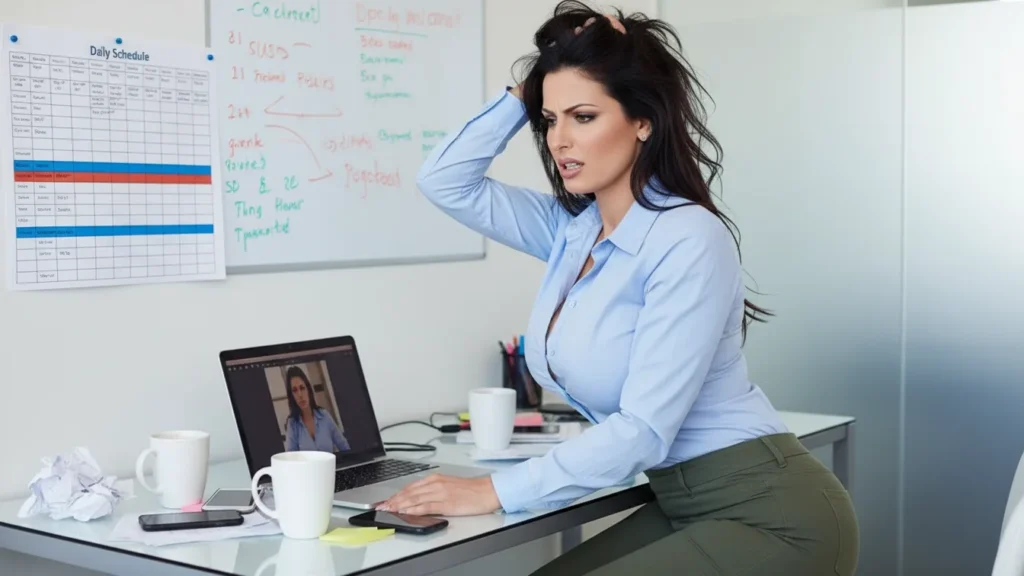
“When Stress Feels Familiar — Even Comfortable”
You promise yourself to slow down.
Yet somehow, life keeps filling with urgency.
Deadlines.
Pressure.
Constant mental tension.
When things finally calm down, something feels… off.
Rest feels uncomfortable.
Silence feels strange.
You almost miss the stress.
This isn’t because you enjoy suffering.
👉 It’s because the brain can adapt to stress — and begin to expect it.
Understanding why the brain gets “addicted” to stress starts with understanding what stress actually does inside the body.
Stress Is a Survival System, Not a Mistake
Stress did not evolve to harm us.
It evolved to protect us.
When the brain detects a challenge or threat, it activates a coordinated response that:
- Sharpens attention
- Mobilizes energy
- Speeds reaction time
- Narrows focus
This response helped humans survive danger long before modern life existed.
The problem isn’t stress itself.
It’s what happens when this system runs too often — for too long.
The Chemistry of Stress: Why It Feels Energizing
During stress, the brain releases chemical messengers that prepare the body for action.
These signals:
- Increase alertness
- Boost short-term energy
- Heighten awareness
For a brief period, stress can feel stimulating.
You may notice:
- Mental sharpness
- Heightened focus
- A sense of urgency that drives action
This temporary boost is one reason stress can become reinforcing.
Why the Brain Starts Expecting Stress
The brain is excellent at pattern recognition.
When stress becomes frequent, the brain learns:
“This state is normal.”
Over time:
- Stress signals become familiar
- Calm states feel unusual
- The brain stays on alert by default
This doesn’t happen consciously.
It’s a form of neural adaptation.
The brain adjusts its baseline based on what it experiences most often.
Stress and the Brain’s Reward System
Here’s a key piece many people miss.
Stress doesn’t only activate threat systems.
It can also interact with reward pathways.
Why?
Because stress followed by relief creates contrast.
That contrast can reinforce the cycle:
- Stress rises
- Action is taken
- Stress drops
- Relief is felt
The brain remembers the relief — and associates stress with eventual resolution.
Over time, this can make stress feel oddly productive or motivating.
A Simple Analogy: Loud Music and Quiet Rooms
Imagine listening to loud music all day.
When it stops, silence feels uncomfortable — even unsettling.
Nothing is wrong with the silence.
Your system just adapted to noise.
Stress works the same way.
When the nervous system is used to high intensity, calm can feel unfamiliar.
Why Calm Can Feel Boring or Unsettling
When stress hormones run high frequently, the brain’s baseline arousal increases.
As a result:
- Low stimulation feels dull
- Stillness feels awkward
- Rest feels undeserved or unproductive
This can make people unconsciously seek stimulation — deadlines, pressure, urgency — just to feel “normal” again.
Not because they want stress.
Because their brain expects activation.
Stress Becomes a Habit, Not a Choice
Habits aren’t just behaviors.
They’re brain states.
If the brain repeatedly solves problems under stress, it learns:
“This is how we function.”
Eventually:
- Stress becomes the default mode
- The brain enters alert state quickly
- Relaxation requires conscious effort
This is not weakness.
It’s conditioning.
The Cost of Living in Stress Mode
While short-term stress is useful, constant stress changes how systems interact.
When stress becomes continuous:
- The nervous system stays activated
- Recovery time shortens
- Emotional regulation becomes harder
- Focus narrows too often
The brain isn’t broken.
It’s overloaded.
Healthy Stress vs Chronic Stress: A Comparison
| Aspect | Short-Term Stress | Chronic Stress |
|---|---|---|
| Purpose | Immediate action | Persistent alert |
| Duration | Brief | Ongoing |
| Energy use | Temporary | Draining |
| Recovery | Full | Incomplete |
| Brain state | Flexible | Rigid |
| Emotional impact | Focused | Fatiguing |
This difference explains why stress that once felt motivating can later feel exhausting.
Common Misunderstandings About Stress “Addiction”
- “I like being stressed.”
The brain likes familiarity, not suffering. - “I’m just a high-pressure person.”
Personality adapts to environment. - “I can’t relax properly.”
Calm may feel unfamiliar, not impossible. - “Stress keeps me productive.”
It can, briefly — but it’s not sustainable.
Why the Brain Resists Slowing Down
When stress decreases, the brain may interpret the change as loss of control.
Without urgency:
- Attention wanders
- Purpose feels unclear
- The brain searches for stimulation
This doesn’t mean calm is dangerous.
It means the brain hasn’t fully recalibrated yet.
Why This Matters Today
Modern life delivers constant low-level stress.
Notifications.
Deadlines.
Information overload.
The brain’s stress system wasn’t designed for this volume or duration.
So it adapts — and sometimes gets stuck in high alert.
Understanding this helps explain why so many people feel tense even when nothing is “wrong.”
Stress Is Reinforced by Meaning, Not Just Chemistry
Stress becomes sticky when it’s tied to identity.
When people associate stress with:
- Productivity
- Importance
- Responsibility
- Success
The brain treats stress as valuable.
This reinforces the cycle even further — not because stress is good, but because it feels meaningful.
How the Brain Eventually Relearns Calm
The brain is adaptable.
Just as it learned stress, it can relearn balance.
When calm states become more frequent:
- The baseline slowly shifts
- Alert systems quiet
- Rest feels less uncomfortable
This process takes time — not force.
The brain needs repeated evidence that calm is safe.
Key Takeaways
- Stress is a natural survival response
- Frequent stress resets the brain’s baseline
- Stress chemicals can feel energizing short-term
- Relief after stress reinforces the cycle
- Calm can feel unfamiliar, not wrong
- Stress “addiction” is adaptation, not choice
Frequently Asked Questions
Can the brain really get addicted to stress?
Not in the clinical sense, but it can become conditioned to stress as a familiar state.
Why do I feel uneasy when things are calm?
Your nervous system may be accustomed to higher activation.
Is stress ever helpful?
Yes, in short bursts. Problems arise when stress becomes constant.
Why do I perform better under pressure?
Stress temporarily boosts focus and energy, but it’s not sustainable.
Can the brain relearn calm?
Yes. The brain adapts to repeated experiences over time.
A Calm Way to Understand Stress
The brain doesn’t cling to stress because it enjoys suffering.
It clings because stress once helped it cope, perform, or survive.
Once you understand that stress is learned — not chosen — the experience becomes less frustrating and more compassionate.
The brain isn’t broken.
It’s been practicing the same pattern for a long time.
Disclaimer: This article explains scientific concepts for general educational purposes and is not intended as professional or medical advice.