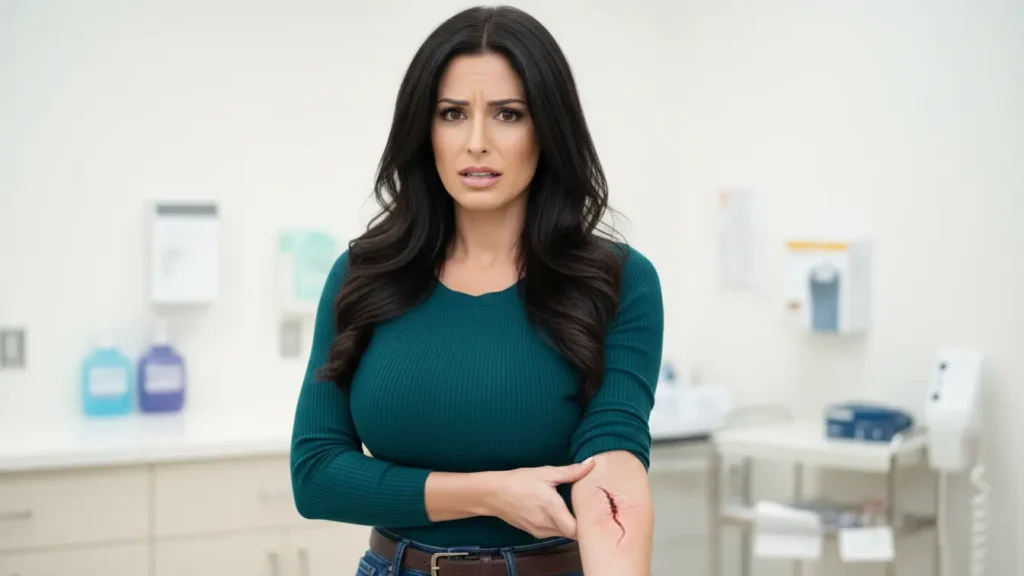
A Change Many People Notice but Rarely Question
When you’re young, a small cut seems to disappear almost overnight.
Years later, the same minor scrape lingers longer than expected.
It doesn’t hurt more.
It simply takes more time.
This change often feels subtle, but it’s one of the most consistent shifts people notice as they age.
Skin healing slows — not because the body stops repairing itself, but because the repair system itself gradually changes.
Understanding why this happens requires looking at how skin renews, communicates, and rebuilds — and how time gently reshapes each step of that process.
Skin Is a Living Repair System
Skin isn’t just a covering.
It’s a living, responsive organ designed to:
- Protect against the environment
- Detect temperature and touch
- Repair itself after damage
Healing is not a single event.
It’s a coordinated process involving cells, signals, structure, and timing.
From childhood through adulthood, this system works quickly and efficiently.
With age, it continues to function — but at a different pace.
The Four Stages of Skin Healing
Whenever skin is injured, it follows a predictable sequence:
- Immediate response – sealing and protection
- Cleanup – removing damaged material
- Rebuilding – forming new tissue
- Remodeling – strengthening and organizing
Each stage depends on the previous one finishing smoothly.
As skin ages, none of these stages disappear — they simply take longer to complete.
Why Aging Slows the Repair Timeline
The most important reason skin heals slower with age is cellular turnover.
Skin repair depends on cells that can:
- Multiply quickly
- Move efficiently
- Communicate clearly
Over time, these abilities gradually decline.
This doesn’t mean cells stop working.
It means they work with less speed and flexibility.
Slower Cell Renewal Beneath the Surface
Young skin replaces itself constantly.
New cells rise from deeper layers to replace older ones, keeping the surface fresh and responsive.
As aging progresses:
- Cell division slows slightly
- Fewer new cells are produced at once
- Replacement takes more time
When an injury occurs, this slower renewal rate becomes visible as delayed healing.
The Changing Structure of Aging Skin
Skin isn’t flat — it’s layered and structured like woven fabric.
With age, that structure subtly shifts:
- The skin becomes thinner
- Support fibers lose density
- Layers connect less tightly
This makes skin more fragile and means repairs require more careful rebuilding.
Think of it like repairing an old wall versus a new one — both are fixable, but one takes more effort.
Why Blood Flow Matters for Healing Speed
Healing requires delivery.
Oxygen, nutrients, and signaling molecules all travel through blood vessels to reach injured skin.
As skin ages:
- Blood flow to the skin decreases slightly
- Delivery becomes less efficient
- Repair signals arrive more slowly
This reduced circulation doesn’t stop healing — it slows the supply chain that supports it.
Communication Between Cells Changes With Age
Healing depends on constant communication.
Cells send chemical signals that say things like:
- “Damage detected”
- “Start rebuilding”
- “Bring more support”
- “Strengthen this area”
With age, these signals can become:
- Less intense
- Less synchronized
- Slightly delayed
The message still gets through — just not as quickly or clearly as before.
A Helpful Analogy: Repairing a Busy City
Imagine a city repairing a damaged bridge.
In a young, well-funded city:
- Workers arrive quickly
- Materials are abundant
- Coordination is smooth
In an older city:
- Crews still arrive
- Repairs still happen
- But planning takes longer
Skin healing follows a similar pattern.
Why Inflammation Lasts Longer in Aging Skin
Inflammation is part of normal healing.
It helps:
- Clean damaged tissue
- Signal repair processes
- Protect the area
In younger skin, inflammation switches off efficiently once its job is done.
With age, this “off switch” becomes slower, meaning the body takes longer to transition fully into rebuilding mode.
Why Scars Can Appear More Noticeable Over Time
Remodeling is the final stage of healing, where skin strengthens and smooths itself.
As aging skin remodels more slowly:
- Tissue organization takes longer
- Surface smoothing is less efficient
- Scars may remain visible for longer periods
This is not a failure — it’s a reflection of slower fine-tuning, not poor repair.
Common Misunderstandings About Slower Healing
“Slow healing means unhealthy skin”
Not necessarily. Aging skin can be healthy and still heal more slowly.
“Skin stops repairing itself with age”
False. Repair continues throughout life — just at a different pace.
“Nothing can heal properly after a certain age”
Skin remains responsive and adaptive well into later years.
Younger vs. Aging Skin Healing: A Comparison
| Aspect | Younger Skin | Aging Skin |
|---|---|---|
| Cell renewal | Rapid | Slower |
| Skin thickness | Denser | Thinner |
| Blood flow | Strong | Reduced |
| Signal strength | High | Moderate |
| Healing speed | Faster | Slower |
| Repair quality | Efficient | Gradual |
Both systems work — they simply operate on different timelines.
Why This Change Is Gradual, Not Sudden
There is no single age where healing suddenly slows.
Instead, the process unfolds gradually over decades.
This makes the change easy to miss — until you compare healing now to healing years ago.
It’s not loss.
It’s adaptation over time.
Why This Matters Today
People live longer, stay active longer, and expect their bodies to perform consistently across decades.
Understanding why skin heals slower with age helps:
- Set realistic expectations
- Reduce unnecessary concern
- Build respect for biological change
- Encourage patience with the body
Knowledge brings perspective — and perspective brings calm.
Key Takeaways
- Skin healing slows with age due to natural biological changes
- Cell renewal becomes less rapid
- Skin structure thins and becomes more delicate
- Blood flow and signaling efficiency decrease
- Healing still occurs — just more gradually
- Slower repair reflects aging, not failure
Frequently Asked Questions
Why do small cuts take longer to heal as I get older?
Because skin cells divide and coordinate more slowly with age.
Does slower healing mean skin is damaged?
No. It means repair processes are functioning at a different pace.
Why does healing feel less “smooth” over time?
Remodeling stages take longer, making texture changes more noticeable.
Is slower healing the same for everyone?
No. Genetics, lifestyle, and environment influence individual variation.
Will skin ever stop healing completely?
No. Skin remains capable of repair throughout life.
A Calm Conclusion
Slower healing is not a sign that the body is giving up.
It’s a reflection of time reshaping biological systems, not breaking them.
Aging skin still protects, repairs, and adapts — it simply works with more deliberation than urgency.
Understanding that shift allows us to view healing not as something lost, but as something evolving alongside us.
Disclaimer: This article explains scientific concepts for general educational purposes and is not intended as professional or medical advice.