A Pattern Many People Notice but Rarely Understand
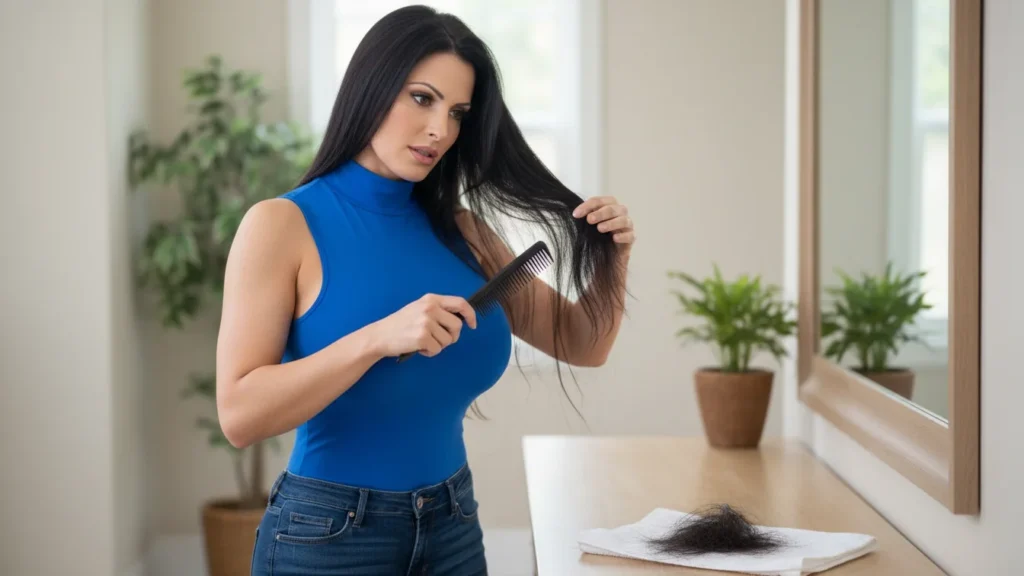
You brush your hair one morning and pause.
There’s more hair than usual.
Days pass, and it keeps happening — especially during certain months of the year.
Yet nothing else feels different.
This experience is so common that many people quietly worry about it, assuming something is “wrong.”
In reality, seasonal hair shedding is often part of a natural biological rhythm, shaped by evolution, environmental cues, and how hair follicles cycle through growth and rest.
Hair does not grow — or fall — randomly.
It follows a schedule.
Hair Is Always Cycling, Even When It Looks Still
Every strand of hair on your head exists in a continuous growth cycle.
At any given time, different hairs are in different phases:
- Growth phase — hair actively lengthens
- Transition phase — growth slows
- Resting phase — hair prepares to shed
This cycle is staggered across thousands of follicles so hair loss appears gradual, not sudden.
Seasonal changes can temporarily synchronize more hairs into the same phase — making shedding more noticeable.
The Hair Growth Cycle Explained Simply
Hair follicles operate like tiny factories with built-in timers.
Each follicle independently decides when to grow, pause, and release a hair.
The key phases are:
- Active growth: Hair grows steadily for months or years
- Transition: Growth stops and the follicle reorganizes
- Resting: Hair remains in place but is no longer growing
- Shedding: The old hair falls as a new one prepares to emerge
Seasonal shifts can influence how many hairs enter the resting phase at once.
Why Seasons Influence Hair Cycles at All
Humans evolved under natural environmental conditions long before climate control.
Our biology learned to respond to seasonal cues such as:
- Changes in daylight length
- Temperature shifts
- Environmental stressors
- Hormonal rhythms tied to light exposure
These signals affect not only mood and sleep — but also skin and hair follicles.
Hair follicles are surprisingly sensitive to environmental information.
The Role of Daylight and Biological Timing
Daylight length changes across seasons, and the body detects this through light exposure.
Light influences internal biological clocks that help regulate:
- Hormone release
- Skin activity
- Hair follicle timing
When daylight shifts significantly, it can nudge hair follicles into synchronized phases, especially the resting phase.
This synchronization leads to a temporary increase in visible hair shedding.
Why Hair Often Sheds More in Late Summer and Fall
In many populations, increased hair shedding is observed during late summer or early fall.
One explanation relates to protective hair retention during high sun exposure months.
Hair growth may increase earlier in the year to help:
- Shield the scalp from sunlight
- Provide thermal regulation
As seasons change, the body may release hairs that are no longer serving that purpose.
This does not mean new hair growth has stopped — it means the cycle is moving forward.
Why Shedding Can Also Increase in Spring
Spring shedding is also commonly reported.
Seasonal transitions place mild physiological stress on the body as it adjusts to:
- Temperature fluctuations
- Changes in routine
- Shifts in light exposure
Hair follicles respond to these transitions by resetting growth rhythms, which can temporarily increase shedding.
A Helpful Analogy: Trees and Leaves
Think of hair like leaves on a tree.
Leaves don’t fall because the tree is unhealthy — they fall because the tree is following a seasonal program.
Hair shedding works the same way.
Letting go of older strands creates space for new growth cycles to begin.
Why Shedding Feels Sudden Even When It Isn’t
Hair shedding usually increases gradually, but perception plays a role.
You notice shedding more when:
- Hair accumulates during washing or brushing
- Longer hairs fall (they look more dramatic)
- Multiple hairs shed around the same time
In reality, the process has been unfolding quietly for weeks.
Why Seasonal Hair Fall Doesn’t Mean Hair Loss
A common misunderstanding is equating shedding with permanent hair loss.
They are not the same.
Seasonal shedding means:
- Old hairs are released
- Follicles remain active
- New hairs are already forming beneath the surface
The scalp is not losing follicles — it’s refreshing inventory.
How the Scalp Environment Changes with Seasons
Seasonal changes affect the scalp just like the skin.
These shifts can include:
- Changes in oil production
- Variations in moisture levels
- Altered blood flow patterns due to temperature
These factors can influence how firmly hairs are held during the resting phase — making release more noticeable.
Seasonal Shedding vs. Continuous Shedding
| Aspect | Seasonal Shedding | Continuous Shedding |
|---|---|---|
| Timing | Appears in specific months | Occurs year-round |
| Duration | Temporary | Persistent |
| Pattern | Fluctuates with seasons | Steady |
| Cause | Biological rhythms | Ongoing cycle imbalance |
| Outcome | Hair regrows normally | Depends on underlying factors |
Seasonal shedding resolves as follicles re-enter growth phases.
Why Some People Notice It More Than Others
Seasonal shedding varies between individuals.
It can be more noticeable due to:
- Hair length and texture
- Natural hair density
- Contrast with clothing or surroundings
- Attention level during grooming
People with longer hair often notice shedding more simply because each strand is more visible.
Common Misunderstandings About Seasonal Hair Fall
“Seasonal shedding means something is wrong”
In most cases, it reflects a normal biological adjustment.
“If hair falls, it won’t grow back”
Seasonal shedding usually precedes new growth.
“Only one season causes hair fall”
Shedding patterns vary by climate, lifestyle, and individual biology.
Why This Matters Today
Modern life often disconnects people from natural biological rhythms.
Climate control, artificial lighting, and indoor lifestyles blur seasonal cues — yet the body still responds to them.
Understanding seasonal hair fall helps people:
- Avoid unnecessary worry
- Recognize natural body cycles
- Develop trust in biological processes
- Interpret hair changes with calm perspective
Awareness replaces anxiety with understanding.
Key Takeaways
- Hair growth follows natural cycles, not random patterns
- Seasonal changes can synchronize shedding phases
- Daylight and environmental cues influence hair follicles
- Seasonal hair fall is usually temporary
- Shedding reflects renewal, not damage
- New hair growth continues beneath the surface
Frequently Asked Questions
Why does my hair fall more during certain months?
Seasonal changes can shift hair follicles into synchronized resting phases, increasing visible shedding.
Is seasonal hair fall permanent?
No. Hair follicles remain active and continue producing new strands.
Why do I notice hair fall more in the shower?
Water and movement dislodge hairs already in the shedding phase, making them more visible at once.
Does everyone experience seasonal hair shedding?
Many people do, but the degree varies by individual biology and environment.
How long does seasonal shedding last?
Typically a few weeks to a couple of months as hair cycles rebalance.
A Calm Conclusion
Hair fall during certain seasons is not a failure of the body.
It’s a reflection of biological timing, shaped by light, environment, and natural cycles that have guided human physiology for thousands of years.
When hair sheds seasonally, it’s not disappearing — it’s making room.
Understanding that rhythm turns concern into clarity and reminds us that the body often knows exactly what it’s doing.
Disclaimer: This article explains scientific concepts for general educational purposes and is not intended as professional or medical advice.