The Subtle Discomfort You Feel Before the Doors Close
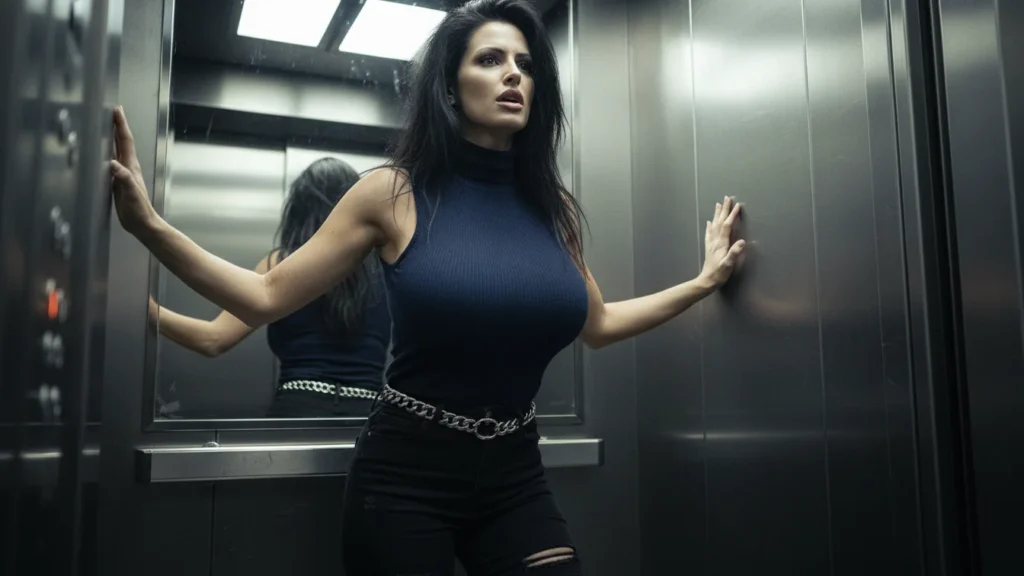
You step into an elevator.
The doors slide shut.
The space feels smaller than it did a second ago.
Nothing has changed physically — yet your body notices something immediately. Breathing feels more noticeable. Sounds feel louder. Your awareness sharpens.
For many people, elevators trigger a sense of unease or claustrophobic discomfort, even if they’re not afraid of small spaces in everyday life.
This reaction isn’t irrational, and it isn’t a flaw.
It’s the result of how the human brain interprets space, control, and sensory input when movement happens inside an enclosed environment.
Claustrophobia Isn’t Just About Size
It’s easy to assume elevators feel claustrophobic simply because they’re small.
But size alone doesn’t explain the reaction.
People are often comfortable in:
- Small rooms
- Cars
- Closets at home
Yet those same people may feel uneasy in elevators.
The difference lies in predictability and control, not square footage.
The brain doesn’t ask, “How big is this space?”
It asks, “How much control do I have here?”
The Brain Constantly Maps Escape Options
One of the brain’s quiet background tasks is scanning for exits.
In open spaces:
- Exits are visible
- Movement is voluntary
- Escape paths are flexible
In elevators:
- Doors close automatically
- Exits are temporarily inaccessible
- Movement is externally controlled
When exits are limited or unclear, the brain raises alertness — even without conscious fear.
This isn’t panic.
It’s situational awareness.
Why Loss of Control Amplifies Discomfort
Elevators remove several forms of personal control at once:
- You can’t choose speed
- You can’t stop movement instantly
- You can’t open doors freely
- You rely on an external system
The human nervous system is sensitive to this combination.
When control shifts away from the individual, the brain compensates by increasing monitoring and bodily awareness.
That heightened awareness can feel like claustrophobia.
Motion Without Visual Reference Confuses the Brain
Another key factor is vertical motion without clear visual cues.
When walking or driving:
- You see the environment change
- Movement matches visual input
In elevators:
- The body moves
- Visual surroundings stay still
This mismatch forces the brain to rely more on internal balance systems rather than sight.
That extra processing effort increases tension and alertness — especially in confined spaces.
Sound, Silence, and Sensory Amplification
Elevators alter sound in subtle ways:
- Mechanical hums
- Door sounds
- Changes in air pressure
Because the space is enclosed:
- Sounds feel closer
- Vibrations travel more clearly
- Silence feels heavier
The brain interprets amplified sensory input as increased importance — another reason awareness rises.
This doesn’t mean danger.
It means attention.
Why Crowded Elevators Feel Worse
Crowding adds another layer.
When personal space shrinks:
- The brain’s spatial boundaries are challenged
- Movement becomes restricted
- Social awareness increases
Humans naturally maintain invisible “buffer zones.” Elevators temporarily erase those buffers.
The result is heightened body awareness, not necessarily fear.
The Role of Anticipation and Uncertainty
Elevators introduce a unique form of uncertainty:
- How long will the ride be?
- Will it stop suddenly?
- What happens if it pauses?
Even if none of these occur, the possibility is enough to activate alert systems.
The brain evolved to respond not only to events — but to potential changes.
Elevators compress time, space, and uncertainty into one experience.
Why Stairs Rarely Trigger the Same Feeling
Stairs may be enclosed, but they offer:
- Self-paced movement
- Visible progress
- Immediate exit options
Even narrow stairwells feel more comfortable because control remains with the individual.
It’s not enclosure that matters most — it’s agency.
Claustrophobic Sensations Are Often Misinterpreted
People sometimes assume elevator discomfort means:
- Fear
- Weakness
- Psychological sensitivity
In reality, it reflects a well-functioning awareness system reacting to:
- Enclosure
- Motion
- Reduced control
Most people feel it to some degree — some simply notice it more clearly.
How the Brain Decides When to Relax
Once the elevator starts moving smoothly:
- Motion becomes predictable
- Time feels defined
- Uncertainty decreases
For many people, discomfort fades after the first few seconds.
This shows that the brain isn’t reacting to the elevator itself — but to the transition into confinement.
Elevators vs Other Enclosed Spaces
| Environment | Control Level | Exit Visibility | Typical Response |
|---|---|---|---|
| Elevator | Low | None (temporarily) | Heightened alertness |
| Car | High | Immediate | Comfortable |
| Small room | Moderate | Visible | Neutral |
| Airplane cabin | Low | Limited | Mixed reactions |
This comparison highlights why elevators stand out despite their short duration.
Common Misunderstandings About Elevator Discomfort
“It means I’m afraid of small spaces.”
Not necessarily — it often reflects sensitivity to control and motion.
“I should just ignore it.”
Awareness is automatic; understanding is more effective than suppression.
“Something is wrong with me.”
Nothing is wrong — this is a common human response.
Clarity reduces confusion, which often reduces discomfort.
Why This Matters Today
Modern life places people in enclosed, automated spaces more than ever:
- Elevators
- Subways
- Rideshares
- Small offices
Understanding how the brain reacts to these environments helps explain everyday discomforts without labeling them as problems.
It also helps people feel more at ease with their own reactions.
A Simple Analogy That Makes Sense
Think of your brain like a navigator.
In open areas, it relaxes — paths are visible.
In elevators, the map temporarily disappears. The navigator doesn’t panic — it simply pays closer attention until movement ends.
That attention can feel like claustrophobia.
Key Takeaways
- Elevator discomfort is driven by perception, not danger
- Loss of control heightens bodily awareness
- Enclosed motion without visual cues increases alertness
- Crowding reduces personal space signals
- The response is common and adaptive
Frequently Asked Questions
Why does the feeling start when the doors close?
Because exit access temporarily disappears, increasing alertness.
Why do glass elevators feel less claustrophobic?
Visual reference restores spatial awareness and control cues.
Why does the discomfort fade during longer rides?
Predictability reduces uncertainty.
Is this related to fear?
It’s related to awareness, not necessarily fear.
Why do some people barely notice it?
Individual sensitivity to spatial and control cues varies.
A Calm Conclusion
Elevators feel claustrophobic not because they’re dangerous, but because they momentarily challenge how the brain understands space, control, and movement.
Once you recognize that this response is a natural adjustment — not a flaw — the experience often feels less intense.
Your brain isn’t overreacting.
It’s simply paying attention.
Disclaimer: This article explains scientific concepts for general educational purposes and is not intended as professional or medical advice.