The Center of Earth You Never Feel
You wake up.
The ground feels solid.
Your compass still points north.
The sky looks normal.
Nothing about daily life reminds you that 5,000 kilometers beneath your feet, something enormous is constantly in motion.
Earth’s core is not static.
It moves.
It flows.
And parts of it rotate at different speeds than the surface above.
If that motion stopped, nothing dramatic would happen overnight — but some of the most important invisible systems keeping Earth stable would begin to weaken.
What We Mean by “Earth’s Core Spinning”
Earth’s core has two main parts:
- Outer core – a swirling ocean of molten iron and nickel
- Inner core – a solid iron sphere rotating slightly differently than the mantle and crust
The word “spinning” doesn’t mean the core is like a solid wheel turning smoothly.
Instead, it means:
- Liquid metal circulates and flows
- Heat-driven motion causes rotation-like movement
- The inner core slowly rotates relative to Earth’s surface
This motion is subtle — but essential.
Why the Core Moves at All
The core doesn’t spin randomly.
Its motion comes from three main factors:
- Heat from Earth’s formation and radioactive decay
- Density differences between hot and cooler material
- Earth’s overall rotation
Hot material rises.
Cooler material sinks.
This constant movement creates convection — similar to how boiling water circulates in a pot.
But in Earth’s core, the “water” is liquid metal.
The Core’s Motion Creates Earth’s Magnetic Field
One of the most important results of core motion is something you never see directly: the magnetic field.
As molten metal moves inside Earth, it generates electric currents.
Those currents create a magnetic field through a process called the geodynamo.
This magnetic field:
- Guides compasses
- Shields Earth from solar radiation
- Helps protect the atmosphere over long time scales
No spinning core → no sustained magnetic field.
If the Core Stopped Spinning, What Would Change First?
Nothing dramatic would happen immediately.
That’s an important point.
If the core’s motion slowed or stopped:
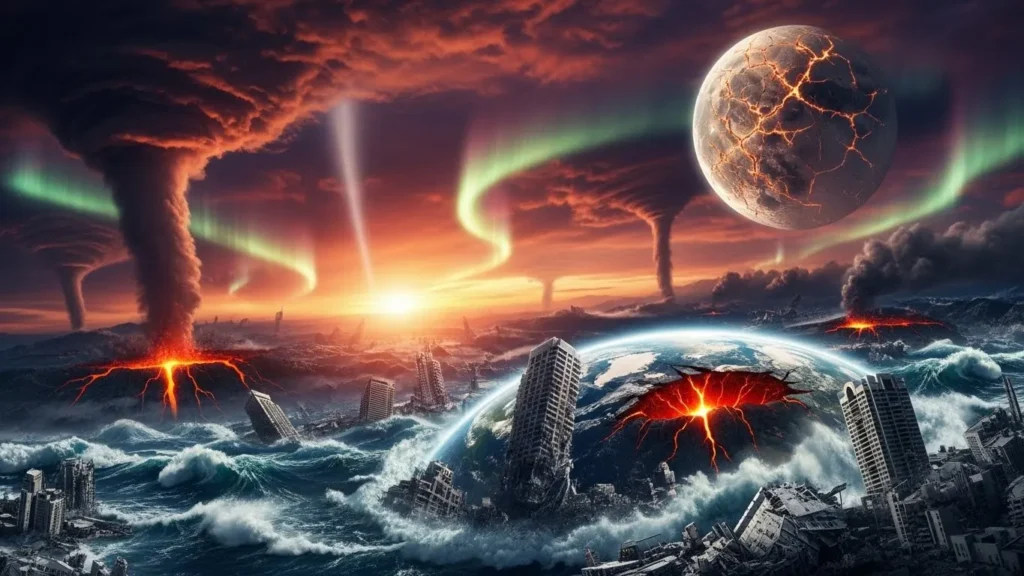
- Earth would not crack open
- Gravity would remain the same
- The planet would not explode
The earliest changes would be subtle and invisible.
Scientists would first notice:
- Weakening magnetic field strength
- Increased irregularity in magnetic behavior
- Gradual loss of magnetic shielding
This would unfold over thousands to millions of years.
What Happens When the Magnetic Field Weakens
Earth’s magnetic field acts like a protective bubble.
It deflects charged particles from the Sun and deep space.
If the field weakened significantly:
- More solar particles would reach the upper atmosphere
- Auroras would become more widespread
- Satellites would face increased exposure
Life on the surface would remain mostly unaffected at first — because Earth’s atmosphere still offers strong protection.
This is often misunderstood.
A weaker magnetic field does not mean instant danger.
A Common Misconception: “The Core Stopping Means the End of Earth”
This idea is popular — and incorrect.
Earth’s core has likely changed speed and behavior many times in its history.
Evidence shows:
- The magnetic field has flipped polarity before
- Field strength has varied significantly
- Life survived all of it
The system is dynamic, not fragile.
What matters is long-term balance, not momentary perfection.
Earth’s Rotation Would Not Suddenly Change
Another misconception is that the core’s motion directly controls Earth’s rotation.
It doesn’t.
Earth’s rotation is governed by:
- Conservation of angular momentum
- Interactions with the Moon
- Distribution of mass across the planet
If the core stopped spinning internally:
- Days would not suddenly lengthen or shorten
- Earth would not wobble dramatically
Surface rotation and core motion are related — but not dependent in a simple way.
Heat Flow Inside Earth Would Slowly Shift
Core motion also helps move heat upward through the mantle.
If motion slowed:
- Heat transfer efficiency would decrease
- Mantle convection could gradually change
- Volcanic and tectonic patterns might slowly evolve
This is a very slow process, measured in millions of years.
Mountains wouldn’t vanish.
Volcanoes wouldn’t suddenly shut down.
Earth would adapt gradually.
Comparing Earth With and Without Core Motion
| System | Normal Core Motion | Core Stops Spinning |
|---|---|---|
| Magnetic field | Strong and sustained | Gradually weakens |
| Surface gravity | Stable | Unchanged |
| Earth rotation | Stable | Largely unchanged |
| Heat transfer | Efficient | Less efficient over time |
| Life on surface | Well-protected | Mostly unaffected initially |
Why the Core Is Unlikely to Ever Fully Stop
Physics works against a complete shutdown.
As long as:
- Earth retains internal heat
- Radioactive decay continues
- Temperature differences exist
Some motion will persist.
Even a slowing core would still move — just differently.
Earth doesn’t need perfection to function.
It needs energy flow.
Why This Matters Today
Understanding Earth’s core helps explain something essential about our planet.
Earth is not held together by visible structures.
It’s held together by:
- Motion beneath the surface
- Energy moving through materials
- Invisible fields protecting the atmosphere
The planet works because systems interact — not because any single part is flawless.
Frequently Asked Questions
1. Could Earth’s core really stop spinning?
A complete stop is extremely unlikely given Earth’s internal energy.
2. Would humans feel anything if it slowed?
No direct sensation would occur at the surface.
3. Would compasses stop working immediately?
No. Changes would occur gradually over long timescales.
4. Has Earth’s magnetic field ever weakened before?
Yes. It has fluctuated and reversed many times in Earth’s history.
5. Would life survive a weaker magnetic field?
Yes. Earth’s atmosphere provides strong additional protection.
Key Takeaways
- Earth’s core motion is slow, steady, and essential
- It generates the planet’s magnetic field
- A stopped core wouldn’t cause instant catastrophe
- Changes would unfold over millions of years
- Earth is resilient, not fragile
A Calm Look Beneath Our Feet
The idea of Earth’s core stopping feels unsettling because it reminds us how little we see of what truly matters.
But science offers reassurance.
Earth’s stability doesn’t depend on constant perfection.
It depends on balance, energy flow, and time.
Even deep beneath the surface, change happens slowly — giving life above plenty of room to adapt.
Disclaimer: This article explains scientific concepts for general educational purposes and is not intended as professional or medical advice.