The Night Would Still Exist — But It Would Feel Different
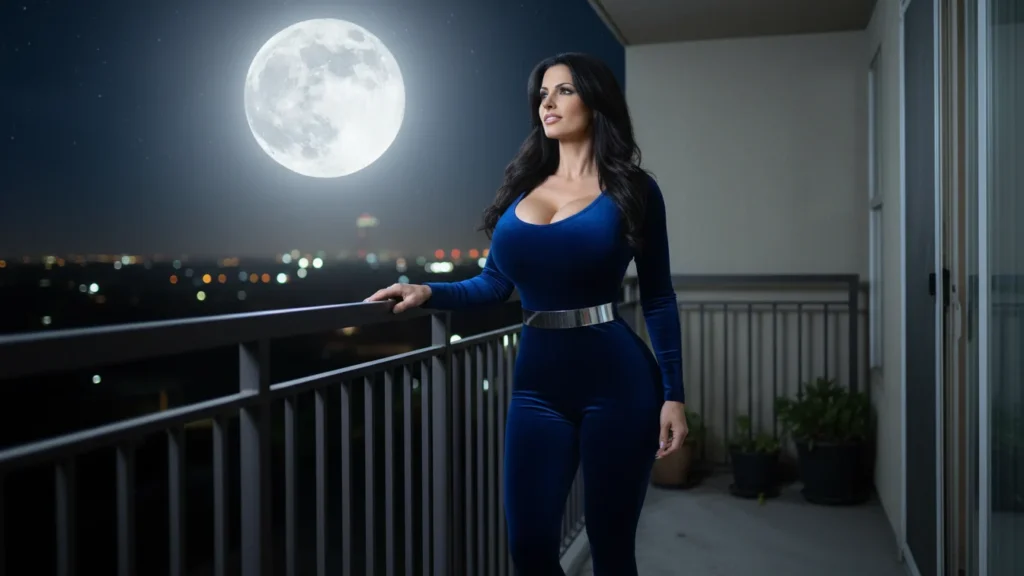
Imagine stepping outside on a clear night.
No streetlights.
No clouds.
Just the sky.
Now imagine something subtle is missing.
The Moon is still there—but it casts no glow. No silver wash on rooftops. No soft outlines of trees. No gentle brightness on water.
The night hasn’t vanished.
But it feels emptier.
Moonlight is easy to overlook because it isn’t loud or dramatic. Yet for billions of years, it has quietly shaped how life moves, rests, hunts, navigates, and senses time.
So what would actually change if moonlight disappeared?
First, What Is Moonlight Really?
Moonlight is not light produced by the Moon itself.
It is reflected sunlight.
The Moon acts like a giant, uneven mirror, bouncing sunlight back toward Earth. Depending on its position, we see different amounts of that reflected light—creating lunar phases.
Even at full brightness, moonlight is:
- About 400,000 times dimmer than sunlight
- Soft, scattered, and indirect
- Strong enough to shape behavior, not vision like daytime
That balance—dim but reliable—is what makes moonlight biologically powerful.
Why Life Learned to Rely on Moonlight
Before artificial lighting, nights were not uniformly dark.
They pulsed with:
- Lunar cycles
- Seasonal shifts
- Predictable brightness patterns
Over time, many living systems began to time their activity around moonlight.
This includes:
- When animals hunt
- When prey hides
- When plants open or close
- When humans traveled, gathered, or rested
Moonlight became a natural signal—a quiet clock embedded in the sky.
What Would Happen to the Night Sky
Without moonlight, the night sky would not become pitch-black everywhere.
But it would change noticeably.
The visual shift would include:
- Sharper contrast between stars and darkness
- Brighter visibility of the Milky Way
- Deeper shadows with no soft illumination
Ironically, astronomers would love it.
But ecosystems and human routines evolved with some nighttime light, not total absence.
How Nocturnal Animals Use Moonlight
Many animals don’t just tolerate moonlight—they depend on it.
Moonlight helps:
- Predators spot movement
- Prey detect silhouettes
- Animals orient themselves in space
Some species reduce activity during bright moons to avoid detection. Others become more active because visibility improves.
If moonlight vanished:
- Hunting patterns would shift
- Predator–prey balance would change
- Energy use would increase due to uncertainty
Nature relies on predictable light gradients, not extremes.
Why This Happens: The Brain and Low-Light Vision
Eyes and brains are remarkably good at using very small amounts of light.
Moonlight sits at the perfect level:
- Enough to reveal shapes
- Not enough to overwhelm night vision
Remove it, and animals must rely more on:
- Smell
- Sound
- Memory
That increases risk and reduces efficiency.
Moonlight is like a dim hallway lamp—it doesn’t light the room, but it prevents collisions.
Human Life Before Electricity Was Moon-Timed
For most of human history, moonlight shaped behavior.
People planned:
- Travel during brighter nights
- Fishing and hunting around lunar cycles
- Ceremonies and gatherings by the full moon
Moonlight extended productive hours without fire or lamps.
Without it:
- Nights would have felt shorter
- Outdoor movement would have been riskier
- Early navigation would be more difficult
Moonlight was humanity’s first natural nightlight.
The Subtle Connection Between Moonlight and Sleep
Moonlight does not control sleep the way sunlight does.
But it modulates nighttime behavior.
Research shows that brighter nights can:
- Delay sleep onset slightly
- Increase alertness
- Reduce deep darkness cues
Without moonlight:
- Nights would be more uniformly dark
- Sleep cues might become sharper
- Seasonal rhythms could feel stronger
Moonlight doesn’t dictate sleep—it softens the transition.
Common Misconception: “Moonlight Is Too Weak to Matter”
This is one of the biggest misunderstandings.
Biology doesn’t respond only to strong signals. It responds to consistent signals.
Moonlight is:
- Predictable
- Cyclical
- Reliable over millions of years
That consistency allowed life to tune itself to lunar rhythms.
Weak does not mean unimportant.
How Plants and Marine Life Respond to Moonlight
Moonlight reaches environments humans rarely consider.
In oceans:
- Many species synchronize spawning with lunar brightness
- Vertical migration patterns follow moon phases
On land:
- Some plants adjust leaf positioning at night
- Pollination timing can shift with moon cycles
Remove moonlight, and these patterns would drift—not collapse, but lose precision.
Comparison Table: Nights With Moonlight vs Without Moonlight
| Feature | Nights With Moonlight | Nights Without Moonlight |
|---|---|---|
| Ambient brightness | Low but present | Near-total darkness |
| Animal navigation | Assisted by silhouettes | Heavily sensory-based |
| Predator–prey balance | Predictable | More chaotic |
| Human visibility | Extended outdoor activity | Restricted movement |
| Biological rhythms | Fine-tuned | Less synchronized |
The change wouldn’t be dramatic overnight—but it would accumulate.
Why Tides Would Not Change
Another common misunderstanding is linking moonlight to tides.
Moonlight has nothing to do with tides.
Tides are caused by:
- The Moon’s gravitational pull
- Earth’s rotation
Even if moonlight disappeared entirely, tides would continue exactly as they do now.
Light influences behavior. Gravity influences water.
Why This Matters Today
In modern cities, artificial light often overwhelms moonlight.
Yet when people visit darker environments, many notice:
- A sense of calm
- Better orientation at night
- Emotional connection to the sky
Understanding moonlight reminds us that natural light isn’t just illumination—it’s information.
The Moon still whispers signals our biology recognizes, even if we don’t consciously notice them.
What a Moonlight-Free World Would Feel Like
The biggest change wouldn’t be scientific.
It would be emotional.
Nights would feel:
- More absolute
- Less textured
- More isolating
Moonlight adds depth to darkness. Without it, night becomes flatter and more final.
Key Takeaways
- Moonlight is reflected sunlight, not light created by the Moon
- Life evolved around predictable lunar brightness cycles
- Animals use moonlight for navigation, hunting, and safety
- Humans historically relied on moonlight for nighttime activity
- Removing moonlight wouldn’t destroy life—but it would subtly reshape it
Frequently Asked Questions
Would Earth become completely dark at night?
No. Stars, airglow, and artificial lights would remain, but natural nights would be far darker.
Would tides stop if moonlight disappeared?
No. Tides depend on gravity, not light.
Do humans biologically depend on moonlight?
Not directly, but behavior, mood, and historical rhythms were shaped by it.
Would animals adapt to moonlight disappearing?
Over time, yes—but with increased energy cost and behavioral changes.
Is moonlight stronger than starlight?
Yes. Moonlight provides far more ambient illumination than stars alone.
A Quiet Conclusion About a Quiet Light
Moonlight doesn’t shout.
It doesn’t command attention.
It doesn’t dominate the sky.
But it has guided life through darkness for billions of years—softening night, shaping rhythm, and offering just enough light to move without fear.
If it disappeared, the world wouldn’t end.
It would simply feel… less alive after sunset.
Disclaimer: This article explains scientific concepts for general educational purposes and is not intended as professional or medical advice.