The Question That Never Leaves the Human Mind
Almost everyone has wondered about it at some point.
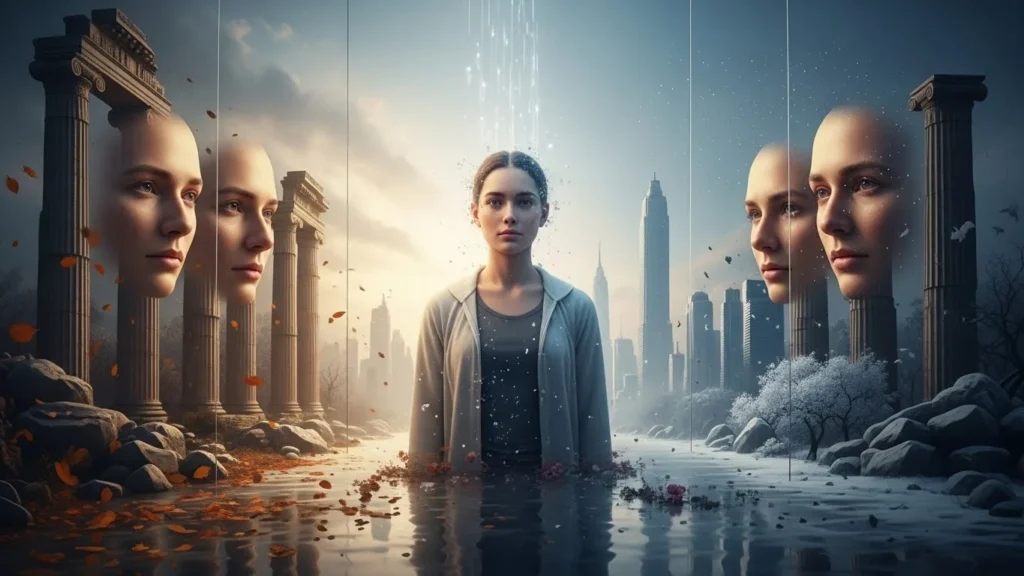
What if time touched everything — except us?
No wrinkles.
No physical decline.
No gradual slowing down of the body.
At first glance, a world without aging sounds like a simple upgrade. Keep the same life, just remove the wear and tear.
But aging is not a single switch inside the body. It is a process woven into how cells divide, how tissues renew, how the brain learns, and how societies organize themselves.
If humans never aged, the effects would ripple far beyond appearance or lifespan.
What Aging Really Is (And What It Is Not)
Aging is often misunderstood as “things breaking down.”
In reality, aging is the gradual result of maintenance limits.
Every day, your body:
- Repairs damaged cells
- Replaces worn-out tissues
- Clears waste from biological processes
These systems are remarkably efficient — but not perfect forever.
Over time:
- Repairs become slightly less precise
- Cellular instructions accumulate small errors
- Renewal slows compared to wear
Aging isn’t a failure. It’s the long-term cost of staying alive.
What “Never Aging” Actually Means in Biology
Never aging does not mean never changing.
Growth, learning, and adaptation would still happen.
It means that after reaching physical maturity:
- Cells would continue renewing at the same quality
- Tissues would maintain structure indefinitely
- Biological systems would not drift toward decline
Think of it like a machine that replaces every part perfectly, forever — no matter how long it runs.
This changes far more than how long someone lives.
The Body: Stability Without Decline
If humans never aged, the adult body would remain in a stable state.
That means:
- Muscle strength would stay consistent
- Bones would maintain density
- Skin would renew without thinning
However, this doesn’t mean bodies would be identical forever.
Physical changes from experience — scars, adaptations, skill-related changes — would still occur. What disappears is the time-driven loss, not life’s imprint.
The body would become a record of experience, not decay.
The Brain Would Still Learn — But Differently
One common belief is that aging limits learning.
In truth, learning slows partly because the brain balances flexibility with stability.
If aging stopped:
- Neural connections could remain adaptable longer
- Memory systems wouldn’t degrade over time
- Skills could accumulate across centuries
But learning wouldn’t become infinite overnight.
The brain would still prioritize:
- What is useful
- What is reinforced
- What is practiced
Experience would matter more than age.
Society Would Change More Than Biology
The most dramatic shifts wouldn’t happen inside the body.
They would happen between people.
A world without aging would affect:
- Careers and education
- Family structures
- Leadership and governance
- Population size
Without natural turnover, societies would need new ways to manage continuity and change.
Progress wouldn’t stop — but it would slow unless systems adapted.
Population Growth Would Redefine Limits
Aging currently places a natural limit on population size.
Remove that limit, and population dynamics change completely.
Unless birth rates also changed:
- Cities would grow denser
- Resources would need stricter management
- Long-term planning would become essential
This doesn’t imply collapse — but it demands careful balance.
Time would no longer regulate population. Choice would.
Motivation and Meaning in a Timeless Life
Many people assume that without aging, motivation would disappear.
But motivation doesn’t come from endings alone.
It comes from:
- Curiosity
- Purpose
- Social bonds
- Goals and challenges
In a timeless body, meaning would likely shift from urgency to depth.
Instead of “before it’s too late,” motivation might become “how deeply can this be explored?”
Comparing Human Life With and Without Aging
| Aspect | Humans With Aging | Humans Without Aging |
|---|---|---|
| Physical condition | Gradual decline over time | Stable after maturity |
| Learning capacity | Slows with age | Maintains adaptability |
| Population balance | Naturally regulated | Requires social regulation |
| Career timelines | Age-based progression | Experience-based progression |
| Sense of time | Urgency-driven | Depth-driven |
Common Misunderstandings About Never Aging
Let’s clear up a few myths.
- “Never aging means invincibility.”
No. Injury and accidents would still exist. - “People would stop changing.”
No. Experience and environment still shape individuals. - “Society would freeze.”
No. Change would continue — but through ideas, not generational turnover.
Aging influences life, but it doesn’t define all change.
Why This Matters Today
Thinking about aging isn’t just about the future.
It helps explain the present.
Aging shapes:
- How we value time
- How societies transfer knowledge
- How cultures renew themselves
By understanding aging as a process — not a flaw — we gain clarity about why human life looks the way it does.
This perspective helps science, philosophy, and everyday understanding meet in the middle.
Frequently Asked Questions
1. Would humans still grow up if they never aged?
Yes. Growth and development would still occur until maturity.
2. Would people still die?
Yes. Aging would stop, but external causes would still exist.
3. Would memory eventually become full?
Memory prioritizes relevance and reinforcement, not storage limits alone.
4. Would creativity decline without aging?
Not necessarily. Creativity depends on experience, not time passing.
5. Is aging purely negative?
No. Aging plays a role in renewal, balance, and generational change.
Key Takeaways
- Aging is a gradual maintenance process, not a single failure
- Never aging would stabilize the body but transform society
- Learning, motivation, and meaning would still exist
- Population and social systems would need rethinking
- Time shapes humanity in subtle, powerful ways
A Calm Look at a Timeless Idea
The idea of never aging fascinates us because it removes a universal boundary.
But science shows something important.
Aging is not just about loss.
It is part of how balance, renewal, and meaning emerge over time.
Imagining life without aging doesn’t diminish life as it is — it helps us understand why time matters, not just how long we have.
Disclaimer: This article explains scientific concepts for general educational purposes and is not intended as professional or medical advice.