Imagine a World of Perfect Specialists
Picture a society where every person masters exactly one skill.
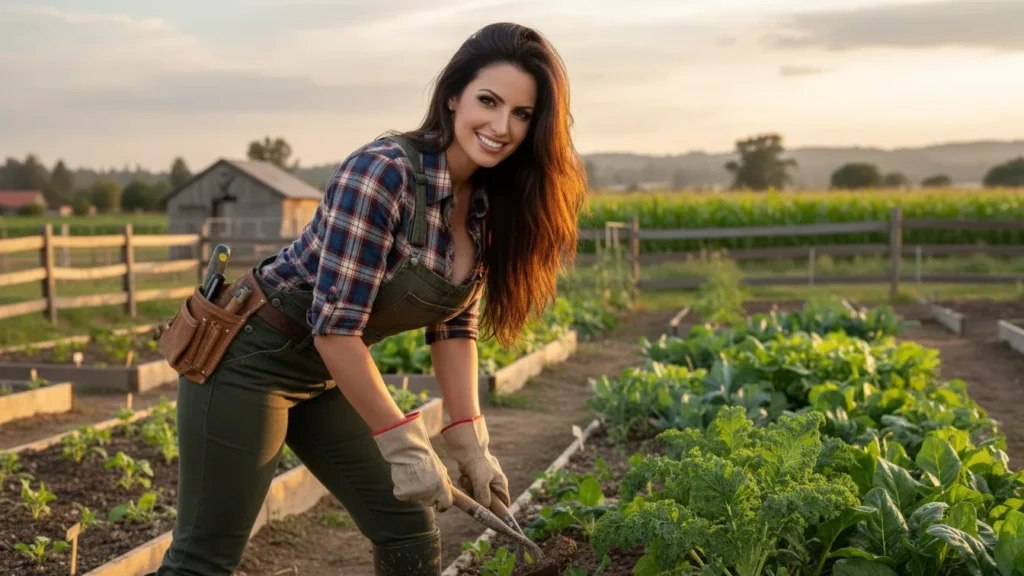
One individual can only farm.
Another can only build.
Another can only write.
They perform that single task exceptionally well—but nothing else.
No improvising.
No cross-training.
No learning new abilities later in life.
At first, this world might seem efficient. But beneath the surface, it would feel strangely fragile.
Human beings are not designed to learn just one thing. Our brains evolved to stack skills, connect them, and repurpose them across situations. Removing that flexibility would reshape how we think, cooperate, and survive.
Why Humans Are Natural Multi-Skill Learners
From infancy, the human brain is built for learning layers of abilities.
A child doesn’t just learn to walk. They learn:
- Balance
- Coordination
- Spatial awareness
- Prediction
Each skill supports the next.
This stacking ability allows humans to adapt quickly to new environments. Instead of being born with fixed abilities, we arrive with a brain designed to learn continuously.
That flexibility is one of humanity’s greatest evolutionary advantages.
How the Brain Actually Learns Skills
Learning a skill isn’t about creating a single “skill center” in the brain.
It involves:
- Sensory regions (seeing, hearing, feeling)
- Motor planning areas
- Memory systems
- Attention networks
When you learn something new, these networks reorganize and strengthen connections.
Crucially, skills overlap.
Learning music can improve pattern recognition.
Learning sports can enhance spatial reasoning.
Learning languages can sharpen memory.
Skills don’t live in isolation. They reinforce one another.
Why This Happens: Neural Reuse
The brain often reuses existing circuits for new purposes.
This process—sometimes called neural reuse—means that:
- Old skills support new ones
- Learning becomes faster over time
- Experience compounds
If humans could learn only one skill, this reuse would be impossible.
The brain would be underutilized—like a powerful computer running a single app forever.
A One-Skill Brain Would Be Less Flexible
If humans were limited to one skill:
- Learning would stop early
- Adaptation would slow
- Problem-solving would narrow
The brain thrives on variety. Different skills activate different networks, keeping the system adaptable and resilient.
Without variety:
- Creativity would decline
- Innovation would stall
- Response to change would weaken
Efficiency would increase—but at the cost of resilience.
Society Would Become Highly Dependent—and Fragile
Specialization already exists in modern society.
But it works because people can:
- Learn supporting skills
- Communicate across domains
- Adapt when roles shift
In a one-skill world:
- Cooperation would be mandatory
- Independence would shrink
- Disruptions would ripple quickly
If one skill group failed, others couldn’t compensate.
Civilization would resemble a machine with no backup systems.
Everyday Life Would Lose Flexibility
Consider simple daily situations.
A person who only cooks couldn’t:
- Repair a broken tool
- Navigate unfamiliar places
- Adjust to unexpected problems
Life would require constant coordination, even for basic needs.
Human adaptability—the ability to “figure things out”—would disappear.
Comparison Table: Multi-Skill Humans vs One-Skill Humans
| Aspect | Multi-Skill Humans | One-Skill Humans |
|---|---|---|
| Learning ability | Lifelong | Fixed |
| Adaptability | High | Low |
| Creativity | Emergent | Limited |
| Independence | Flexible | Restricted |
| Social resilience | Strong | Fragile |
The difference isn’t intelligence—it’s flexibility.
Why Human Intelligence Is Not One-Dimensional
A common misunderstanding is that intelligence equals mastery of one area.
In reality, intelligence emerges from:
- Connecting ideas
- Transferring knowledge
- Adjusting strategies
A person who learns many skills develops mental bridges between them.
These bridges allow insights to travel across domains—fueling creativity and problem-solving.
One skill alone creates depth, but not breadth.
How Evolution Shaped Skill Diversity
Early humans survived by learning multiple abilities:
- Tool use
- Social coordination
- Environmental reading
- Communication
Those who adapted survived changing climates, predators, and resources.
Species that relied on a single narrow skill struggled when conditions changed.
Learning diversity wasn’t optional—it was protective.
Emotional and Social Consequences
Learning multiple skills also supports emotional regulation.
Different skills:
- Provide alternative ways to cope
- Offer identity flexibility
- Reduce over-dependence on one role
In a one-skill world:
- Identity would be rigid
- Failure would be devastating
- Emotional resilience would weaken
Variety isn’t distraction—it’s psychological insurance.
Why Humans Enjoy Learning New Things
Curiosity isn’t a flaw. It’s a biological signal.
The brain rewards learning because:
- New skills increase survival odds
- Novelty strengthens neural connections
- Exploration builds adaptability
If humans could learn only one skill, curiosity would have no outlet.
Motivation would fade—not because effort is hard, but because growth would be blocked.
A Common Misunderstanding About Mastery
Mastery is often framed as narrowing focus.
But in humans, true mastery usually sits on top of broad foundations.
Even experts rely on:
- Communication skills
- Emotional awareness
- Adaptability
Removing those supporting skills would weaken expertise, not strengthen it.
Why This Matters Today
Modern life increasingly encourages specialization.
But understanding the biology of learning reminds us:
- Diversity of skills strengthens resilience
- Cross-learning improves thinking
- Flexibility matters more than perfection
The human brain isn’t designed for single-track development.
It’s designed for growth across dimensions.
What a One-Skill World Would Feel Like
Such a world wouldn’t be chaotic.
It would be orderly—but brittle.
Predictable—but slow to respond.
Impressive in precision, yet vulnerable to change.
The absence wouldn’t be knowledge.
It would be adaptability.
Key Takeaways
- Human brains evolved to learn multiple interconnected skills
- Skills reinforce each other through shared neural networks
- One-skill learning would reduce adaptability and resilience
- Society depends on flexible learners, not fixed specialists
- Learning diversity supports creativity, survival, and identity
Frequently Asked Questions
Could humans survive with only one skill?
Yes—but survival would rely heavily on rigid cooperation and stable conditions.
Would intelligence decrease in a one-skill world?
Not necessarily—but problem-solving and creativity would narrow.
Is specialization bad for learning?
No. Specialization works best when built on broad learning foundations.
Why does learning new skills feel rewarding?
Because the brain evolved to value adaptability and growth.
Are humans unique in multi-skill learning?
Humans are among the most flexible learners due to advanced neural plasticity.
A Calm Conclusion About Human Potential
Humans aren’t powerful because we master one thing.
We’re powerful because we connect many things.
Skills layer, overlap, and support one another—turning experience into insight and learning into adaptability.
If humans learned only one skill, the world would still function.
But it would lose the quiet strength that comes from being able to grow, change, and learn again.
Disclaimer: This article explains scientific concepts for general educational purposes and is not intended as professional or medical advice.