Standing at the Edge Without a Second Thought
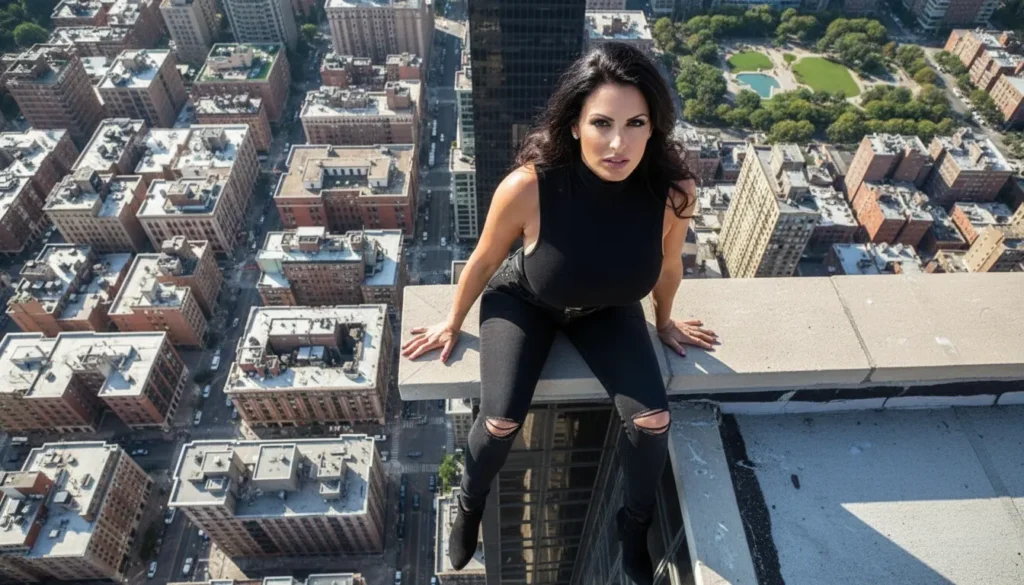
Imagine stepping onto a high balcony and feeling… nothing.
No tightening in the chest.
No instinctive step backward.
No sudden awareness of the drop below.
Just calm curiosity.
For most humans, height triggers an automatic response—a subtle or intense sense of caution. But what if that response never existed? What if humans had no fear of heights at all?
This question isn’t about bravery or personality. It’s about biology. Fear of heights is deeply connected to how the brain processes space, balance, and survival. Removing it would quietly—but profoundly—change how humans interact with the world.
What Fear of Heights Really Is (And What It Isn’t)
Fear of heights isn’t just “being scared.”
It’s a built-in response created by the brain when it detects a potential loss of balance combined with distance below.
Importantly:
- It’s not learned through experience alone
- It appears early in life
- It exists even in people who’ve never fallen
This response doesn’t scream danger—it whispers caution.
That whisper is enough to slow movement, sharpen attention, and prevent risky behavior near edges.
How the Brain Detects Height and Risk
The brain doesn’t measure height with a ruler. It combines multiple sensory signals:
- Vision (depth and distance)
- Inner ear (balance and motion)
- Muscle feedback (body position)
When these systems detect a large drop, the brain increases alertness.
This happens before conscious thought.
You don’t decide to feel uneasy near a ledge.
Your nervous system decides for you.
Without that signal, the edge would feel no different from flat ground.
Why Fear of Heights Exists at All
From an evolutionary perspective, falling is one of the oldest and most reliable threats.
Long before modern buildings:
- Cliffs
- Trees
- Rocky terrain
- Uneven ground
All posed risks.
Individuals who hesitated near edges were more likely to survive and reproduce. Over time, this caution became part of human biology.
Fear of heights isn’t a flaw—it’s a survival filter.
What Would Change Immediately Without It
If humans had no fear of heights, daily behavior would subtly shift.
People might:
- Stand closer to edges
- Move faster near drops
- Underestimate fall risk
- Feel no instinctive hesitation
Not because they want danger—but because the brain wouldn’t flag it.
Risk wouldn’t disappear.
Awareness of it would.
Balance Without Fear: A Risky Combination
Balance is not just mechanical—it’s predictive.
The brain constantly asks:
“What happens if I misstep right now?”
Fear of heights adds extra margin for error.
Without it:
- Balance corrections would be smaller
- Reaction times might slow
- Minor slips could become major falls
Fear doesn’t paralyze balance—it enhances it.
Everyday Example: Walking Near a Drop
Think about walking beside a steep edge.
Most people naturally:
- Slow their pace
- Keep distance
- Focus attention downward
They don’t think about doing this.
Without fear of heights, that automatic adjustment wouldn’t happen. Walking near a drop would feel no different from walking on a sidewalk.
The body wouldn’t prepare—because the brain wouldn’t warn it.
Why Vision Alone Isn’t Enough
You might assume sight alone could keep people safe.
But vision tells you where you are—not how careful to be.
Fear provides emotional weight to visual information.
It transforms “I see a drop” into “I should act cautiously.”
Without that emotional layer, perception becomes neutral—and neutrality near danger is risky.
Comparing Humans With and Without Fear of Heights
| Feature | With Fear of Heights | Without Fear of Heights |
|---|---|---|
| Edge awareness | Heightened | Neutral |
| Movement near drops | Slower, cautious | Faster, casual |
| Balance adjustments | Enhanced | Reduced |
| Risk perception | Automatic | Deliberate only |
| Survival margin | Wider | Narrower |
This comparison shows that fear acts as a built-in safety buffer.
Common Misunderstanding: “Fear of Heights Is Just Anxiety”
Fear of heights is often confused with anxiety.
They’re not the same.
- Anxiety is generalized and variable
- Height fear is specific and consistent
- Anxiety can be excessive
- Height fear is usually proportional
Most people with fear of heights function normally in daily life. The response activates only when needed.
Removing it would remove a targeted protection—not an emotional burden.
How Architecture and Cities Would Feel Different
Without fear of heights, urban spaces would be experienced differently.
People might:
- Lean over railings casually
- Stand closer to edges on rooftops
- Treat high places like open ground
Design itself might change, relying more on physical barriers than human instinct.
Currently, architecture often assumes psychological distance from edges. Without it, safety would depend entirely on structure.
How Children Learn Safety Near Heights
Even infants show hesitation near edges.
This suggests fear of heights isn’t fully taught—it’s biologically primed.
Children explore, but they pause when depth appears.
Without that pause:
- Learning through trial would be riskier
- Fewer mistakes would be survivable
- Exploration would carry higher costs
Fear of heights allows learning without catastrophe.
Why This Fear Doesn’t Block Progress
Humans still:
- Climb mountains
- Build skyscrapers
- Fly planes
- Cross bridges
Fear doesn’t stop exploration—it regulates it.
People push boundaries with tools, planning, and awareness. Fear ensures those steps are intentional, not accidental.
Without fear, exploration wouldn’t be bolder—it would be more careless.
Why This Matters Today
In a world of tall buildings, open balconies, and extreme environments, fear of heights quietly keeps millions safe every day.
Understanding this instinct reminds us that:
- Not all fear is harmful
- Some fear improves precision
- Biology prioritizes survival, not comfort
Fear of heights isn’t about limiting freedom.
It’s about preserving it over a lifetime.
Key Takeaways
- Fear of heights is an automatic survival response
- It integrates vision, balance, and body awareness
- It improves movement precision near drops
- Removing it would increase unnoticed risk
- Fear acts as a safety margin, not a barrier
- Some instincts exist to prevent irreversible mistakes
Frequently Asked Questions (FAQ)
1. Is fear of heights learned or inborn?
It appears to be partly inborn, with experience refining it.
2. Why do some people feel it more strongly?
Individual sensitivity varies, but the basic mechanism is shared.
3. Would technology replace fear of heights?
Technology can assist, but instinct reacts faster than tools.
4. Do animals have fear of heights?
Many species show edge-avoidance behavior linked to balance and vision.
5. Is fear of heights always useful?
In most situations, yes—it activates only when needed.
Conclusion: Fear as a Quiet Form of Intelligence
If humans had no fear of heights, life wouldn’t instantly become dangerous.
But it would become less forgiving.
Fear of heights is not panic.
It’s perception sharpened by biology.
It slows us just enough to notice risk.
It protects without asking permission.
It keeps mistakes survivable.
Sometimes, the instincts we wish away are the ones quietly holding us together.
Disclaimer: This article explains scientific concepts for general educational purposes and is not intended as professional or medical advice.