A World Without Peaks to Look Up To
Mountains feel permanent.
They rise above cities, shape coastlines, and quietly anchor our sense of place. From distant horizons to local weather patterns, they influence daily life in ways most people never consciously notice.
Now imagine something strange—but scientifically revealing:
What if Earth had no mountains at all?
No Himalayas.
No Andes.
No Rockies.
No Alps.
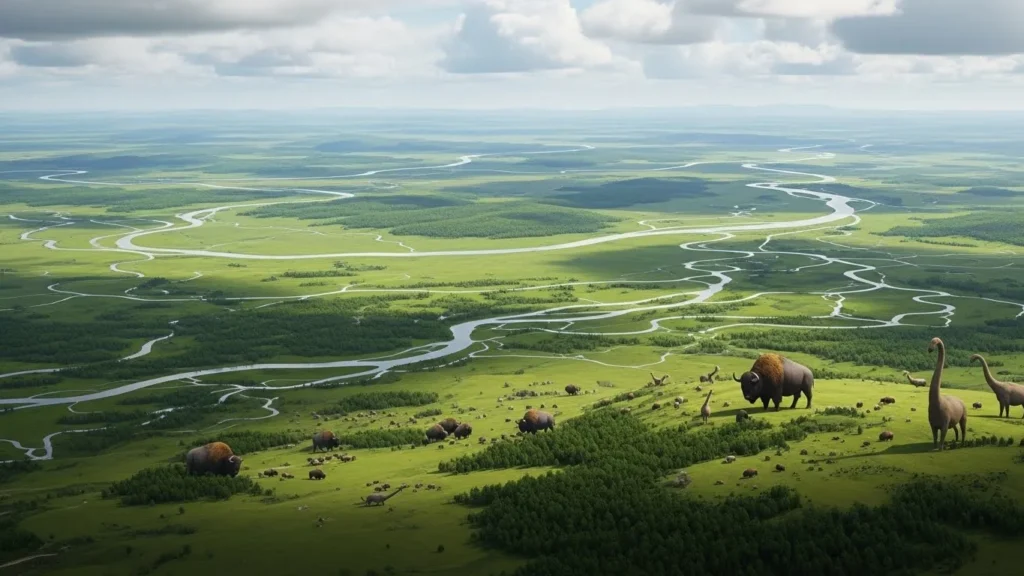
Just a vast planet of plains, gentle hills, and shallow plateaus.
This thought experiment isn’t about fantasy. It’s a powerful way to understand why mountains exist, what they do, and how deeply they influence Earth’s systems, even when we’re not thinking about them.
First, What Do We Mean by “Mountains”?
Mountains are not just tall piles of rock.
Scientifically, they are large landforms created by powerful forces inside Earth, mainly:
- Plate tectonics (when Earth’s plates collide or pull apart)
- Volcanic activity
- Long-term uplift and erosion
They rise because Earth’s crust is dynamic, not static.
Without mountains, it would mean something even more profound:
👉 Earth’s surface processes would be fundamentally different.
How Mountains Normally Shape the Planet
Before removing mountains, it helps to understand what they quietly do every day.
Mountains act as:
- Climate regulators
- Water directors
- Ecosystem architects
- Natural barriers
- Geological storytellers
They slow winds, redirect rain, guide rivers, and create isolated habitats.
Without them, Earth wouldn’t just look flatter—it would behave differently.
A Flatter Earth Would Change Rainfall Patterns Everywhere
One of the most important roles of mountains is invisible.
They control rain.
When moist air moves across the land and hits a mountain range:
- The air is forced upward
- It cools as it rises
- Water vapor condenses
- Rain or snow falls
This is called orographic rainfall.
Without mountains:
- Moist air would travel farther inland without releasing rain
- Rainfall would be more evenly spread—but often weaker
- Seasonal rain patterns would blur
Some regions would become drier, not wetter.
A Common Misunderstanding
Many people assume flat land means more rain everywhere.
In reality, mountains create rainfall by forcing air to rise. Without them, clouds often just drift by.
Rivers Would Behave Very Differently
Mountains are the starting points of most major rivers.
They provide:
- Height differences (gravity-driven flow)
- Snowmelt reservoirs
- Natural channels
Without mountains:
- Rivers would be slower
- Flow would be less directional
- Floodplains would be broader and more unstable
Instead of long, fast-flowing rivers, Earth would have:
- Wide, shallow waterways
- Frequent meandering
- Increased seasonal flooding
Water would linger instead of rushing.
Earth’s Climate Would Become More Uniform—but Not Gentler
Mountains create climate variety.
They block winds, trap cold air, and redirect heat.
Without them:
- Cold air could travel farther toward the equator
- Hot air could move deeper into polar regions
- Weather systems would spread more evenly
This doesn’t mean calmer weather.
It means larger-scale systems with fewer interruptions.
Storms could travel longer distances without weakening.
A Comparison: Earth With vs. Without Mountains
| Feature | Earth With Mountains | Earth Without Mountains |
|---|---|---|
| Rainfall patterns | Region-specific, varied | More uniform, often weaker |
| River flow | Fast, directional | Slow, spread-out |
| Climate zones | Diverse and layered | Broad and blended |
| Ecosystem diversity | Highly specialized | More generalized |
| Natural barriers | Common | Almost none |
Mountains add complexity—and complexity supports resilience.
Ecosystems Would Lose Their Vertical Diversity
Mountains don’t just stretch across land.
They stretch upward, creating vertical ecosystems.
As elevation increases:
- Temperature drops
- Oxygen decreases
- Plant types change
- Animal behaviors shift
Without mountains:
- No alpine ecosystems
- Fewer climate niches
- Less biodiversity overall
Species would compete in flatter environments with fewer natural separations.
This doesn’t mean life would disappear.
It means life would become less varied.
Human Civilization Would Have Developed Differently
Mountains shaped human history long before modern science.
They influenced:
- Migration routes
- Cultural separation
- Language development
- Natural borders
- Resource distribution
Without mountains:
- Human populations would mix earlier
- Fewer isolated cultures would form
- Trade routes would be more direct
- Political borders would be harder to define naturally
Civilizations would spread faster—but become more similar.
Why Mountains Matter More Than We Realize
Mountains slow things down.
They slow:
- Wind
- Water
- Migration
- Climate shifts
That slowing effect stabilizes Earth.
Without it, planetary systems would move faster, farther, and with fewer buffers.
Mountains are Earth’s brakes.
Why This Matters Today (Even If Mountains Aren’t Changing)
Understanding the role of mountains helps us understand:
- Why some regions are dry
- Why rivers behave unpredictably
- Why biodiversity clusters where it does
- Why climate patterns are uneven
When we study mountains, we’re really studying how Earth regulates itself.
Even subtle changes to landforms can ripple through climate, water, and life systems.
Key Takeaways
- Mountains are critical climate and water regulators
- They create rainfall, guide rivers, and shape ecosystems
- A mountain-free Earth would be flatter—but less diverse
- Climate patterns would spread farther and blend together
- Human history would likely be more unified, but less varied
- Mountains add stability by slowing Earth’s systems
Frequently Asked Questions
Would Earth be hotter or colder without mountains?
Neither uniformly. Temperatures would spread more evenly, with fewer extremes caused by elevation.
Would deserts disappear without mountains?
Some deserts exist because of mountains. Without them, desert locations would change, not vanish.
Could rivers exist without mountains?
Yes, but they would be slower, wider, and more prone to flooding.
Would life still thrive on a flat Earth?
Absolutely—but biodiversity would likely be lower due to fewer ecological niches.
Are mountains still forming today?
Yes. Earth’s tectonic plates are constantly moving, slowly creating and reshaping mountains.
A Calm Conclusion
Mountains don’t dominate Earth.
They quietly support it.
They redirect rain, steady climate, guide water, and create space for life to specialize and flourish.
Imagining a world without mountains doesn’t make Earth seem fragile—it makes its balance easier to appreciate.
Sometimes, the most important structures are the ones that simply stand there, doing their work over millions of years.
Disclaimer: This article explains scientific concepts for general educational purposes and is not intended as professional or medical advice.