A World Without Color Beneath the Waves
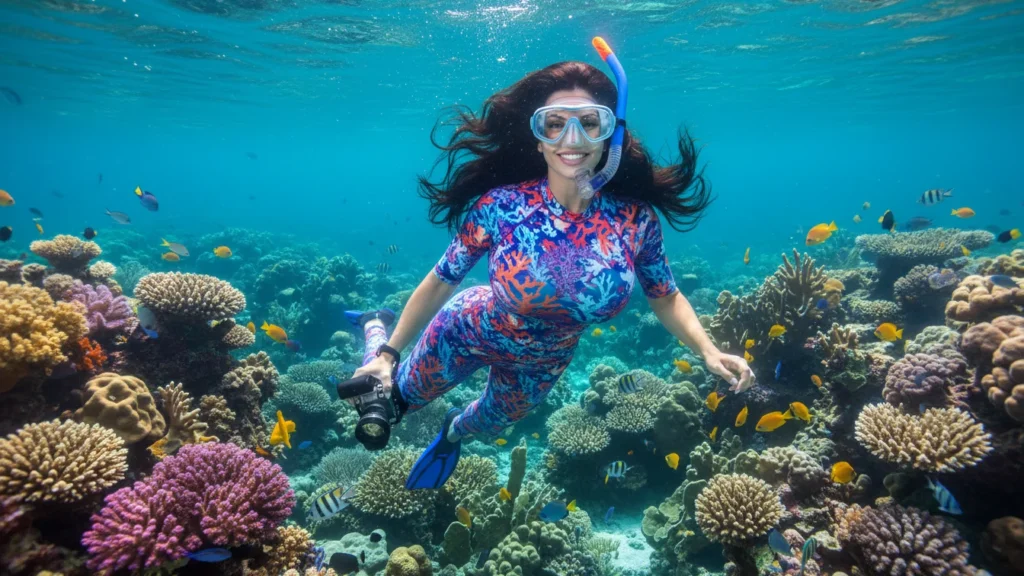
Imagine diving into tropical waters and seeing… emptiness.
No branching corals.
No darting fish.
No complex underwater cities.
Just bare rock, algae, and open water.
Coral reefs cover a tiny fraction of the ocean floor, yet they support an outsized share of ocean life. If they vanished, the change wouldn’t be loud or immediate. It would be quiet, cascading, and global — unfolding through ecosystems, coastlines, and human societies in ways most people never see.
What Coral Reefs Really Are (Beyond the Beauty)
Coral reefs are often described as underwater gardens.
Scientifically, they’re closer to living infrastructure.
Built by tiny coral animals over centuries, reefs form rigid structures that create:
- Shelter
- Feeding grounds
- Breeding sites
- Natural barriers
They are not just habitats. They are ecosystem architects.
Remove the structure, and everything built around it begins to destabilize.
Why Coral Reefs Support So Much Life
Coral reefs occupy less than 1% of the ocean floor, yet they support an estimated quarter of all marine species.
They do this by offering:
- Countless hiding places
- Surfaces for algae and microorganisms
- Complex food chains packed into small areas
A reef is like a high-rise city compared to the open ocean’s vast plains.
Without reefs, the ocean doesn’t become empty — but it becomes far simpler.
The Immediate Biological Ripple
If coral reefs vanished, the first impact would be local — and fast.
Species that rely directly on coral structure would lose:
- Shelter from predators
- Spawning sites
- Reliable food sources
Fish populations would decline rapidly, not because the ocean ran out of water or oxygen, but because the architecture of survival disappeared.
Many species would migrate. Others would simply fade out.
How Food Webs Would Reshape
Reefs are central nodes in marine food webs.
They connect:
- Small grazers
- Mid-level predators
- Large roaming species
When reefs vanish, these links break.
Fish that depend on reef species lose prey. Predators shift ranges or decline. Energy flow through the system slows.
The ocean wouldn’t collapse overnight — but it would reorganize into a less productive state.
What Happens to Coastal Protection
Coral reefs act as natural breakwaters.
They absorb wave energy before it reaches shore, reducing erosion and storm damage.
Without reefs:
- Waves hit coastlines with greater force
- Shorelines erode faster
- Low-lying areas become more vulnerable
This protection isn’t abstract. It’s measurable.
Many tropical coastlines exist in their current form because reefs quietly dissipate energy every day.
Why Beaches Would Change Shape
Sand doesn’t just appear on beaches.
In many regions, reef organisms contribute to sand production as they grow, break down, and recycle calcium carbonate.
Without reefs:
- Sand supply slows
- Beaches thin or retreat
- Shorelines become rockier or more unstable
The loss wouldn’t be dramatic at first — just a gradual reshaping that becomes obvious over decades.
The Human Food Connection
Hundreds of millions of people rely on reef-associated fisheries for protein and income.
If reefs vanished:
- Local fish catches would drop
- Fishing pressure would shift elsewhere
- Food systems would become less predictable
This isn’t about total global food supply — it’s about local stability.
Reefs support small-scale, coastal food systems that can’t easily be replaced by distant industrial alternatives.
Why Reefs Are Not Easily Replaced
A common misconception is that ecosystems simply “adapt” when something disappears.
Adaptation takes time — often longer than human timescales.
Reefs take centuries to form.
Once gone, they don’t bounce back quickly. Other ecosystems may fill the space, but they don’t perform the same roles with the same efficiency.
Loss isn’t just change.
It’s loss of function.
How Ocean Chemistry Would Shift
Coral reefs influence local water chemistry by cycling carbon and nutrients.
Without them:
- Nutrient balance near coasts would shift
- Algal growth patterns would change
- Water clarity would decrease in some regions
These chemical changes further affect species survival, compounding biological stress.
A Famous Example of What’s at Stake
Consider the Great Barrier Reef.
It’s not just a tourist destination. It’s a massive, living system that:
- Supports thousands of species
- Protects coastlines
- Influences regional fisheries
Its loss wouldn’t be symbolic. It would be systemic.
Why Reef Loss Affects Even Non-Coastal Nations
You don’t need to live near the ocean to be affected.
Reef loss influences:
- Global seafood markets
- Climate-related migration
- Economic stability in coastal regions
- Biodiversity that supports medicine and research
In a connected world, ecological shifts rarely stay local.
The Emotional and Cultural Dimension
For many coastal communities, reefs are part of identity.
They shape:
- Traditions
- Livelihoods
- Stories and rituals
Losing reefs isn’t just ecological — it’s cultural.
Scientific models often track numbers. Lived experience tracks meaning.
Both matter.
Why Reef Loss Would Be Quiet — Not Explosive
There would be no single moment when reefs “vanish.”
Instead:
- Coral diversity declines
- Structure weakens
- Ecosystem services fade
The danger lies in normalization.
Each year feels only slightly worse than the last — until the system no longer resembles what it once was.
A Comparison: Ocean With Reefs vs Without Reefs
| Aspect | With Coral Reefs | Without Coral Reefs |
|---|---|---|
| Biodiversity | Extremely high | Significantly reduced |
| Coastal protection | Strong | Weak |
| Fish productivity | Concentrated and stable | Dispersed and lower |
| Shoreline stability | Maintained | Increasing erosion |
| Ecosystem complexity | High | Simplified |
Common Misunderstandings About Coral Reefs
“Reefs only matter for tropical fish.”
They influence global systems far beyond local species.
“If reefs vanish, something else will replace them.”
Replacement doesn’t equal equivalence.
“Humans can fully engineer substitutes.”
Artificial structures can help locally but don’t replicate full reef function.
Understanding these distinctions prevents oversimplification.
Why This Matters Today
Coral reefs sit at the intersection of biology, climate, and human systems.
Their fate reflects how tightly linked Earth’s systems are — and how small changes can propagate outward.
Even if you never see a reef, you live in a world shaped by the stability they provide.
Their loss wouldn’t just change the ocean.
It would change how the planet works.
Key Takeaways
- Coral reefs are ecosystem builders, not just habitats
- Their loss would simplify ocean food webs
- Coastlines would face greater erosion and instability
- Human food systems would lose local resilience
- Reef loss creates long-term, global ripple effects
Frequently Asked Questions
Would the ocean become empty without coral reefs?
No, but it would support far fewer species in many regions.
Can other ecosystems replace coral reefs?
They can occupy space, but they don’t perform the same functions.
Would reef loss affect people far from the coast?
Yes, through food systems, economies, and climate-related impacts.
Why do reefs take so long to recover?
They are built slowly by living organisms over centuries.
Are coral reefs only important for biodiversity?
No — they also protect coastlines and support human communities.
A Calm Way to Think About Reef Loss
Coral reefs are not fragile ornaments.
They are load-bearing systems — holding together networks of life, chemistry, and human reliance.
If they vanished, the ocean wouldn’t collapse overnight.
It would slowly lose its richness, its buffering capacity, and its resilience.
The true impact wouldn’t be a dramatic ending —
but a quieter, simpler world beneath the waves, and a less stable one above them.
Disclaimer: This article explains scientific concepts for general educational purposes and is not intended as professional or medical advice.