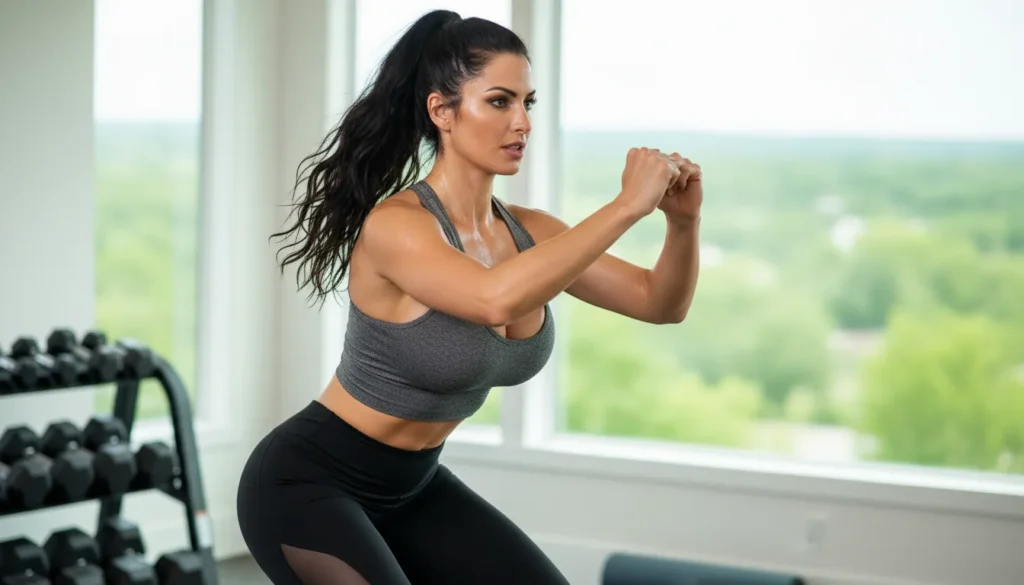
Have you ever started exercising and noticed something surprising?
You’re only a few minutes into a run or workout…
and suddenly, sweat appears everywhere.
Your forehead becomes damp.
Your shirt sticks to your skin.
Your body feels like it turned on a hidden faucet.
And the big question is:
Why does sweating increase so much during exercise?
It’s not random.
It’s not weakness.
And it’s definitely not your body “losing control.”
Sweating is actually one of the most intelligent survival systems humans have.
Your body is doing something remarkable:
It’s protecting you from overheating while keeping your internal world stable.
Let’s explore the fascinating science behind why we sweat more when we move.
Sweating Is Your Body’s Built-In Cooling Technology
The human body works best within a narrow temperature range.
Even though the world around you changes constantly, your body tries to stay around:
37°C (98.6°F)
This balance is called temperature regulation, and it’s one of your body’s top priorities.
Think of your body like a high-performance engine.
Engines generate heat when they run.
So does your body.
And exercise is like pressing the accelerator.
Exercise Creates Heat — A Lot More Than You Realize
When you exercise, your muscles need energy.
To get that energy, your body burns fuel (like glucose and fat) using oxygen.
This process produces:
- Movement
- Power
- And a large amount of heat as a byproduct
Here’s the surprising part:
Only about 20–25% of the energy you use becomes movement.
The rest becomes heat.
That means your body heats up quickly during physical activity.
Without cooling, your temperature would rise dangerously fast.
So your body responds immediately with one of its best tools:
Sweating.
Sweat Is Like Nature’s Air Conditioner
Sweat itself isn’t the main goal.
The real magic happens when sweat evaporates.
When sweat leaves your skin and turns into vapor, it takes heat with it.
That’s called:
It’s the same reason you feel cold stepping out of a pool.
Water evaporates → heat escapes → the surface cools down.
So sweating is not about getting wet.
It’s about preventing overheating.
The Brain Controls Sweating Like a Thermostat
Deep inside your brain is a small but powerful area called the:
You can think of it as your body’s thermostat.
It constantly monitors your internal temperature.
When exercise raises your heat levels, the hypothalamus sends signals:
- Increase skin blood flow
- Activate sweat glands
- Release cooling responses
It’s a rapid automatic system.
You don’t choose to sweat.
Your brain does it for you.
Why Sweating Increases as Exercise Gets Harder
Sweating is proportional.
The harder your muscles work, the more heat they create.
So the body scales up sweat production based on intensity.
That’s why:
- Walking causes light sweating
- Jogging causes more
- Sprinting causes heavy sweating
Your sweat rate increases because your internal engine is running hotter.
It’s your body matching heat output with cooling output.
Sweat Glands: Tiny Cooling Factories Across Your Skin
Your skin contains about 2 to 4 million sweat glands.
There are two main types:
1. Eccrine glands (most important for exercise)
These are spread across most of your body.
They produce watery sweat designed for cooling.
2. Apocrine glands (more active in stress or puberty)
Found in areas like the armpits.
These are not the main players during workouts.
During exercise, eccrine glands dominate.
They release sweat directly onto your skin to cool you down.
Why Sweat Appears Faster in Some People
Have you noticed that some people start sweating quickly, while others don’t?
That difference is completely normal.
Sweating depends on factors like:
- Fitness level
- Genetics
- Body size
- Climate
- Workout intensity
- Sweat gland sensitivity
Some bodies activate sweat faster because they’ve learned to regulate heat efficiently.
In fact, athletes often sweat sooner because their bodies are trained to cool down early.
Sweating isn’t always a sign of being “out of shape.”
Sometimes it’s a sign of being well-adapted.
The Role of Blood Flow: Heat Must Reach the Skin
Sweating isn’t working alone.
Your body also increases blood flow near the skin.
Why?
Because heat is carried through the bloodstream.
When you exercise, your body sends more blood toward your skin surface.
This allows heat to escape more easily.
So cooling happens through two combined strategies:
- Sweat evaporation
- Skin heat release
It’s a coordinated biological response.
Common Misconception: “Sweating Means Fat Is Burning”
This is one of the most common misunderstandings.
Sweat is not fat leaving the body.
Sweating is primarily:
Water + salts
Fat loss happens through long-term energy use, not sweat droplets.
You can sweat heavily without losing significant fat.
Sweat is about temperature control, not weight loss.
Why Humidity Makes Sweat Feel Worse
Have you ever exercised on a humid day and felt drenched?
That’s because evaporation becomes harder.
When the air is already full of moisture, sweat cannot evaporate easily.
So instead of cooling you efficiently, sweat stays on your skin.
That’s why:
- Hot dry climates feel more tolerable
- Humid climates feel heavier and exhausting
Sweat works best when it can evaporate.
Sweat Isn’t Just Water — It’s Chemistry Too
Sweat contains more than just liquid.
It also includes:
- Sodium
- Potassium
- Chloride
- Small amounts of minerals
These help regulate body fluid balance.
That’s why sweat tastes salty.
The body is releasing heat, but also losing electrolytes in the process.
Still, the primary purpose remains cooling.
Why You Keep Sweating After Exercise Ends
Ever finished a workout and wondered:
“Why am I still sweating?”
Because your body is still cooling down.
Even after you stop moving:
- Your temperature remains elevated
- Your metabolism is still active
- Heat is still leaving the muscles
Sweating continues until your internal thermostat returns to baseline.
It’s like a fan running after an engine shuts off.
Sweating Is One of Humanity’s Secret Superpowers
Most mammals cool down by panting.
Humans are different.
We are among the best sweaters on Earth.
Sweating allowed humans historically to:
- Walk long distances
- Run in hot climates
- Stay active without overheating
In evolutionary terms, sweat made endurance possible.
Sweating is not just a workout inconvenience.
It’s a biological advantage.
Why This Matters Today (Evergreen Insight)
Understanding sweating changes how we see our bodies.
Instead of thinking of sweat as embarrassing or unpleasant, it helps to realize:
Sweating is evidence that your body is working intelligently.
It means:
- Your brain is monitoring your internal balance
- Your muscles are producing energy
- Your cooling systems are functioning properly
In modern life, where many people sit indoors, sweating during exercise is a reminder:
Your body still has ancient, brilliant systems designed for movement.
Quick Summary: Why Sweating Increases During Exercise
Sweating increases because:
- Exercise produces large amounts of heat
- The brain detects rising temperature
- Sweat glands release moisture onto the skin
- Evaporation removes heat efficiently
- The body prevents overheating and maintains stability
Sweat is not weakness.
It’s protection.
It’s science.
Sweat Is Your Body’s Way of Staying Safe
Next time you feel sweat building during a workout, remember:
Your body isn’t failing.
It’s functioning beautifully.
Every drop is part of a smart biological design.
Sweating is the language your body uses to say:
“I’m working hard… and I’m keeping you balanced.”