Look up at the night sky.
Those tiny points of light seem eternal—unchanging, peaceful, distant.
But the truth is far more dramatic:
Stars are not forever.
Every star in the universe has a life story.
And one day, every star reaches an ending.
Some fade away quietly.
Others explode with unimaginable energy.
A few collapse into objects so extreme that space and time behave strangely around them.
So what really happens when a star dies?
The answer is one of the most fascinating chapters in all of science—because star death is not just an ending.
It’s how the universe creates its greatest transformations.
Let’s explore what happens when a star dies, step by step, in a clear and human way.
Understanding What a Star Really Is
To understand star death, we first need to understand star life.
A star is essentially a gigantic sphere of hot gas—mostly hydrogen and helium.
At its core, something extraordinary is happening:
Nuclear fusion.
Fusion is the process where small atoms combine into larger ones, releasing enormous energy.
That energy becomes:
- Light
- Heat
- Radiation
- The pressure holding the star up
In a way, a star is like a cosmic engine.
It shines because it is constantly balancing two forces:
- Gravity pulling inward
- Fusion pressure pushing outward
As long as fusion continues, the star remains stable.
But stars don’t have unlimited fuel.
Eventually…
The balance breaks.
The Real Reason Stars Die: Fuel Runs Out
Stars don’t die the way living things do.
They “die” when they can no longer support themselves against gravity.
Think of a campfire.
As long as wood is burning, the fire stays alive.
But once the wood is gone, the fire fades or changes.
A star is similar.
Its “wood” is hydrogen.
Over millions or billions of years, the star slowly consumes its fuel.
When hydrogen in the core begins to run low, the star enters its final phase.
And from here, the star’s fate depends on one major factor:
The Mass of the Star
Mass determines everything.
Small stars die gently.
Massive stars die violently.
Extreme stars leave behind the strangest objects in the cosmos.
Let’s explore each path.
What Happens When a Small Star Dies (Like Our Sun)
Our Sun is considered an average-sized star.
Stars like this have long, steady lives—lasting around 10 billion years.
When they begin to die, they do not explode.
Instead, they change slowly.
Step 1: The Star Becomes a Red Giant
When hydrogen fuel runs low, the core contracts.
Gravity squeezes it tighter.
That increase in pressure causes the outer layers of the star to expand outward dramatically.
The star grows enormous.
It becomes a red giant.
If the Sun became a red giant today, it would stretch close to Earth’s orbit.
This is a common misunderstanding:
✅ Red giants are not hotter.
They look red because their expanded surface cools down.
Step 2: The Star Sheds Its Outer Layers
A red giant cannot hold onto its outer material forever.
Over time, it releases gas into space, creating a glowing cloud called a planetary nebula.
Despite the name, planetary nebulae have nothing to do with planets.
Early astronomers simply thought they looked planet-like through telescopes.
These nebulae are some of the most beautiful objects in space.
They are like cosmic farewell breaths.
Step 3: The Core Becomes a White Dwarf
After the outer layers drift away, what remains is the star’s hot core:
A white dwarf.
White dwarfs are incredibly dense.
Imagine compressing something as massive as the Sun into an object the size of Earth.
That’s a white dwarf.
It no longer produces fusion.
It simply glows from leftover heat, slowly cooling over trillions of years.
So for small stars:
Death is a quiet fading, not an explosion.
What Happens When a Massive Star Dies?
Massive stars live fast and die spectacularly.
They burn through fuel much more quickly—sometimes in just a few million years.
Their deaths are some of the most powerful events in the universe.
Step 1: The Star Builds Heavier Elements
Small stars fuse hydrogen into helium.
But massive stars go much further.
They fuse elements in layers like an onion:
- Hydrogen → Helium
- Helium → Carbon
- Carbon → Oxygen
- Oxygen → Neon
- Neon → Silicon
- Silicon → Iron
This is where things change.
Iron is the turning point.
Why Iron Ends Everything
Fusion produces energy only up to iron.
Trying to fuse iron doesn’t release energy—it consumes it.
So once the star’s core becomes iron…
The star can no longer generate enough outward pressure.
The core collapses in seconds.
The Supernova: The Explosion of a Star’s Death
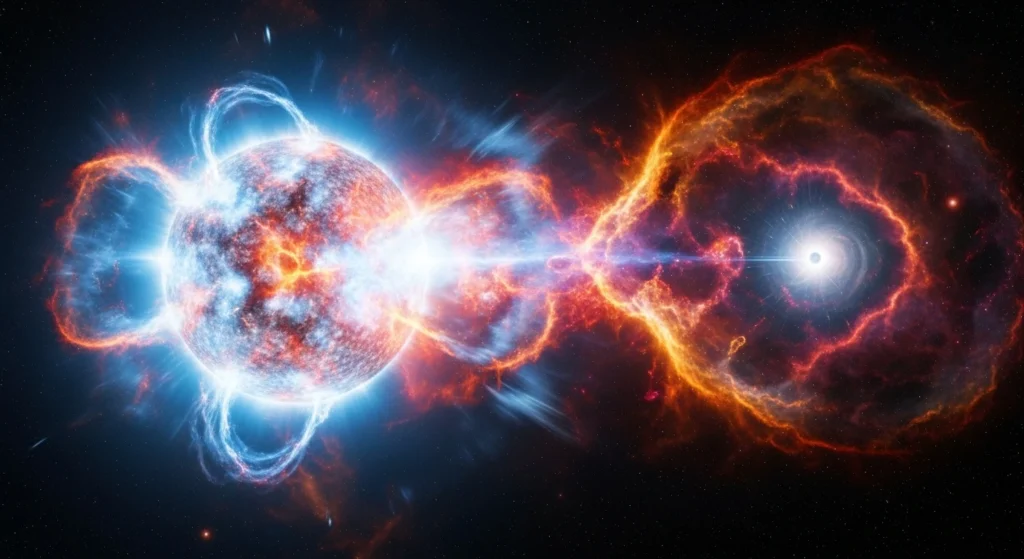
When the core collapses, the collapse triggers a massive shockwave.
The star explodes in a supernova.
A supernova can briefly outshine an entire galaxy.
It releases:
- Light
- Energy
- Heavy elements
- Powerful radiation
Supernovas are not just destruction.
They are creation events.
Because supernovas are how the universe spreads elements like:
- Gold
- Silver
- Uranium
- Oxygen
- Calcium
- Iron
In fact…
The atoms in your bones were forged in dying stars.
That is not poetry.
That is chemistry.
What Happens After a Supernova?
After the explosion, the star’s core remains.
And again, mass determines the outcome.
Neutron Stars: The Universe’s Densest Objects
If the remaining core is heavy—but not too heavy—it becomes a neutron star.
Neutron stars are astonishing.
They pack more mass than the Sun into a sphere only about 20 kilometers wide.
A teaspoon of neutron star material would weigh billions of tons on Earth.
Neutron stars are made almost entirely of neutrons—particles squeezed tightly together.
Some neutron stars spin rapidly and emit beams of radiation.
These are called pulsars, like cosmic lighthouses.
Black Holes: When Gravity Completely Takes Over
If the star’s core is even more massive, not even neutrons can resist gravity.
The core collapses endlessly.
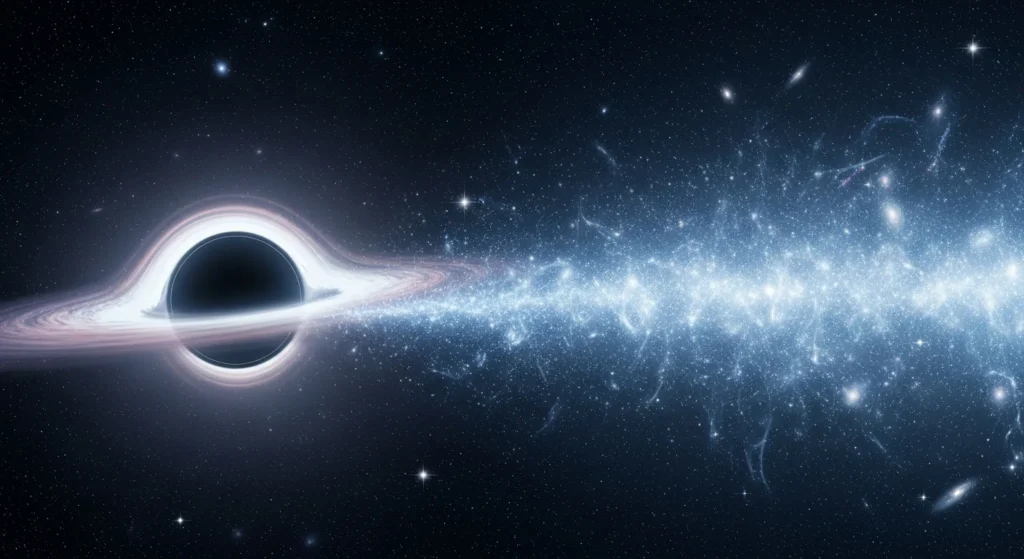
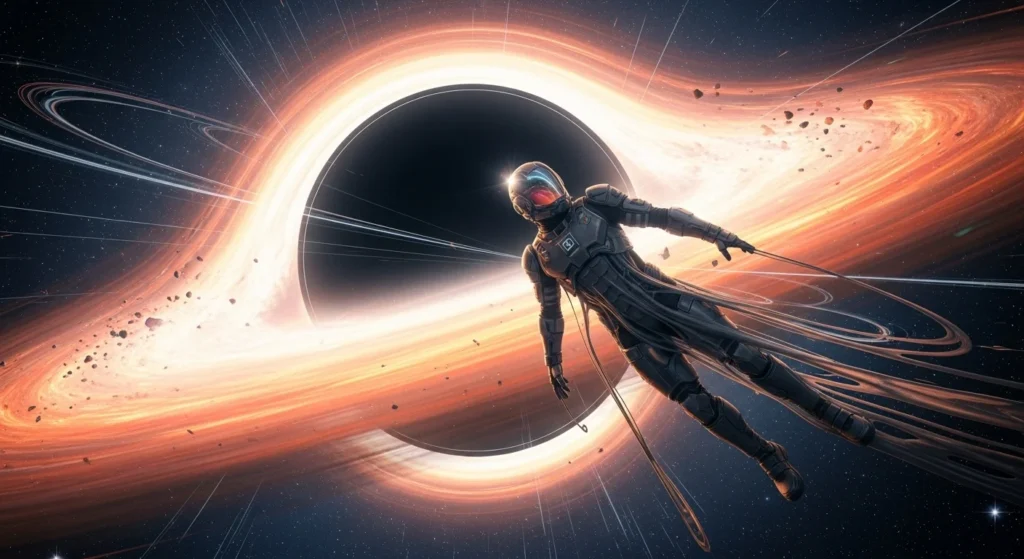
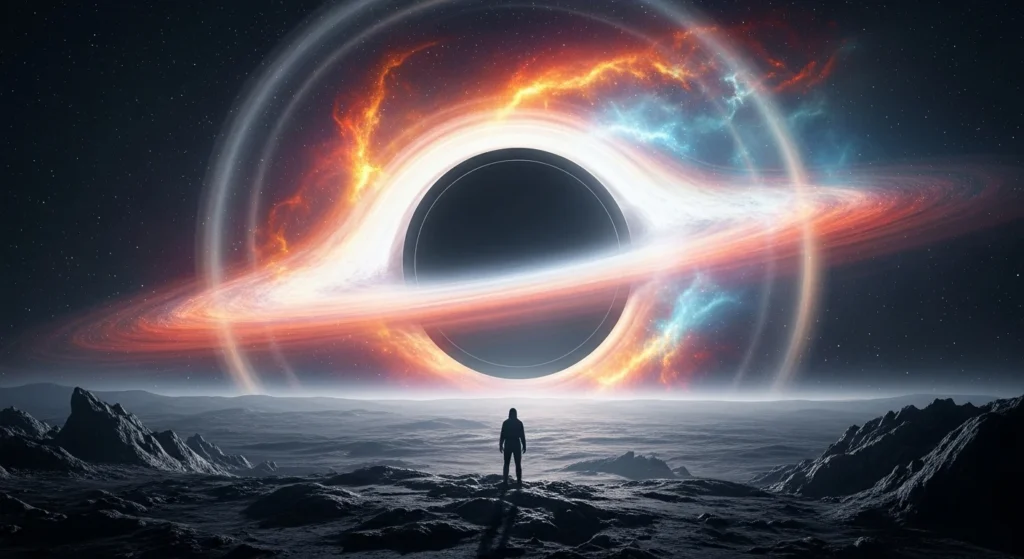
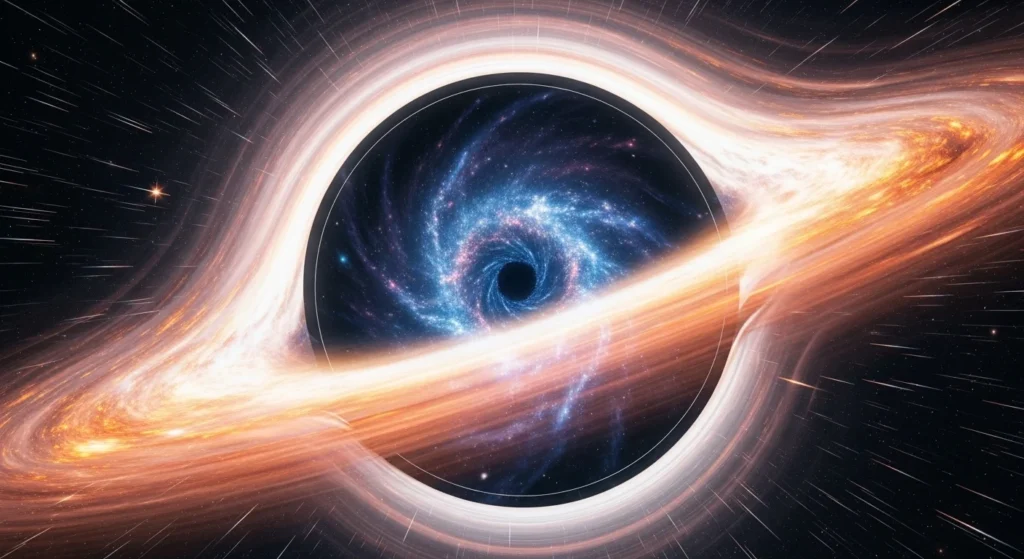
It forms a black hole.
A black hole is not a vacuum cleaner sucking everything in.
That’s a common misconception.
Black holes behave like normal massive objects unless you get extremely close.
What makes them unique is the event horizon:
A boundary beyond which not even light can escape.
Black holes represent the most extreme outcome of star death.
Gravity becomes absolute.
Common Misunderstandings About Star Death
Let’s clear up a few popular myths.
Myth 1: The Sun Will Explode in a Supernova
No. The Sun is not massive enough.
It will become a red giant, then a white dwarf.
Myth 2: Black Holes Destroy Everything
Black holes don’t roam space eating galaxies.
They form from specific massive stars and mostly remain stable.
Myth 3: Star Death Means the Star Vanishes
Not at all.
Stars leave behind:
- White dwarfs
- Neutron stars
- Black holes
- Nebulae full of elements
Star death reshapes the universe.
Why This Matters Today (Evergreen Perspective)
Star death might seem distant, but it affects everything around us.
Because dying stars are the reason we have:
- Oxygen to breathe
- Carbon in our bodies
- Iron in our blood
- Calcium in our bones
- Elements that form planets
The universe began with mostly hydrogen and helium.
Everything else came later—through stars living and dying.
So understanding what happens when a star dies is really understanding:
Where the universe gets its complexity… and where we come from.
The Universe Runs on Recycling
A star’s death is not a cosmic tragedy.
It’s part of an ongoing cycle.
Like forests that burn and regrow…
Stars end so that new stars can form.
Nebulae created by dying stars become the birthplace of future solar systems.
Star death is how the universe evolves.
Not just toward darkness…
But toward diversity, chemistry, and possibility.
Final Thought: Every Ending Is Also a Beginning
When a star dies, it doesn’t simply disappear.
It transforms:
- Into a fading white dwarf
- Into a neutron star spinning like a beacon
- Into a black hole bending space itself
- Into an explosion that seeds the cosmos with new elements
The night sky is not a static ceiling.
It is a living timeline of stellar life and death.
And every atom in you carries the history of stars that ended long ago.
In the universe…
Even death is part of creation.