“The Frozen Parts of Earth We Rarely Think About”
Ice feels distant to most people.
Glaciers sit far away.
Ice sheets belong to the poles.
Sea ice comes and goes beyond daily attention.
But ice is not just frozen water sitting harmlessly on the planet.
It is a structural component of Earth’s systems.
If all of it melted at once — glaciers, ice sheets, sea ice, mountain ice — Earth would not explode or crack apart.
Instead, the planet would quietly reorganize itself in ways that would slowly become impossible to ignore.
First, What Counts as “All Ice”?
When scientists talk about Earth’s ice, they mean several different forms:
- Ice sheets (Antarctica and Greenland)
- Mountain glaciers
- Sea ice floating on oceans
- Permanent snow and permafrost ice
Not all ice affects the planet in the same way.
Floating ice behaves differently from ice resting on land — and this distinction matters more than most people realize.
The Immediate Change: Sea Levels Would Rise Dramatically
The most visible result would be sea-level rise.
Here’s the key point:
- Melting sea ice does not raise sea level (it already floats)
- Melting land ice does raise sea level
If all land-based ice melted:
- Global sea levels would rise by about 65–70 meters (over 200 feet)
This wouldn’t be a wave or a flood.
It would be a permanent reshaping of coastlines.
What Coastlines Would Look Like Afterward
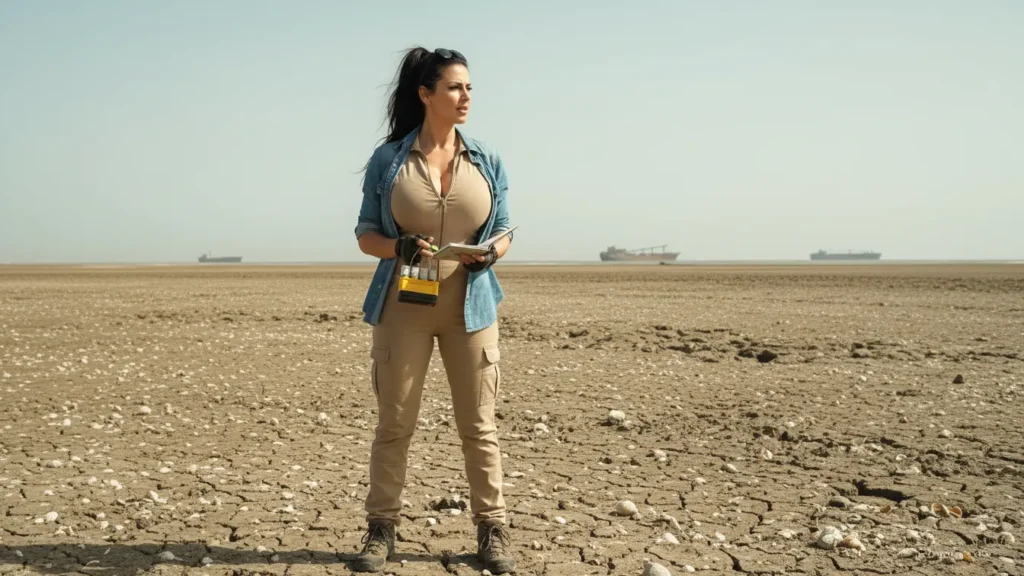
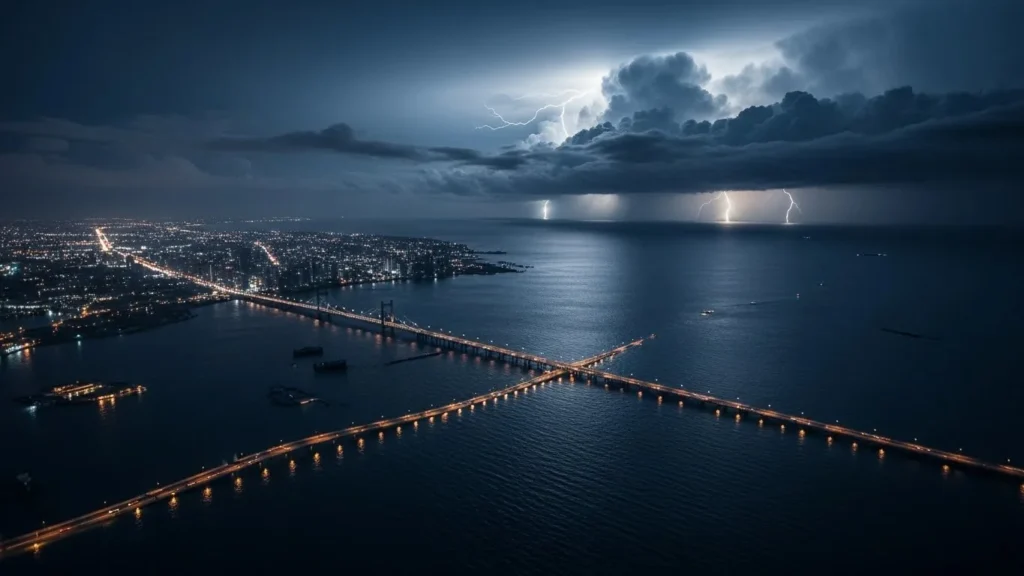
Many familiar coastal areas would disappear underwater.
Not instantly — but completely.
Large portions of:
- Coastal cities
- River deltas
- Low-lying islands
would become submerged.
New coastlines would form farther inland.
Mountains would become islands.
Plains would become shallow seas.
Earth wouldn’t lose land — it would redistribute it.
A Common Misunderstanding: “The Ocean Would Spill Over”
This sounds intuitive — but it’s wrong.
Oceans wouldn’t overflow the planet.
Water would simply spread evenly across Earth’s surface, following gravity and terrain.
There’s no “edge” for water to fall off.
The planet would still be balanced — just wetter in some places and drier in others.
The Weight of Ice Matters More Than You Think
Ice isn’t just cold — it’s heavy.
Ice sheets press down on Earth’s crust with immense force.
When that weight disappears:
- Land beneath former ice sheets would slowly rise
- The crust would rebound upward over thousands of years
- This process is called isostatic rebound
Regions like Antarctica and parts of North America would gradually lift themselves higher.
Earth’s surface would adjust — slowly, but continuously.
Ocean Circulation Would Change Quietly but Profoundly
Melting all ice would release enormous amounts of fresh water into the oceans.
Fresh water is less dense than salt water.
That matters because ocean circulation depends on density differences.
With sudden freshening:
- Deep ocean currents would weaken
- Heat distribution across the planet would change
- Some regions would warm, others could cool
This isn’t about chaos — it’s about rebalancing energy across the globe.
Climate Patterns Would Shift, Not Collapse
Ice reflects sunlight.
This reflectivity is called albedo.
When ice disappears:
- Darker land and ocean surfaces absorb more heat
- Regional temperatures rise
- Weather patterns slowly adjust
This creates a feedback loop — but not an instant runaway.
Earth’s climate system responds gradually, adjusting over decades to centuries.
Life Would Not Instantly Vanish
This is one of the biggest fears — and one of the biggest misconceptions.
Life on Earth is adaptable.
If all ice melted:
- Polar ecosystems would disappear
- Coastal ecosystems would relocate
- Many species would migrate or adapt
Some species would struggle.
Others would expand into newly available regions.
Earth has experienced dramatic climate shifts before — and life persisted through them.
Comparing Earth Before and After All Ice Melts
| System | Earth With Ice | Earth Without Ice |
|---|---|---|
| Sea level | Stable coastlines | +65–70 meters |
| Surface reflectivity | High (ice reflects light) | Lower heat reflection |
| Ocean circulation | Strong global currents | Altered, weaker circulation |
| Crust pressure | Ice-weighted | Gradual land rebound |
| Ecosystems | Polar and alpine ice-based | Shifted, redistributed |
The Atmosphere Would Stay — But Behave Differently
Earth’s atmosphere would not escape into space.
Gravity remains the same.
But atmospheric circulation would adjust because:
- Temperature gradients change
- Ocean heat transport changes
- Land–sea distributions shift
Wind patterns, rainfall zones, and seasonal cycles would slowly reorganize.
Weather wouldn’t stop — it would relocate.
Why “All at Once” Is the Most Unrealistic Part
In reality, ice cannot melt all at once.
Melting requires energy — enormous energy.
Earth’s ice exists precisely because the planet cannot easily supply that energy quickly.
Ice melt, in real conditions, happens over:
- Decades
- Centuries
- Millennia
This thought experiment helps illustrate why ice is such a powerful stabilizer of Earth’s systems.
Why This Matters Today
Ice is more than frozen scenery.
It regulates:
- Sea levels
- Climate balance
- Ocean circulation
- Long-term habitability
Understanding ice helps explain why Earth has remained livable for so long — and why slow changes matter more than sudden ones.
Ice works quietly.
So do its consequences.
Frequently Asked Questions
1. Would Earth flood completely if all ice melted?
No. Large areas of land would remain above sea level.
2. Would melting ice change Earth’s gravity?
No. Gravity depends on Earth’s mass, not ice distribution.
3. Would oceans become freshwater?
No. Oceans would remain salty, though surface salinity would change.
4. Would weather become extreme everywhere?
Not everywhere. Patterns would shift, not uniformly intensify.
5. Has Earth ever been mostly ice-free before?
Yes. In the distant past, Earth experienced warm periods with little or no permanent ice.
Key Takeaways
- Only land ice raises sea levels when it melts
- Sea levels would rise about 65–70 meters globally
- Earth’s crust would slowly rebound after ice loss
- Climate and ocean systems would rebalance over time
- Life would adapt, not disappear overnight
A Calm Look at a Drastic Scenario
The idea of all ice melting sounds dramatic because ice feels like Earth’s safety net.
But science tells a calmer story.
Earth would not break.
The oceans would not spill away.
Life would not instantly end.
The planet would do what it has always done — adjust, rebalance, and continue.
Ice shapes Earth quietly.
And even without it, Earth would remain a living, changing world.
Disclaimer: This article explains scientific concepts for general educational purposes and is not intended as professional or medical advice.