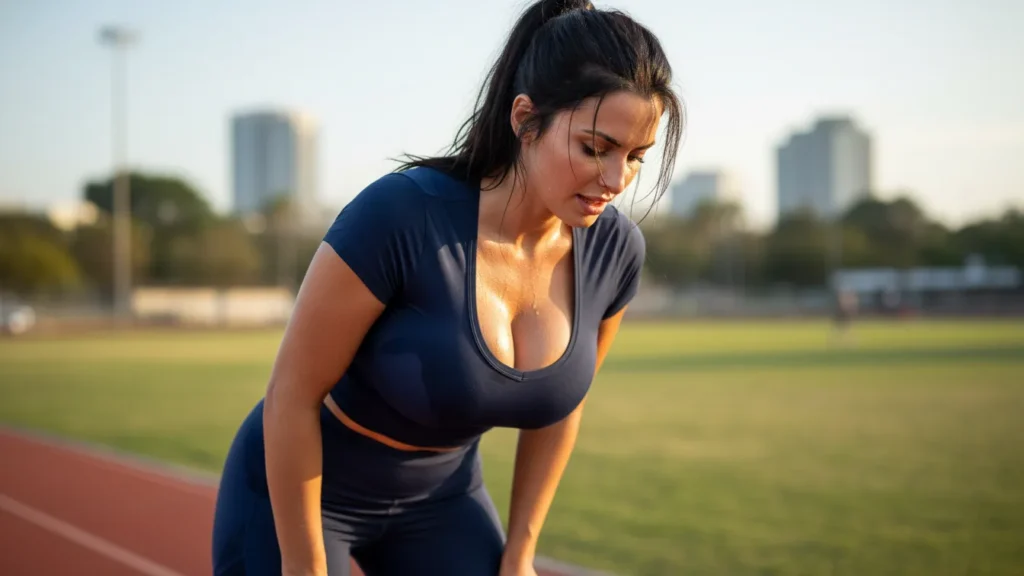
“That Cool Feeling After You Start Sweating”
You step into the sun.
You exercise for a few minutes.
Your skin becomes damp.
Then something noticeable happens.
Even though it’s still hot around you, your body starts to feel cooler.
Sweat doesn’t look powerful.
It’s just water on the skin.
Yet it’s one of the most effective temperature-control systems found in nature.
Sweat cools the body not by being cold — but by carrying heat away in a very specific way.
The Core Problem the Body Is Always Solving
The human body works best within a narrow temperature range.
Every movement, thought, and muscle contraction produces heat.
Without a way to release that heat:
- Body temperature would keep rising
- Internal processes would lose balance
- Physical performance would drop quickly
So the body needs a controlled exit route for heat.
Sweating is that route.
What Sweat Actually Is (And What It Isn’t)
Sweat is mostly water, mixed with small amounts of salts and minerals.
Importantly:
- Sweat is not meant to hydrate the skin
- Sweat is not meant to cool by temperature alone
- Sweat is not waste removal
Its primary role is heat management.
Water was chosen because of a special physical property:
It absorbs a lot of energy when it changes state.
The Key Process: Evaporation
The cooling power of sweat comes from evaporation.
Evaporation happens when liquid water turns into water vapor.
But this change doesn’t happen for free.
To evaporate, water must absorb energy.
That energy comes from heat — specifically, heat from your skin.
Why Evaporation Removes Heat
Here’s the simple idea:
- Faster-moving water molecules escape into the air
- Those fast molecules carry energy with them
- The remaining water molecules move more slowly
- Slower movement means lower temperature
As sweat evaporates, it literally steals heat from your body.
That’s why evaporation feels cooling, even on a warm day.
Why Sweat on Your Skin Works Better Than Water in the Air
You may have noticed this:
- Wet skin in dry air feels cool
- Wet skin in humid air feels sticky and hot
That difference matters.
Evaporation works best when:
- The surrounding air is dry
- Water vapor can escape easily
When the air is already full of moisture, evaporation slows — and cooling becomes less effective.
Why Moving Air Makes You Feel Cooler
Fans don’t lower temperature.
They increase evaporation.
Moving air:
- Carries away water vapor
- Makes room for more evaporation
- Speeds up heat loss
That’s why a breeze feels refreshing when you’re sweaty, even if the air itself isn’t cold.
How the Body Knows When to Start Sweating
The body constantly monitors its internal temperature.
When it begins to rise:
- Temperature sensors detect the change
- Signals are sent to sweat glands
- Sweat is released onto the skin
- Evaporation begins
- Heat is carried away
This process starts quietly and increases only when needed.
Why Sweat Appears Before You Feel Overheated
Sweating often begins before you feel too hot.
That’s intentional.
It allows the body to:
- Prevent overheating
- Stabilize temperature early
- Avoid sudden spikes
In this way, sweating is proactive, not reactive.
A Simple Comparison Table
| Situation | Evaporation Speed | Cooling Effect |
|---|---|---|
| Dry air, breeze | Fast | Strong |
| Dry air, still | Moderate | Good |
| Humid air | Slow | Weak |
| No evaporation | None | No cooling |
| Moving air + sweat | Very fast | Maximum cooling |
Sweat only works when it can evaporate.
Why Sweat Feels Warm at First
When sweat first appears, it may feel warm or sticky.
That’s because:
- It hasn’t evaporated yet
- Heat is still present in the liquid
- Cooling starts only after evaporation begins
The cooling sensation comes after sweat begins to dry.
Common Misunderstanding: “Sweat Is Cold”
Sweat is usually close to body temperature.
It doesn’t cool because it’s cold.
It cools because it removes heat during evaporation.
This distinction explains why:
- Cold water cools briefly
- Evaporating water cools continuously
The effect depends on phase change, not temperature alone.
Why Humans Rely So Heavily on Sweating
Many animals cool themselves differently.
Some pant.
Some rest in shade.
Some rely on fur insulation patterns.
Humans are unique in using widespread sweating across most of the body.
This allows:
- Long-duration physical activity
- Heat regulation during endurance movement
- Fine control over body temperature
It’s one reason humans can remain active in warm conditions.
Why Sweat Stops Cooling Once You’re Fully Soaked
If sweat drips off without evaporating, cooling efficiency drops.
Dripping sweat:
- Leaves the skin too quickly
- Doesn’t absorb enough heat
- Provides less cooling
Evaporation on the skin surface is what matters — not the amount of sweat produced.
Everyday Examples You’ve Probably Noticed
You’ve experienced sweat cooling many times:
- Feeling cooler after a workout once sweat dries
- Feeling chilled when sweaty in air conditioning
- Feeling hotter in humid weather despite sweating
- Feeling refreshed when wind hits sweaty skin
Each example comes back to evaporation and heat loss.
Why This Matters Today
Modern life often separates people from natural cues.
Understanding sweat cooling explains:
- Why humidity feels oppressive
- Why airflow improves comfort
- Why clothing choices affect temperature perception
- Why still air feels hotter than moving air
It shows that comfort depends on heat exchange, not just temperature numbers.
Frequently Asked Questions (FAQ)
1. Does sweating cool the body instantly?
No. Cooling happens as sweat evaporates, not when it first appears.
2. Why do some people sweat more than others?
Sweat production varies naturally and doesn’t directly equal cooling efficiency.
3. Can sweat cool you in cold weather?
Yes — sometimes too much, which is why wet skin can feel chilling in cool air.
4. Why does sweat feel sticky in humidity?
High moisture in the air slows evaporation, reducing cooling.
5. Is evaporation the only way the body loses heat?
No. The body also loses heat through radiation, breathing, and contact with cooler surfaces.
Key Takeaways
- Sweat cools the body through evaporation
- Evaporation removes heat from the skin
- Moving air increases cooling efficiency
- Humidity reduces sweat’s cooling power
- Sweat is a heat-management tool, not cold liquid
- Cooling depends on phase change, not temperature alone
Conclusion: A Cooling System Built Into Every Drop
Sweat may seem simple, but it’s the result of precise physics and biology working together.
Each drop is a tiny heat-carrier, designed to leave your body and take excess warmth with it.
The next time you feel sweat cooling your skin, you’re not just feeling moisture.
You’re feeling energy quietly leaving your body — exactly as it’s supposed to.
Disclaimer: This article explains scientific concepts for general educational purposes and is not intended as professional or medical advice.





Pingback: Why You Feel Thirst Before Dehydration — The Body’s Built-In Early Warning System