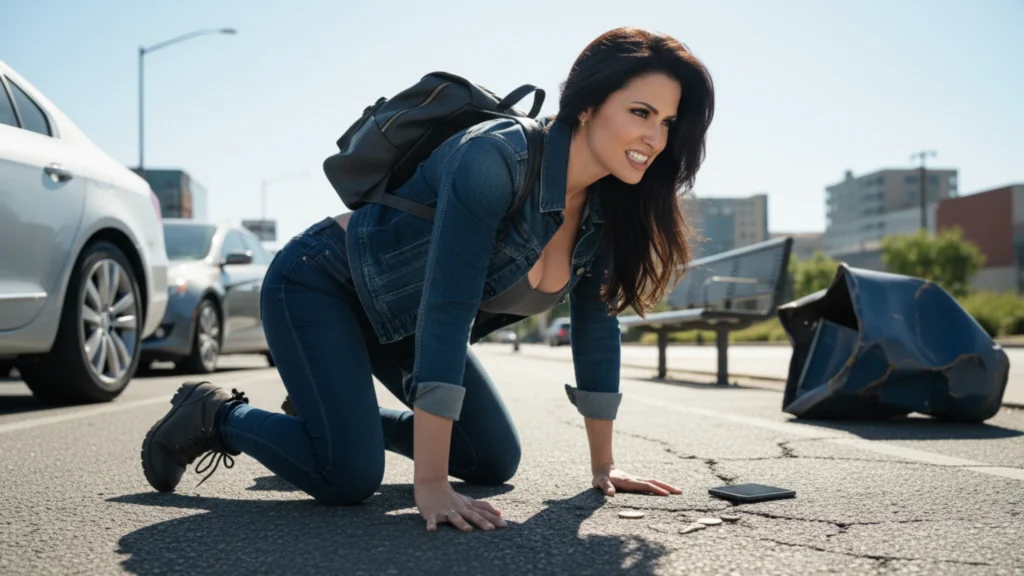
“Imagine Waking Up in a Heavier World”
You step out of bed.
Your body feels heavier than usual.
Standing up takes more effort.
Every movement feels slightly slower.
Nothing looks different — yet everything feels different.
👉 If gravity suddenly became stronger, the change wouldn’t arrive with explosions or chaos. It would arrive as weight.
To understand how stronger gravity would affect the world, we need to explore how gravity quietly shapes movement, structures, biology, and the planet itself — every second of every day.
First, What Do We Mean by “Stronger Gravity”?
Gravity is the force that pulls objects toward each other.
On Earth, gravity gives everything weight and keeps us grounded.
In this thought experiment:
- Earth’s gravity suddenly increases
- The planet’s size stays the same
- Air, oceans, and physics continue normally
- Gravity returns to normal later
Think of it as turning up gravity like a dimmer switch — not flipping it off or on.
Even a small increase would have noticeable effects.
Why Gravity Shapes Everyday Life More Than We Notice
Gravity is always working, but because it’s constant, we rarely feel it.
It determines:
- How fast objects fall
- How hard muscles must work
- How tall buildings can stand
- How water flows and settles
When gravity changes, these systems must immediately adjust.
Stronger gravity doesn’t just pull harder — it reshapes balance, effort, and stability.
What Happens to the Human Body First
The most immediate effect would be on your body.
With stronger gravity:
- Your weight increases instantly
- Muscles work harder to move
- Joints feel more load
- Posture becomes harder to maintain
Simple actions like walking, lifting objects, or climbing stairs would require noticeably more effort.
Not because muscles fail — but because gravity is asking more of them.
Why Movement Feels Slower Under Stronger Gravity
Movement depends on force overcoming resistance.
When gravity increases:
- Each step requires more upward force
- Jumps become shorter or impossible
- Falls happen faster and hit harder
It’s similar to wearing a heavy backpack all the time — except the weight affects your entire body.
The laws of motion stay the same, but the conditions change.
How Stronger Gravity Affects Balance and Coordination
Balance depends on subtle muscle adjustments.
With stronger gravity:
- Tiny balance corrections require more effort
- Fatigue sets in faster
- Reaction times feel slower
The brain must constantly compensate for the added pull.
This makes coordination feel harder — even though nothing is “wrong.”
What Happens to Objects and Buildings
Stronger gravity doesn’t just affect living things.
It affects everything with mass.
Buildings, bridges, and structures would experience:
- Increased downward force
- Higher stress on supports
- Reduced safety margins
Structures designed for normal gravity might crack, bend, or fail — especially tall or heavy ones.
Not instantly everywhere, but gradually where stress was already close to limits.
Why Falling Becomes More Dangerous
Under stronger gravity:
- Objects fall faster
- Impact forces increase
- Dropping small items becomes risky
A fall from standing height would deliver more force to the ground.
This is because gravity accelerates objects downward more aggressively.
The distance doesn’t change — the energy at impact does.
What Happens to the Air and Atmosphere
Gravity holds Earth’s atmosphere in place.
If gravity becomes stronger:
- Air is pulled closer to the surface
- Atmospheric pressure increases slightly
- Breathing feels heavier
The air wouldn’t disappear — but it would become denser near ground level.
This could subtly change how sound travels and how wind behaves.
How Oceans and Water Respond to Stronger Gravity
Water responds quickly to gravity.
With increased gravity:
- Ocean water settles more tightly
- Waves become shorter and heavier
- Water flows downhill faster
Tides could change slightly because gravity affects how water redistributes across the planet.
Rivers would flow more forcefully, reshaping landscapes over time.
The Effect on Plants and Trees
Plants evolved under Earth’s current gravity.
With stronger gravity:
- Trees struggle to grow tall
- Stems thicken to support weight
- Leaves hang lower
Plants would adapt by growing shorter and sturdier.
Tall, delicate structures become harder to support when gravity increases.
How Stronger Gravity Changes Animals
Animals rely on muscle strength relative to body weight.
If gravity increases:
- Larger animals struggle more
- Smaller, compact animals cope better
- Jumping and flying become harder
Flight becomes especially difficult because wings must generate more lift to overcome increased pull.
Birds would need stronger wings or shorter flight times.
Why Bones and Muscles Are Affected
Bones and muscles are built to withstand specific loads.
Under stronger gravity:
- Bones experience higher stress
- Muscles fatigue faster
- Posture becomes more demanding
Over time, bodies might adapt by becoming denser and stronger — but sudden change would feel exhausting.
Common Misunderstandings About Stronger Gravity
“Everything Would Be Crushed Instantly”
No. Effects scale gradually with gravity strength.
“Gravity Only Affects Falling”
Gravity influences standing, sitting, breathing, and even circulation.
“Only Humans Would Notice”
All matter with mass responds to gravity — living or not.
A Simple Comparison: Normal vs Stronger Gravity
| Normal Gravity | Stronger Gravity |
|---|---|
| Easy movement | Increased effort |
| Stable structures | Higher structural stress |
| Normal falls | Faster, harder impacts |
| Tall plants | Shorter, sturdier growth |
This comparison shows how deeply gravity shapes daily life.
Why This Matters Beyond Curiosity
Gravity is one of the universe’s most fundamental forces.
Understanding how life depends on it helps explain:
- Why planets have limits
- Why bodies evolved certain shapes
- Why space environments feel so different
It also explains why astronauts train intensely before returning to Earth.
Why This Matters Today
As humans explore space and imagine living on other planets, gravity becomes a key question.
Different gravity levels mean:
- Different movement
- Different architecture
- Different biology
Understanding gravity isn’t abstract — it’s practical knowledge for future exploration.
Key Takeaways
- Gravity determines weight, movement, and structure
- Stronger gravity increases effort for all actions
- Buildings and landscapes experience greater stress
- Living organisms would adapt over time
- Gravity quietly shapes every moment of life
Frequently Asked Questions
Would people be pinned to the ground?
Only if gravity increased dramatically. Small increases cause heaviness, not immobility.
Would time or light change?
No. Gravity affects mass and motion, not time perception in this scenario.
Would airplanes still fly?
Flight becomes harder because lift must overcome stronger pull.
Would oceans spill or disappear?
No. Water redistributes but remains bound to Earth.
Is stronger gravity realistic?
Not suddenly — but planets with stronger gravity do exist.
A Calm Conclusion
Gravity is invisible, constant, and usually unnoticed.
Yet it shapes how we move, build, breathe, and live.
Imagining stronger gravity reveals how finely tuned our world really is — balanced just enough to allow movement without collapse.
The planet doesn’t feel comfortable by accident.
It feels comfortable because gravity, life, and structure evolved together — in quiet harmony.
Disclaimer: This article explains scientific concepts for general educational purposes and is not intended as professional or medical advice.





Pingback: Why Hot Water Sometimes Freezes Faster — The Counterintuitive Science Explained
Pingback: What If Time Travel Became Possible — How Science Says Reality Would Change
Pingback: What If Earth Had Two Moons? The Science Behind a Double-Moon World
Pingback: Why Heavy Objects Don’t Fall Faster — The Simple Physics That Surprises Almost Everyone
Pingback: What If Earth Had Rings Like Saturn — How Life, Skies, and Science Would Change
Pingback: What If Time Suddenly Slowed Down — A Science-Based Look at a Frozen World