What Would Alien Life Actually Look Like? The Most Realistic Answers Science Can Give
When most people imagine alien life, they picture something instantly familiar:
- Big eyes
- Strange limbs
- Flying saucers
- Advanced civilizations
Hollywood has trained our brains to expect aliens to look like futuristic humans.
But science suggests something very different:
Real alien life, if it exists, will probably be simpler, stranger, and far less dramatic than we expect.
The universe is filled with worlds unlike Earth.
And life, if it emerges elsewhere, would be shaped by those environments in ways that may surprise us.
So what would alien life actually look like?
Let’s explore the most realistic scientific possibilities—grounded in biology, evolution, chemistry, and planetary science.
First, Most Alien Life Would Probably Be Microbial
The most important point is also the simplest:
If life exists elsewhere, it is most likely microscopic.
On Earth, life began as single-celled organisms and remained microbial for billions of years.
Even today, most life on Earth is still microbial:
- Bacteria
- Archaea
- Simple ocean microbes
Complex animals appeared very late in Earth’s history.
So statistically, the universe is far more likely to contain:
✅ Alien microbes
Than advanced alien civilizations
Real-life comparison
If Earth’s history were a 24-hour day, humans appear only in the last few seconds.
Microbes dominate the timeline.
Alien Life Would Be Shaped by Its Environment
Life is not random.
It adapts to conditions.
That means alien life would be molded by factors like:
- Gravity
- Atmosphere
- Temperature
- Available chemistry
- Energy sources
- Liquid solvents
On Earth, organisms look different in oceans, deserts, jungles, and ice.
Now imagine worlds even more extreme.
Alien biology would reflect its planet the way Earth biology reflects ours.
The Most Likely Alien Habitats Aren’t Alien Cities—They’re Hidden Oceans
Some of the best places to search for life may be ocean worlds beneath ice.
In our solar system alone, several moons likely contain deep subsurface oceans:
These oceans are dark, sealed, and warmed by tidal heating.
If life exists there, it might resemble Earth’s deep-sea life near hydrothermal vents.
Possible alien organisms there could be:
- Microbial mats
- Worm-like creatures
- Slow-moving scavengers
- Chemosynthetic ecosystems
Not space monsters—more like deep-ocean biology.
Alien Life Might Not Use Sunlight at All
When people think of life, they think of sunlight and photosynthesis.
But Earth shows another option:
Chemosynthesis
Deep beneath the ocean, ecosystems thrive without sunlight by using chemical energy from Earth’s interior.
Life elsewhere could do the same.
On a planet with:
- Volcanic activity
- Subsurface oceans
- Chemical gradients
Life could exist entirely underground.
So alien life might not live on the surface.
It could be hidden.
Would Alien Life Be Carbon-Based Like Us?
Carbon is the backbone of life on Earth because it forms complex molecules easily.
Most scientists believe carbon-based life is the most likely elsewhere too, because carbon chemistry is extremely versatile.
But alternative possibilities include:
- Silicon-based chemistry (less likely, but sometimes discussed)
- Exotic biochemical solvents
However, science suggests:
Alien life may be chemically familiar, even if biologically unfamiliar.
The laws of chemistry are universal.
Alien Life Might Breathe Something Very Different
If alien life exists, its “air” could be nothing like ours.
On Earth:
- We breathe oxygen
- Plants produce oxygen
But oxygen is reactive and not guaranteed elsewhere.
Alien organisms might use:
- Methane respiration
- Sulfur-based metabolism
- Hydrogen chemistry
- Ammonia cycles
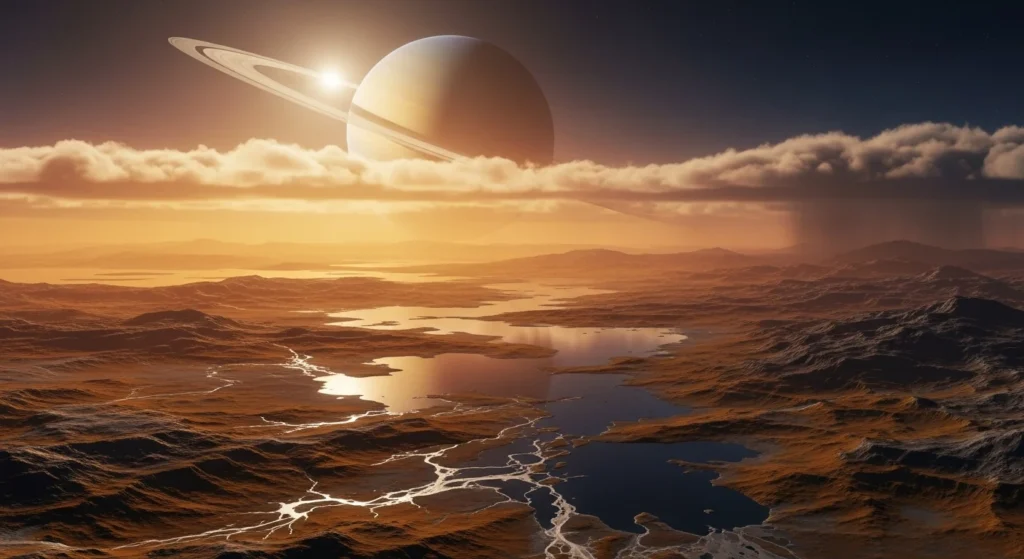
Titan, for example, has methane lakes and organic-rich chemistry.
Life there—if possible—would be radically different in metabolism.
What Would Alien Animals Look Like?
If complex life evolved, what might it look like?
Science can’t predict exact forms, but evolution offers patterns.
Convergent evolution
On Earth, unrelated species often evolve similar solutions:
- Wings (birds, bats, insects)
- Eyes (multiple lineages)
- Streamlined bodies (fish, dolphins)
So on other planets, we might expect:
- Sensory organs
- Locomotion structures
- Efficient shapes
Not because aliens would resemble Earth animals…
But because physics shapes survival.
Gravity Would Change Alien Body Design
On high-gravity planets:
- Creatures may be shorter and stronger
- Flight would be harder
- Movement would be compact
On low-gravity worlds:
- Organisms could grow taller
- Leaping might replace walking
- Flight could be easier
So alien bodies might reflect their planet’s gravity the way Earth animals reflect ours.
Alien Life Might Not Have Faces
Humans instinctively expect faces, because we are social primates.
But faces are not inevitable.
Alien organisms could be:
- Radial like starfish
- Colony-like like coral
- Plant-animal hybrids
- Floating organisms with no clear “head”
Life doesn’t need a face.
It needs function.
Intelligence Might Be Rare
A major misunderstanding is that alien life automatically means intelligent beings.
On Earth:
- Life is common
- Intelligence at a human level is extremely rare
Dinosaurs ruled for 160 million years without building radios.
So alien worlds might have:
- Rich ecosystems
- Complex creatures
- No technological civilization
Intelligence is not evolution’s guaranteed outcome.
What Would Alien Ecosystems Feel Like?
An alien biosphere might include:
- Purple or black “plants” under different star light
- Slow metabolisms on cold worlds
- Bioluminescent oceans
- Microbial skies on gas giants (speculative but studied)
- Forest-like chemistry we wouldn’t recognize immediately
Alien life could be subtle.
Not dramatic.
Not obvious.
Mistakes to Avoid When Imagining Alien Life
Mistake 1: Expecting humanoids
Humanoid aliens are storytelling, not biology.
Mistake 2: Assuming aliens are advanced
Most life would likely be microbial.
Mistake 3: Thinking life must live on the surface
Subsurface oceans may be more promising.
Mistake 4: Assuming Earth is the template
Earth is one example, not the rulebook.
Actionable Insight: How Scientists Search for Alien Life
Scientists look for biosignatures such as:
- Liquid water or alternative solvents
- Organic molecules
- Atmospheric imbalance (oxygen + methane together)
- Chemical energy sources
- Repeating patterns that suggest biology
The search is careful, slow, and evidence-driven.
Why This Matters Today (Evergreen)
Understanding what alien life might look like changes how we see Earth.
It helps us ask:
- How did life begin here?
- What makes a world habitable?
- Is biology universal or rare?
- Are we one example among many?
Alien life is not just about aliens.
It’s about life itself.
Key Takeaways
- Most alien life would likely be microbial, not intelligent
- Environment shapes biology more than imagination does
- Subsurface oceans may be the most promising habitats
- Alien metabolism could use methane, sulfur, or hydrogen instead of oxygen
- Complex life could evolve convergent features, but not humanoid forms
- Intelligence is not guaranteed
- Science searches through chemistry, atmospheres, and planetary conditions
FAQ: What Alien Life Might Really Be Like
1. Would aliens look like humans?
Almost certainly not. Humanoid forms are not biologically expected.
2. What is the most likely alien life form?
Microbes in water-rich or underground environments.
3. Could alien life exist without oxygen?
Yes. Oxygen is not required for life; many Earth microbes thrive without it.
4. Where is the best place to find alien life nearby?
Europa, Enceladus, and possibly Mars’s subsurface are top candidates.
5. Would intelligent civilizations be common?
Science suggests intelligence may be rare compared to simple life.
Conclusion: Alien Life Would Be Real Biology, Not Science Fiction
If we ever discover life beyond Earth, it probably won’t arrive with spaceships.
It will likely appear as:
- Microbes under ice
- Chemistry in an ocean
- Strange organic patterns in an atmosphere
Alien life, in reality, would be shaped by evolution, physics, and environment—not Hollywood.
And the most exciting truth is this:
The universe may not be empty.
It may simply be alive in ways we are only beginning to understand.