A Question That Feels Impossible… Until You Look Closer
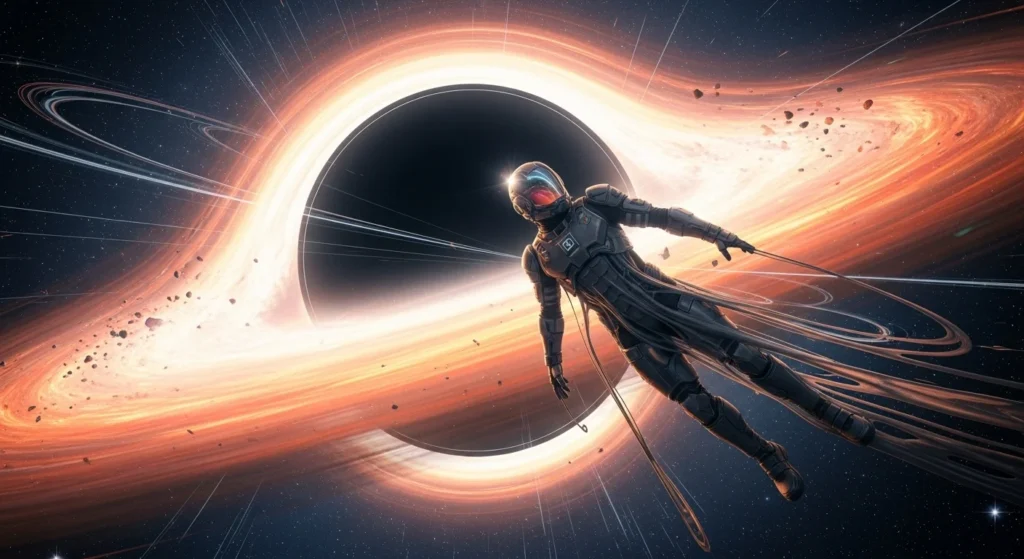
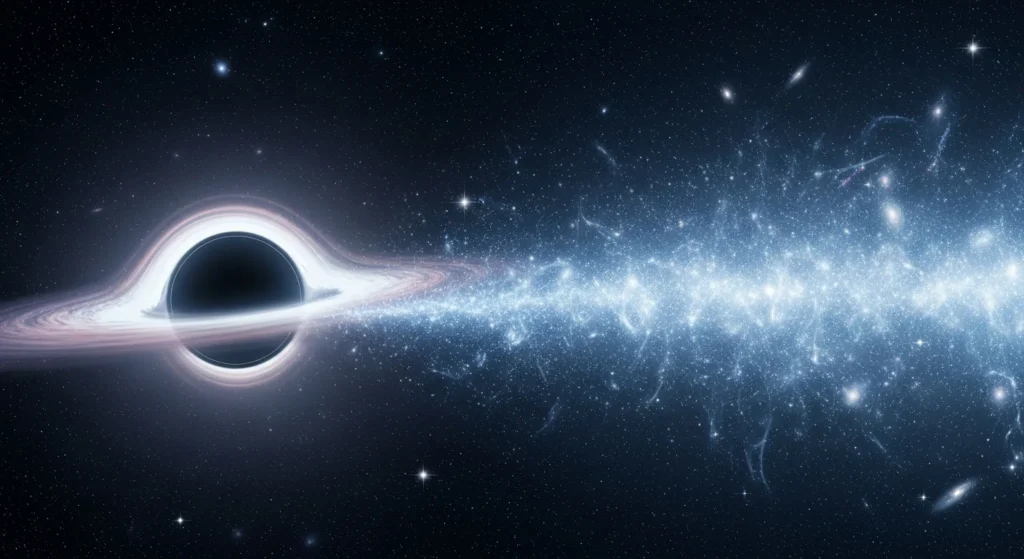
Black holes are often described as the ultimate cosmic monsters.
They trap matter.
They seem like the one thing in the universe that can never be undone.
So it’s natural to wonder:
Can a black hole ever disappear?
Or more simply:
Can black holes eventually die?
Surprisingly, modern physics says the answer might be:
Yes—over an unimaginably long time.
Not through explosion.
Not through collapse.
But through something far stranger:
A slow fading process called black hole evaporation.
Let’s explore this mystery in a clear, grounded way—from the basics to the mind-bending science behind it.
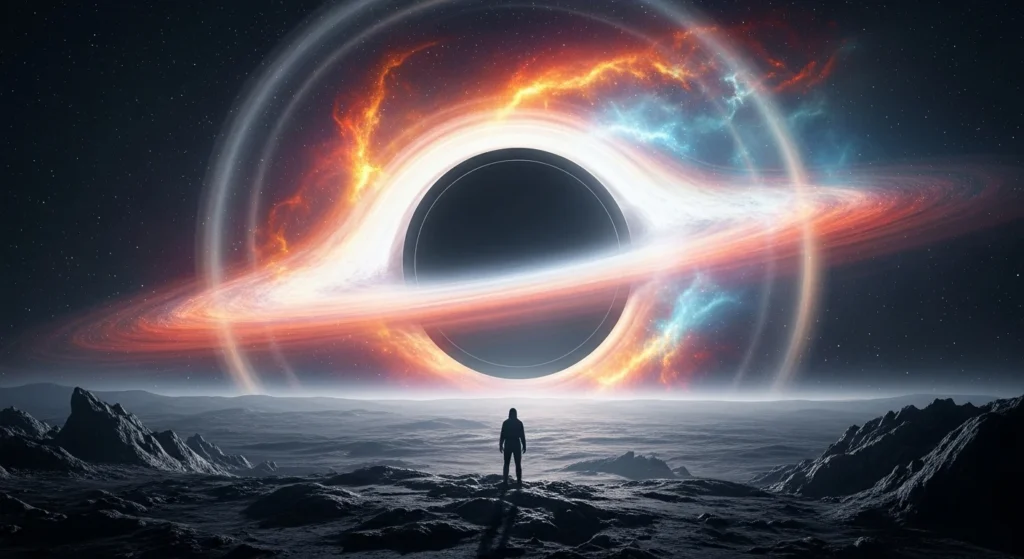
What Exactly Is a Black Hole?
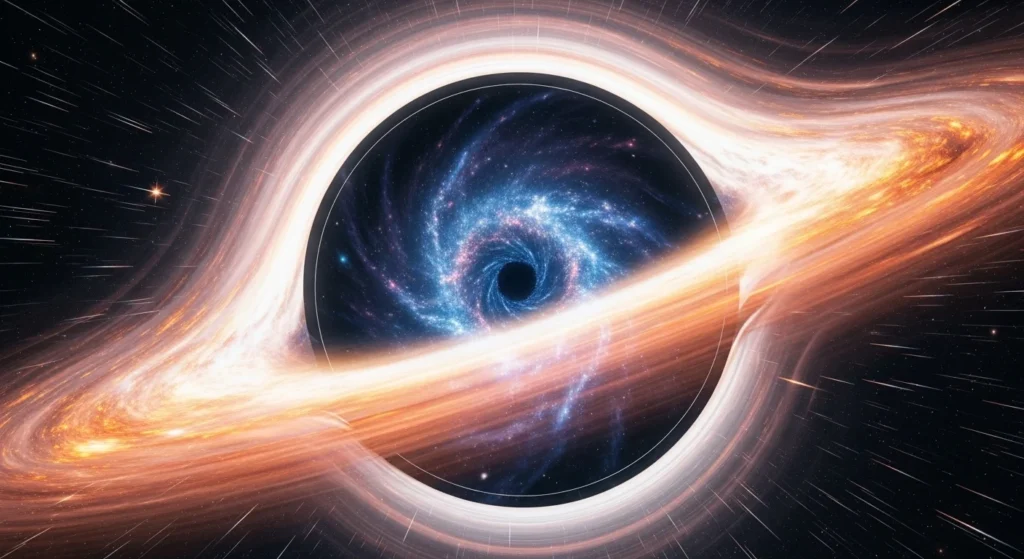
A black hole is a region of space where gravity becomes so intense that:
- Matter cannot escape
- Light cannot escape
- Time behaves differently near it
The boundary around a black hole is called the event horizon.
Think of it like a one-way door in space:
- Cross in, and nothing can return outward.
Black holes form when extremely massive stars collapse under their own gravity.
What remains is an object so dense that it warps space itself.
For a long time, scientists believed black holes were permanent.
Once formed, they would simply exist forever.
But then physics introduced a surprising twist.
The Big Misconception: “Black Holes Only Grow”
It’s easy to assume black holes are cosmic vacuum cleaners, constantly getting bigger.
In reality:
Black holes only grow if they absorb matter or merge with other black holes.
Most of the time, they’re simply sitting in space.
And incredibly, black holes may also be doing something unexpected:
Losing energy very, very slowly.
This idea comes from one of the most famous discoveries in modern cosmology.
Hawking Radiation: The Strange Way Black Holes Can Shrink
In the 1970s, physicist Stephen Hawking made a shocking prediction:
Black holes are not completely black.
They can emit tiny amounts of radiation.
This emission is now called:
At first, it sounds impossible.
How can something that traps light also release energy?
The answer lies in the strange behavior of empty space itself.
Space Is Not Truly Empty
Even in the darkest vacuum, space is not nothing.
According to quantum physics, space is filled with brief fluctuations.
Pairs of particles and antiparticles constantly appear and disappear.
This is sometimes compared to bubbles forming in boiling water:
- They pop into existence
- They vanish almost instantly
- The vacuum is never truly still
Near a black hole’s event horizon, something unusual can happen:
One particle falls in…
And the other escapes.
To an outside observer, it looks like the black hole is emitting radiation.
And because energy must be conserved:
The black hole loses a tiny bit of its mass.
That’s the key idea.
Do Black Holes Really Evaporate?
Yes—at least according to our best understanding of physics.
Over time, Hawking radiation causes a black hole to:
- Lose mass
- Shrink slowly
- Eventually disappear
This process is called black hole evaporation.
But don’t imagine it happening quickly.
For large black holes, the timescale is beyond enormous.
How Long Would It Take for a Black Hole to Die?
Here’s where reality becomes almost impossible to picture.
A black hole with the mass of our Sun would take about:
10⁶⁷ years to fully evaporate.
That’s a 1 followed by 67 zeros.
To put that into perspective:
- The universe is about 13.8 billion years old
- That’s only ~10¹⁰ years
So even the oldest black holes have barely begun this process.
Supermassive black holes—like the ones in galaxy centers—would last even longer.
Black holes don’t die soon.
But they may not live forever.
What Happens at the End?
As a black hole shrinks, something strange occurs:
Smaller black holes radiate faster.
So evaporation speeds up dramatically near the end.
In theory, the final moments might involve a burst of energy.
But scientists are still unsure exactly how that last stage works, because:
It involves physics at the edge of quantum gravity—an area we don’t fully understand yet.
So the ending is still one of the biggest mysteries in cosmology.
Why This Is Such a Big Deal in Science
Black hole evaporation matters because it connects two major theories:
- General relativity (gravity)
- Quantum mechanics (the smallest scales of reality)
Black holes sit at the intersection of these worlds.
They are laboratories for extreme physics.
And questions like:
- What happens to information that falls in?
- Can radiation carry it out?
- Does anything truly vanish from the universe?
…are still being actively explored.
This is part of what’s called:
The black hole information paradox.
It remains one of the deepest puzzles in modern science.
Everyday Analogy: A Bank Account That Slowly Leaks
Think of a black hole like a massive bank vault of energy.
For most of its life, it holds onto everything.
But Hawking radiation is like a tiny leak:
- One coin disappears
- Then another
- Over unimaginable time, even the vault empties
The leak is so small that it doesn’t matter day to day…
But over cosmic timescales, it changes everything.
Do All Black Holes Eventually Die?
According to current physics:
✅ Yes, all black holes should evaporate if given enough time.
Even supermassive ones.
Even the largest possible.
The universe may eventually reach a far future where:
- Stars burn out
- Galaxies fade
- Black holes slowly vanish
- Only low-energy radiation remains
That’s one possible long-term cosmic future.
Common Misunderstanding: “Will Black Holes Eat the Universe First?”
No.
Black holes are powerful locally, but they don’t endlessly consume everything.
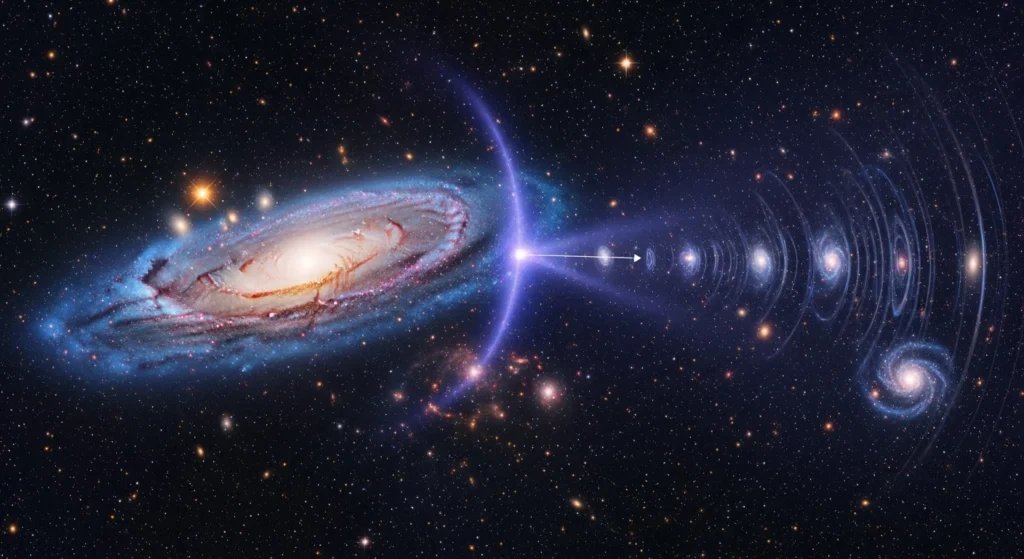
The universe is expanding, and most black holes are far apart.
Also:
Evaporation is incredibly slow, but growth is not guaranteed.
Black holes aren’t cosmic doomsday machines.
They are objects obeying physical laws—some of which still surprise us.
Why This Matters Today (Evergreen Perspective)
Black holes may seem distant, but they shape our understanding of reality itself.
Studying their fate helps scientists answer questions like:
- What is space made of?
- How does gravity really work?
- Can the universe erase information?
- What happens in the farthest future of time?
The fact that black holes might not last forever reminds us:
Even the most extreme objects in existence may have an ending.
The Big Takeaway
So, can black holes eventually die?
Yes—according to Hawking radiation, black holes can slowly evaporate and disappear.
But this happens over timescales so enormous that no black hole has died yet.
Black holes are not eternal monuments.
They may be the universe’s longest-lasting objects…
But even they might fade away in the deepest future.
A Final Thought
Black holes feel like the ultimate symbol of permanence.
Yet physics suggests that even the darkest prisons of space may slowly dissolve.
In the universe, even infinity has a clock.