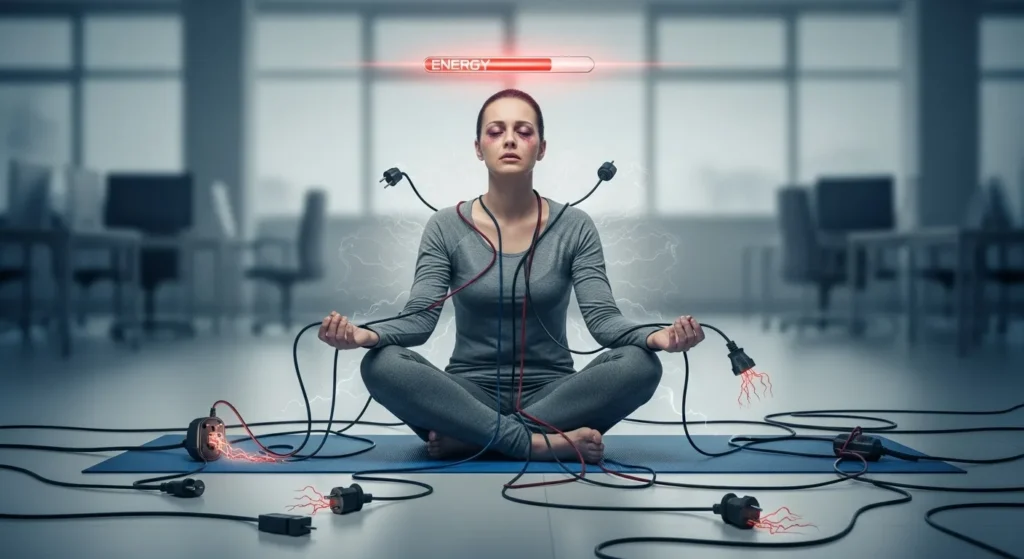
Why Does Everything Take Longer to Feel Better When You’re Stressed?
Most people have noticed it.
When life feels calm, recovery feels faster:
A good night’s sleep restores you.
A day off feels refreshing.
Energy returns more easily.
But under stress…
Rest doesn’t feel as effective.
Fatigue lingers.
Even small strains take longer to bounce back from.
It can feel like your body is trying…
But not fully recovering.
Why?
Stress doesn’t just affect mood.
Stress changes biology.
It shifts the body into a state of readiness, where repair and restoration become secondary.
Recovery takes longer under stress because the body is prioritizing survival mode over rebuild mode.
Let’s explore the science behind why stress slows restoration.
The Body Has Two Main Modes: Repair Mode and Alert Mode
Your nervous system constantly balances two broad states:
- Alert mode (action, readiness, vigilance)
- Repair mode (restoration, rebuilding, recovery)
In calm conditions, the body can invest resources in repair:
- Tissue maintenance
- Immune balance
- Deep sleep
- Mental reset
Under stress, the body shifts toward alert mode.
It treats the world as demanding.
The body doesn’t stop recovering…
But recovery becomes less efficient because energy is redirected.
Stress is like running background emergency software.
Why This Happens: Stress Signals the Brain That “Now Is Not the Time”
Stress evolved as a short-term survival tool.
When something feels urgent, the brain interprets:
“Focus on immediate action, not long-term restoration.”
So stress activates systems designed for:
- Fast response
- Increased attention
- Higher readiness
- Resource mobilization
That is useful in emergencies.
But restoration requires the opposite:
- Slowness
- Calm
- Safety
- Downshift
Recovery is strongest when the body feels safe enough to repair.
Stress reduces that feeling of safety.
Cortisol: The Body’s Timekeeper of Stress Response
One of the key hormones involved in stress is cortisol.
Cortisol helps the body:
- Mobilize energy
- Stay alert
- Regulate daily rhythms
In normal patterns, cortisol rises in the morning and falls at night.
Stress can keep cortisol elevated longer than usual.
That matters because high-alert chemistry makes it harder for the body to fully enter recovery mode.
Think of cortisol like a “lights on” signal.
Restoration often needs the lights to dim.
When stress keeps them bright, recovery slows.
Stress Changes How the Body Uses Energy
The body has a limited energy budget.
Under calm conditions, energy can go toward:
- Repair
- Digestion
- Immune upkeep
- Deep rest
Under stress, energy shifts toward:
- Muscle readiness
- Increased vigilance
- Faster heart rate
- Rapid response systems
It’s not that the body is wasting energy.
It’s reallocating it.
Like a city diverting funds from parks to emergency services.
Repair still happens.
But resources are stretched thinner.
Sleep Under Stress Becomes Less Restorative
Sleep is one of the most important recovery tools.
Stress affects sleep biology by increasing:
- Mental alertness
- Nighttime rumination
- Nervous system activation
Even if you sleep the same number of hours, stress can reduce sleep depth.
Deep sleep is when the brain and body do much of their maintenance work.
Stress makes the nervous system lighter, more reactive, less settled.
That is why stressful periods often leave people feeling “unrested” even after rest.
Recovery depends on quality, not just time.
The Immune System Shifts Priorities Under Stress
Stress biology also influences immune regulation.
In short bursts, stress can sharpen immune readiness.
But prolonged stress can create imbalance:
- More inflammation signaling
- Less efficient repair coordination
- Slower return to baseline
The immune system is deeply connected to restoration.
Recovery is not just muscles.
It’s the entire body’s internal maintenance network.
Stress changes that network’s rhythm.
Why Emotional Stress Feels Physical
Stress is not only mental.
It is embodied.
When stress is present, the body often holds:
- Muscle tension
- Shallow breathing
- Elevated alertness
That constant low-level activation adds to fatigue.
The body never fully “stands down.”
Recovery takes longer because the body is still partially braced.
It’s like trying to recharge a phone while apps keep running.
Everyday Examples You’ve Definitely Felt
Stress-delayed recovery shows up in common ways:
- Feeling tired even after a weekend off
- Needing longer to feel refreshed after travel
- Lingering soreness or heaviness during stressful weeks
- Rest feeling incomplete
- Taking longer to mentally reset after busy periods
These experiences are not imagined.
They reflect how stress alters restoration systems.
Common Misconception: “Rest Should Fix It Immediately”
Many people believe recovery should be quick:
“One night of sleep should solve this.”
But recovery is not instant.
It depends on internal conditions.
Stress changes those conditions.
Rest works best when the nervous system is allowed to downshift.
If stress remains high, rest becomes lighter, less complete.
The body can rest…
But it may not fully restore.
That’s an important difference.
Comparison Table: Recovery in Calm vs Recovery Under Stress
| Feature | Calm Conditions | Stress Conditions |
|---|---|---|
| Nervous system mode | Repair-focused | Alert-focused |
| Cortisol rhythm | Falls normally | Stays elevated longer |
| Energy allocation | Maintenance and rebuilding | Readiness and response |
| Sleep depth | More restorative | More fragmented or lighter |
| Muscle state | Relaxed | Tense, braced |
| Recovery speed | Faster | Slower |
Why This Matters Today (Evergreen)
Modern life creates prolonged stress exposure:
- Constant connectivity
- Work pressure
- Information overload
- Reduced downtime
Stress was designed for short bursts.
Not for continuous background activation.
Understanding why recovery takes longer under stress helps normalize a common modern experience:
Feeling like rest isn’t “working.”
The body isn’t broken.
It’s just still in alert mode.
Recovery needs calm biology, not just free time.
The Body Can’t Fully Repair While It’s Still Scanning
One of the deepest truths is simple:
Recovery requires safety.
The brain prioritizes repair only when it senses:
- Low urgency
- Stability
- Permission to downshift
Stress keeps the brain scanning, even subtly.
That scanning prevents full restoration.
The body doesn’t rebuild efficiently while it feels on-call.
Stress delays recovery because the nervous system stays partially engaged.
Simple, Educational Understanding (No Treatment Claims)
Recovery takes longer under stress because:
- Stress shifts the body into alert mode instead of repair mode
- Cortisol and arousal signals stay elevated
- Energy is redirected toward readiness rather than restoration
- Sleep becomes lighter and less renewing
- The body holds tension and vigilance, slowing recharge
Stress doesn’t stop recovery.
It slows it by changing the body’s priorities.
Key Takeaways
- Recovery takes longer under stress because the body prioritizes alertness over repair
- Stress hormones like cortisol keep the nervous system activated
- Energy is diverted from maintenance to readiness systems
- Sleep under stress is often less restorative even if hours are similar
- Prolonged tension and vigilance reduce the body’s ability to fully recharge
- Recovery works best when the nervous system can truly downshift
FAQ: Common Curiosity Questions
1. Why doesn’t rest feel as refreshing when I’m stressed?
Because stress keeps the nervous system partly active, reducing deep restoration.
2. Does stress affect sleep even if I still sleep enough?
Yes. Stress can reduce sleep depth and calmness, making recovery less complete.
3. Why does stress make fatigue linger?
Because energy is being used for alertness and tension instead of rebuilding.
4. Is recovery more than just sleep?
Yes. Recovery involves immune balance, nervous system downshift, and emotional processing.
5. Why does calm help the body repair better?
Because the body restores most efficiently when it feels safe, stable, and not on high alert.
Conclusion: Stress Delays Recovery Because the Body Can’t Fully Power Down
Recovery is not just time off.
It is a biological state.
When stress is present, the body shifts toward vigilance:
- Hormones stay elevated
- Sleep becomes lighter
- Energy goes toward readiness
- Repair slows down
That’s why recovery takes longer under stress.
Not because you’re doing something wrong…
But because the body is doing what it was designed to do:
Stay prepared when life feels demanding.
True restoration happens when the nervous system can finally stand down.
Recovery is faster in calm because calm tells the body:
“You are safe enough to rebuild now.”
Disclaimer: This article explains scientific concepts for general educational purposes and is not intended as professional or medical advice.