Why Does One Deep Exhale Feel Like Instant Relief?
Almost everyone knows this feeling:
You’re tense without realizing it.
Your shoulders are tight.
Your mind feels crowded.
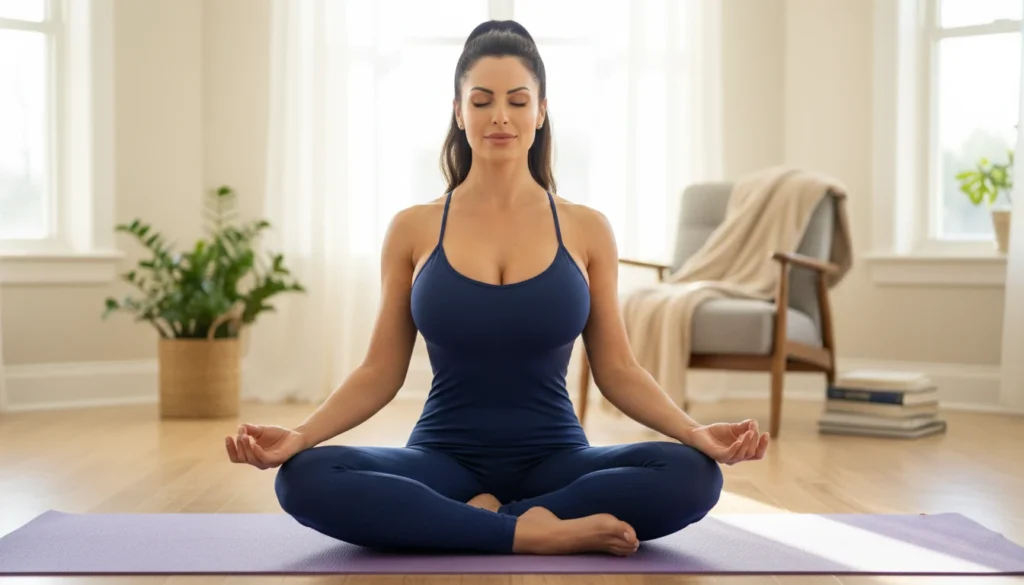
Then you take one deep breath in…
And especially one long breath out…
Something shifts.
The chest softens.
The face relaxes.
The body feels quieter.
It can feel almost mysterious—like the exhale is flipping an internal switch.
But this isn’t magic.
A deep exhale feels relaxing because your body is built to treat slow breathing as a signal:
“You are safe now.”
Behind that simple breath is a powerful biological system linking lungs, brain, heart rhythm, and the nervous system’s calm mode.
Let’s explore why breathing out slowly feels like relief.
Breathing Is More Than Air — It’s Communication With the Brain
Most body functions happen automatically:
- Heartbeat
- Digestion
- Temperature control
Breathing is different.
It’s automatic… but also adjustable.
That makes breathing a rare bridge between:
- Conscious control
- Unconscious nervous system regulation
Each breath is not just gas exchange.
It’s a message.
Fast breathing often appears during:
- Effort
- Excitement
- Alertness
Slow, deep breathing often appears during:
- Rest
- Sleep
- Calm connection
So when you exhale deeply, the brain interprets it as meaningful.
Not just breathing…
But a state change.
The Exhale Activates the Body’s “Rest Mode” More Than the Inhale
A key detail many people miss:
Exhaling is more strongly linked with relaxation than inhaling.
Why?
Inhale tends to slightly activate the system.
Exhale tends to slow it down.
During a long exhale:
- Heart rate gently decreases
- Muscles reduce tension
- Nervous system shifts toward calm
This is part of how the autonomic nervous system balances two main modes:
- Sympathetic (alert, active)
- Parasympathetic (rest, restore)
Deep exhales lean toward the parasympathetic side.
That’s why they feel soothing.
The Parasympathetic Nervous System: The Body’s Built-In Calm Network
Your nervous system has two major gears.
1. Alert Gear (Sympathetic)
This supports:
- Action
- Focus
- Quick response
2. Calm Gear (Parasympathetic)
This supports:
- Rest
- Recovery
- Digestion
- Slower heart rhythms
Deep, slow exhalation helps the body shift into calm gear.
It’s like easing your foot off the accelerator.
The body doesn’t “force relaxation”…
It allows it.
Why This Happens: The Vagus Nerve and Breath
One of the most important calming pathways in the body involves the vagus nerve.
This nerve connects the brain to major organs, including:
- Heart
- Lungs
- Digestive system
It helps regulate:
- Heart rhythm
- Breathing patterns
- Relaxation signals
Slow exhaling gently stimulates vagal activity.
That’s one reason deep breathing is closely tied to feelings of easing and settling.
Think of the vagus nerve like a biological “slow-down cable” running through the body.
Deep exhales tug it softly.
Heart Rate and Exhale: A Quiet Rhythm Shift
Here’s something fascinating:
Your heart rate naturally changes as you breathe.
This is called respiratory sinus arrhythmia (a normal healthy rhythm pattern).
- Heart rate speeds up slightly on inhale
- Heart rate slows down slightly on exhale
A longer exhale extends that slowing phase.
So deep breathing feels calming partly because your cardiovascular system literally shifts tempo.
It’s like music slowing from a fast beat to a softer rhythm.
Your brain notices that rhythm change.
And interprets it as safety.
Deep Exhales Reduce “Noise” in the Nervous System
When people feel tense, the nervous system is often busy:
- Scanning
- Anticipating
- Holding muscle readiness
- Processing many inputs
A deep exhale is like a nervous system reset tone.
It reduces internal sensory noise by:
- Slowing respiratory rhythm
- Lowering arousal signals
- Increasing internal steadiness
The body becomes less “braced.”
Not because problems vanished…
But because the brain is no longer preparing for immediate action.
Everyday Examples: When Exhales Naturally Appear
You’ve seen this biology in daily life:
- After finishing a difficult task, you sigh
- Before sleep, breathing becomes slower
- After crying, a long exhale often follows
- After stress, the body releases breath
These aren’t habits.
They’re built-in regulation behaviors.
The sigh and deep exhale are ancient nervous system tools for shifting state.
Common Misconception: “Deep Breathing Is Just Psychological”
Many people assume:
“It only works because you think it works.”
But deep exhales are not just mental.
They produce measurable physiological shifts:
- Heart rhythm changes
- Muscle tone decreases
- Nervous system balance shifts
- Brain safety perception increases
The relief is biological first…
Then emotional.
Your mind feels calmer because your body is calmer.
The Brain Interprets Slow Breathing as “No Emergency”
Breathing is tightly linked to emotion.
Fast shallow breathing often accompanies:
- Urgency
- Fear
- High stimulation
Slow breathing accompanies:
- Rest
- Social safety
- Quiet states
So the brain uses breathing as evidence.
A deep exhale tells the brain:
“If we can breathe slowly, we must not be in immediate danger.”
This is why exhalation feels like permission to soften.
Comparison Table: Short Breaths vs Deep Exhales
| Breathing Pattern | Nervous System Message | Heart Rhythm Effect | Common Feeling |
|---|---|---|---|
| Short, rapid breathing | Alertness, readiness | Heart rate stays higher | Tension, stimulation |
| Normal resting breathing | Balanced regulation | Stable rhythm | Neutral calm |
| Deep inhale only | Slight activation | Brief heart rate rise | Wakefulness |
| Long, slow exhale | Safety, parasympathetic shift | Heart rate slows | Relief, relaxation |
| Natural sigh | Reset and release signal | Rhythm recalibration | Emotional easing |
Why Deep Exhales Feel Like “Letting Go” Physically
The feeling of release is not imagined.
During long exhales:
- Rib muscles relax
- Diaphragm resets upward
- Shoulder tension often drops
- The chest feels less braced
This is why people describe exhaling deeply as:
- “Dropping tension”
- “Unclenching”
- “Finally breathing again”
It’s a physical change, not just a thought.
Why This Matters Today (Evergreen)
Modern life keeps many people in low-level activation:
- Constant notifications
- Screens
- Deadlines
- Noise
- Always-on thinking
Deep exhales remain one of the simplest built-in signals of calm.
Understanding the science helps demystify something universal:
Your body already has a calming switch.
And it often begins with breathing out.
Simple, Actionable Understanding (Without Treatment Claims)
The key insight is this:
Deep exhales feel relaxing because they shift the body’s internal balance toward restoration.
They are not “magic breaths.”
They are biology doing what it evolved to do:
- Slow down
- Reset
- Regulate
- Signal safety
Breathing out slowly is one of the clearest ways the nervous system recognizes:
“This moment is not urgent.”
Key Takeaways
- Deep exhales activate calming nervous system pathways
- Exhaling is more strongly tied to relaxation than inhaling
- Slow breathing supports parasympathetic “rest mode”
- The vagus nerve plays a major role in exhale-related calm
- Heart rate naturally slows during exhalation
- Deep exhales feel good because the body interprets them as safety signals
FAQ: Common Curiosity Questions
1. Why does a sigh feel instantly relieving?
A sigh is a natural nervous system reset that helps recalibrate breathing rhythm and release tension.
2. Is exhaling more calming than inhaling?
Yes—exhaling tends to slow heart rate and activate parasympathetic calming pathways.
3. Why do deep exhales relax muscles?
Long exhales reduce bracing signals in the nervous system, allowing muscle tone to drop.
4. Does the brain really respond to breathing speed?
Yes—breathing patterns are closely linked to how the brain interprets safety versus urgency.
5. Why does breathing change when we feel calm?
Because calm states naturally involve slower rhythms, and the body uses breath as regulation feedback.
Conclusion: The Exhale Is the Body’s Quiet Calm Signal
A deep exhale feels relaxing for a simple scientific reason:
It tells your nervous system to soften.
Breathing out slowly shifts heart rhythm, reduces internal alertness, and signals safety to the brain.
That’s why relief often arrives not with effort…
But with release.
Sometimes the body’s calmest message is the simplest one:
A long breath out.
Disclaimer: This article explains scientific concepts for general educational purposes and is not intended as professional or medical advice.