The Water You Never See but Always Use
Turn on a tap.
Walk past a green field.
Notice a river still flowing during a dry season.
Much of that water didn’t come from recent rain.
It came from underground water—a vast, hidden system stored beneath our feet in soil, sand, and rock. We rarely think about it because we don’t see it. But it quietly supports daily life, ecosystems, and even the shape of the land itself.
So what if underground water suddenly disappeared?
Not dried up rivers.
Not empty clouds.
Just the water beneath the ground—gone.
To understand what that would mean, we first need to understand what underground water actually is and why it exists at all.
What Is Underground Water, Really?
Underground water—often called groundwater—is rain and surface water that slowly seeps into the ground.
Instead of staying on the surface, water moves downward through:
- Soil
- Sand
- Gravel
- Cracks in rock
Eventually, it collects in natural storage zones called aquifers.
Think of aquifers like giant underground sponges.
They don’t hold water in open caves; they store it in tiny spaces between particles.
This slow movement and storage is what makes underground water reliable and steady.
Why Underground Water Forms in the First Place
Groundwater exists because of gravity and time.
Rain doesn’t fall all at once.
The ground doesn’t absorb water instantly.
As water seeps downward:
- Some is used by plants
- Some evaporates
- Some continues deeper
Over months, years, and even centuries, water accumulates underground.
This slow process creates a buffer—a reserve that smooths out extremes between wet and dry periods.
Without this buffer, water systems would be far more chaotic.
What Would Happen First If Underground Water Disappeared?
If underground water vanished, the first changes wouldn’t be dramatic floods or cracks in the earth.
They would be subtle.
At first, you’d notice:
- Wells running dry
- Springs stopping
- Streams shrinking faster after rainfall
That’s because many surface water sources rely on groundwater to keep flowing when rain stops.
Groundwater acts like a delayed release system, feeding rivers slowly over time.
Without it, surface water becomes brief and unreliable.
Why Rivers Would Behave Differently
Many people assume rivers are fed only by rain or melting snow.
In reality, a large portion of river flow—especially during dry seasons—comes from underground water slowly leaking into riverbeds.
Without groundwater:
- Rivers would rise quickly after rain
- Then drop sharply soon after
- Seasonal flow would become extreme
Rivers wouldn’t disappear everywhere, but they would become far less stable.
How Soil Depends on Underground Water
Soil is not just dirt.
It’s a living system.
Underground water keeps soil moisture balanced, even when rain is scarce.
Without it:
- Soil would dry out more quickly
- Roots would lose access to deep moisture
- Microorganisms would struggle to survive
Plants wouldn’t just suffer during droughts—they’d face constant stress.
The land would behave more like a desert, even in places that receive rainfall.
Plants, Roots, and the Hidden Water Connection
Many plants don’t rely only on surface water.
Their roots grow downward to reach moisture stored deeper in the soil.
Trees, in particular, depend heavily on underground water to survive dry seasons.
If underground water disappeared:
- Shallow plants might survive briefly
- Deep-rooted plants would struggle
- Forest stability would decline over time
Vegetation patterns would shift—not overnight, but steadily.
Underground Water vs. Surface Water: A Comparison
| Feature | Surface Water | Underground Water |
|---|---|---|
| Visibility | Easily seen | Hidden |
| Response to rain | Immediate | Slow and delayed |
| Stability over time | Variable | Highly stable |
| Evaporation loss | High | Minimal |
| Role during dry periods | Limited | Essential |
This comparison explains why underground water is often more reliable than what we see above ground.
How Underground Water Shapes the Land Itself
Water underground doesn’t just support life—it shapes geology.
Over long periods, groundwater:
- Dissolves minerals
- Forms caves and sinkholes
- Stabilizes soil structure
- Maintains pressure beneath the surface
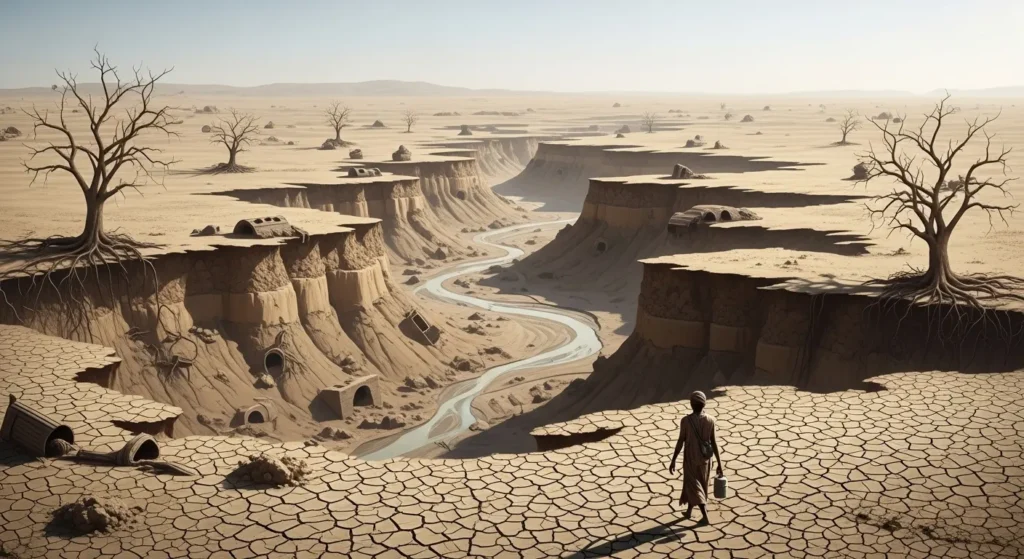
If underground water disappeared suddenly, land stability could change.
Soils might compact.
Ground could settle unevenly.
Natural formations would stop evolving.
The landscape would become more rigid—and less resilient.
Common Misunderstanding: “Rain Can Replace Underground Water Instantly”
A widespread misconception is that rainfall alone can replace underground water quickly.
In reality:
- Recharge takes time
- Water moves slowly through soil
- Some aquifers refill over decades or centuries
Rain without underground storage is like pouring water onto concrete—it runs off instead of staying available.
Groundwater is what turns rain into long-term supply.
How Animals Are Connected to Underground Water
Many animals rely indirectly on underground water, even if they never dig wells.
Groundwater supports:
- Plant growth
- Wetlands
- Seasonal streams
- Stable habitats
When underground water disappears, food chains weaken from the bottom up.
Animals wouldn’t vanish immediately, but ecosystems would become less predictable and more fragile.
Why Underground Water Acts Like Earth’s Savings Account
A helpful way to think about underground water is as a savings account, not a checking account.
- Rain is income
- Rivers are spending
- Groundwater is savings
When savings disappear, systems rely only on what arrives in the moment.
That makes everything more vulnerable to fluctuation.
Why This Matters Today
Understanding underground water isn’t about fear—it’s about awareness.
Groundwater explains why:
- Some regions stay green during dry spells
- Rivers don’t stop flowing immediately
- Ecosystems remain stable year after year
It also reminds us that invisible systems often matter most.
Just because something is out of sight doesn’t mean it’s optional.
Key Takeaways
- Underground water forms slowly from rainfall and infiltration
- It stabilizes rivers, soil, plants, and ecosystems
- Without it, surface water becomes unpredictable
- Soil dries faster and plant systems weaken
- Groundwater acts as Earth’s natural buffer
- Its value lies in steadiness, not visibility
Frequently Asked Questions (FAQ)
1. Is underground water the same as underground rivers?
No. Most groundwater exists in tiny spaces between soil and rock, not open tunnels.
2. Would rain still fall if underground water disappeared?
Yes. Underground water does not control rainfall, but it controls what happens after rain.
3. Would oceans be affected by losing underground water?
Not directly, but coastal systems and freshwater balance would change over time.
4. Do all regions rely equally on underground water?
No. Some areas depend on it heavily, while others rely more on surface water.
5. Is underground water always fresh?
Not always. Some underground water is salty or mineral-rich, depending on geology.
Conclusion: The Quiet System That Holds the Surface Together
If underground water disappeared, the planet wouldn’t collapse overnight.
But it would lose something essential: stability.
Groundwater doesn’t announce itself.
It doesn’t flow dramatically.
It doesn’t sparkle in the sun.
Yet it quietly holds ecosystems, landscapes, and life together.
The water we never see is often the water that matters most.
Disclaimer: This article explains scientific concepts for general educational purposes and is not intended as professional or medical advice.