“A Thought That Feels Like Science Fiction — But Teaches Real Science”
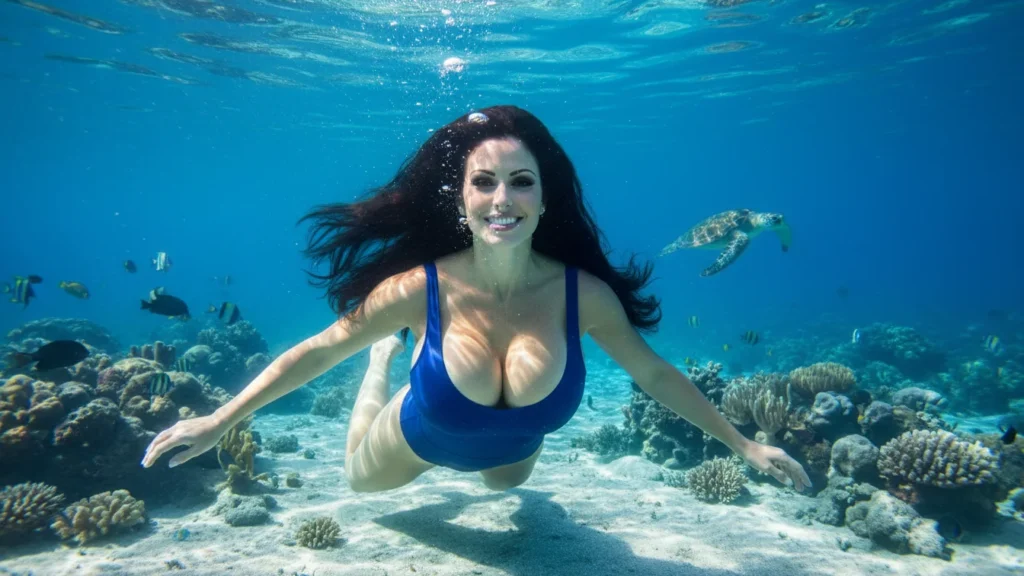
Imagine stepping into the ocean.
No tanks.
No masks.
No panic.
You inhale—and instead of choking, your body calmly extracts oxygen from the surrounding water.
You walk along the seafloor.
You speak underwater.
You explore depths humans have never stayed in before.
It sounds like science fiction. But asking “What if humans could breathe underwater?” opens the door to understanding how breathing, biology, evolution, and Earth itself really work.
This is a scientific thought experiment—not a prediction—but everything that follows is grounded in real biology and physics.
First, Why Humans Can’t Breathe Underwater Today
Breathing isn’t just about oxygen.
It’s about how oxygen moves from the environment into the bloodstream.
Humans breathe air because:
- Air contains a high concentration of oxygen
- Our lungs are designed for gas exchange, not liquid
- Oxygen moves easily from air into blood across thin lung tissue
Water changes everything.
Water:
- Contains far less usable oxygen
- Is much denser than air
- Moves slowly across biological membranes
Our lungs simply aren’t built for that environment.
How Aquatic Animals Breathe Underwater
Fish don’t “breathe water.”
They extract dissolved oxygen from it.
They use gills, which:
- Have enormous surface area
- Are extremely thin
- Allow water to flow continuously across them
This constant flow keeps oxygen moving into the body efficiently.
Without this specialized system, breathing underwater wouldn’t work.
What Would Humans Need to Change to Breathe Underwater?
For humans to breathe underwater naturally, major biological changes would be required.
These include:
- A new oxygen-exchange organ (similar to gills)
- Vastly increased surface area for oxygen absorption
- A different blood oxygen-transport strategy
- Structural changes to the neck, chest, and circulation
This wouldn’t be a small adaptation.
It would represent a fundamental redesign of human biology.
Why Lungs Don’t Work Like Gills
A common misconception is that lungs could just “adapt” to water.
But lungs rely on:
- Air-filled spaces
- Rapid gas diffusion
- Dry internal surfaces
Water would:
- Flood the air sacs
- Prevent oxygen exchange
- Damage lung tissue
Gills and lungs are optimized for completely different environments.
How Breathing Underwater Would Change the Human Body
If humans evolved to breathe underwater, the entire body would change—not just breathing organs.
Possible adaptations would include:
- Streamlined body shape to reduce drag
- Modified skin to regulate water loss
- Altered hearing and vision for underwater physics
- Changes in muscle density and buoyancy
Breathing underwater would reshape how humans move, sense, and interact with the world.
Energy Costs: Why Underwater Breathing Is Hard
Extracting oxygen from water requires much more energy than from air.
That’s because:
- Water holds less oxygen than air
- Moving water across tissues takes effort
- Oxygen diffusion is slower in liquid
Fish compensate by constantly moving water over their gills.
Humans would need either:
- Continuous motion
- Or highly efficient passive systems
Either way, metabolism would change significantly.
Would Humans Still Breathe Air?
Interestingly, underwater-breathing humans might still need air.
Many aquatic animals that evolved from land ancestors still:
- Surface for air
- Use lungs alongside gills
A dual-breathing system could be possible—but complex.
Maintaining two respiratory systems would require enormous biological coordination.
How Life and Civilization Would Change
If humans could breathe underwater, the implications would be massive.
Exploration would transform:
- Deep-sea exploration becomes routine
- Shipwrecks become accessible
- Ocean floors become living spaces
Settlement patterns would shift:
- Underwater habitats emerge
- Coastal cities expand downward
- New ecosystems face human interaction
The oceans would no longer be barriers—but extensions of civilization.
The Environmental Consequences
Breathing underwater wouldn’t just change humans—it would change oceans.
Potential effects include:
- Increased disturbance of fragile ecosystems
- New forms of resource extraction
- Greater responsibility for ocean conservation
The ocean is Earth’s most delicate large-scale system. Human access would require extreme care.
A Simple Comparison: Humans Now vs Underwater Humans
| Feature | Humans Today | Underwater-Breathing Humans |
|---|---|---|
| Breathing medium | Air | Water (dissolved oxygen) |
| Main organ | Lungs | Gill-like structures |
| Oxygen availability | High | Low |
| Energy demand | Moderate | High |
| Habitat range | Land & surface | Land, surface & deep ocean |
Same species—very different planet experience.
Common Misunderstanding: “We’d Just Become Fish-Like”
Humans wouldn’t turn into fish.
Evolution works by modifying existing structures, not replacing identity.
Underwater humans would:
- Still be recognizably human
- Still use tools and language
- Still rely on complex social systems
They’d simply interact with Earth differently.
Why This Would Take Millions of Years
Such a transformation couldn’t happen quickly.
It would require:
- Sustained evolutionary pressure
- Many generations
- Gradual survival advantages
Evolution optimizes for efficiency, not imagination.
Breathing underwater would only evolve if it offered a clear survival benefit over countless generations.
Why This Happens — The Core Scientific Principle
Breathing depends on how efficiently oxygen moves from the environment into the body, and air and water require completely different biological solutions.
That principle explains why breathing underwater is so challenging—and so transformative.
Why This Matters Today
This thought experiment helps us understand:
- Why humans evolved the way we did
- How tightly biology matches environment
- Why oceans remain so different from land
It also builds appreciation for the elegance of life’s design—and the limits imposed by physics.
Key Takeaways
- Humans can’t breathe underwater due to oxygen and density differences
- Aquatic breathing requires specialized structures like gills
- Underwater breathing would reshape the entire human body
- Civilization and ecosystems would change dramatically
- Evolution favors efficiency, not fantasy
Frequently Asked Questions
Could technology ever let humans breathe underwater naturally?
Technology can assist breathing, but natural biological breathing would require evolutionary changes.
Why does water contain less oxygen than air?
Oxygen dissolves poorly in water compared to how freely it exists in air.
Would underwater humans still need sleep?
Yes. Sleep is a brain function, not a breathing one.
Could underwater humans live in deep oceans?
Pressure, temperature, and light would still limit depth, even with underwater breathing.
Do any mammals breathe underwater?
No. All mammals rely on air, even those that live mostly in water.
A Calm, Imaginative Conclusion
Breathing underwater would feel magical—but it would also be deeply demanding.
It would require new biology, new energy systems, and a new relationship with Earth’s oceans.
By imagining this impossible ability, we learn something powerful:
Life doesn’t just adapt to the world—it is shaped by it, breath by breath.
Disclaimer: This article explains scientific concepts for general educational purposes and is not intended as professional or medical advice.