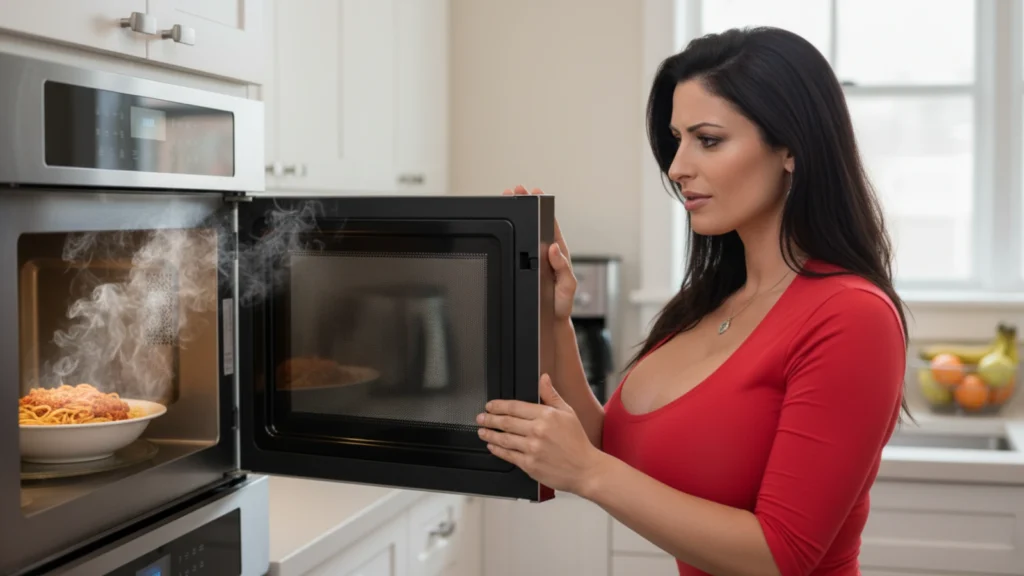
A Familiar Moment Your Brain Never Questions
You walk into a kitchen where food is cooking.
Before you see anything, the smell reaches you.
It feels rich, full, and almost impossible to ignore.
Later, when that same food cools, the aroma fades — even though nothing has been removed.
This isn’t imagination or appetite playing tricks. It’s the result of how heat changes the behavior of molecules, air, and the human sense of smell.
Warm food doesn’t just smell stronger by chance. It follows predictable physical and chemical rules that quietly shape every eating experience.
Smell Begins With Molecules Leaving Food
Smell starts when tiny chemical particles escape food and enter the air.
These particles are called aroma molecules.
For you to smell something, those molecules must:
- Break free from the food
- Travel through the air
- Reach receptors inside your nose
The more molecules that reach your nose — and the faster they arrive — the stronger the smell feels.
Temperature directly controls every step of this process.
Heat Gives Molecules the Energy to Move
At the molecular level, temperature is motion.
When food is warm:
- Molecules vibrate faster
- Chemical bonds loosen slightly
- Particles escape the surface more easily
When food is cold:
- Molecular movement slows
- Fewer aroma compounds enter the air
- Smells remain trapped inside the food
Think of it like people leaving a crowded room:
- In cold conditions, the doors are heavy and slow to open
- In warm conditions, the doors swing freely
Heat doesn’t create new smells — it releases the ones already there.
Volatile Compounds: The Carriers of Smell
Not all food molecules can become smell.
The ones that do are called volatile compounds, meaning they evaporate easily.
Warmth increases volatility by:
- Lowering resistance at the food’s surface
- Helping compounds shift from solid or liquid into gas
- Speeding their movement through air
This is why hot soup fills a room with aroma while cold soup smells muted, even if the ingredients are identical.
Why Warm Air Spreads Smell Better
Smell doesn’t just depend on food — it depends on air.
- Is lighter and rises
- Moves more freely
- Carries aroma molecules farther
Cold air:
- Is denser
- Slows diffusion
- Keeps smells closer to their source
When food is warm, it creates tiny upward currents that lift aroma molecules directly toward your nose.
Cold food lacks this invisible airflow advantage.
Your Nose Responds More Strongly to Warm Aromas
The human sense of smell evolved in warm environments.
Your olfactory system works best when:
- Aroma molecules arrive quickly
- Concentrations are high
- Airflow delivers continuous signals
Warm food creates exactly these conditions.
Cold food sends fewer molecules, more slowly, resulting in weaker sensory signals — even though the food hasn’t changed chemically.
Why Heating Food Can “Wake Up” Smell Instantly
Have you noticed that reheating food suddenly brings the smell back?
That’s because:
- Heat reactivates molecular motion
- Volatile compounds escape again
- Airflow increases around the food
Nothing new is added. The aroma was always there — just temporarily locked in place.
A Simple Comparison of Warm vs Cold Food Smell
| Factor | Warm Food | Cold Food |
|---|---|---|
| Molecular movement | Fast | Slow |
| Aroma release | High | Low |
| Volatility | Increased | Reduced |
| Airflow around food | Active | Minimal |
| Smell intensity | Strong | Subtle |
This difference explains why temperature changes perception without changing ingredients.
Why Cooking Creates Such Powerful Smells
Cooking adds another layer.
Heat doesn’t just release aromas — it transforms molecules.
As food heats:
- New aromatic compounds form
- Existing ones intensify
- Complex scent combinations emerge
This is why baking bread, frying onions, or roasting spices produces smells far stronger than raw ingredients.
The chemistry becomes more expressive as temperature rises.
Common Misunderstandings About Food Smell
Many people believe:
- Warm food smells stronger because we’re “hungrier”
- Cold food loses flavor permanently
- Smell is only about taste
In reality:
- Hunger affects attention, not molecular release
- Cooling suppresses aroma but doesn’t destroy it
- Smell begins in physics, not preference
The nose simply reacts to how efficiently molecules reach it.
Why This Happens Across All Cuisines
This principle applies universally:
- Hot tea smells stronger than iced tea
- Fresh bread smells stronger than refrigerated bread
- Warm spices smell richer than cold ones
Cultural food preferences may differ, but the underlying science is the same everywhere.
Why This Matters Today
Modern food experiences often involve refrigeration, reheating, and packaging.
Understanding how temperature affects smell explains:
- Why leftovers feel less aromatic
- Why warming food changes perception instantly
- Why scent plays such a strong role in enjoyment
Smell shapes how food feels before it even touches the tongue — and temperature quietly controls that gateway.
Key Takeaways
- Smell depends on molecules escaping food into the air
- Heat increases molecular motion and volatility
- Warm air spreads aroma more efficiently
- Cold temperatures trap scent compounds inside food
- Heating doesn’t create smell — it releases it
- Stronger aroma comes from physics, not appetite
Frequently Asked Questions
Why does hot food smell better than cold food?
Hot food releases more aroma molecules into the air, making smells stronger and easier to detect.
Does warming food change its ingredients?
Warming mainly changes molecular movement. Cooking can create new compounds, but gentle warming mostly releases existing aromas.
Why do leftovers smell stronger after reheating?
Heat restores volatility and airflow, allowing trapped aroma molecules to escape again.
Why do cold foods sometimes taste bland?
Taste relies heavily on smell. Reduced aroma delivery weakens overall flavor perception.
Does smell affect taste?
Yes. Smell contributes a large portion of what we perceive as flavor, even before food reaches the mouth.
A Quiet Scientific Truth
Warm food doesn’t just feed the body — it activates the air around it.
Through invisible motion, rising currents, and energized molecules, heat allows aroma to travel, reach your senses, and shape experience.
Smell, it turns out, is not just about food — it’s about movement you can’t see.
Disclaimer: This article explains scientific concepts for general educational purposes and is not intended as professional or medical advice.