
“When a Small Moment Feels Way Bigger Than It Is”
Your phone buzzes unexpectedly.
Your heart jumps.
A short email sounds serious.
Your stomach tightens.
A stranger’s tone feels off.
Your mind starts racing.
Logically, you know these are small things.
Yet your body reacts as if something serious is happening.
This isn’t weakness.
It isn’t overthinking.
It’s biology.
Your brain is designed to overreact—especially to uncertainty and potential threats.
Your Brain’s First Job Isn’t Calm — It’s Survival
Modern life values calm thinking, logic, and emotional balance.
But your brain didn’t evolve for office meetings, notifications, or social nuance.
It evolved for survival.
Its primary job has always been simple:
Detect danger early—even if it turns out to be nothing.
From an evolutionary perspective, false alarms were safer than missed threats.
Overreaction kept humans alive.
The Brain’s Early-Warning System
Deep inside the brain is a fast, automatic threat-detection network.
It constantly scans for:
- Sudden changes
- Unfamiliar signals
- Anything that might mean danger
This system works before conscious thought.
That’s why reactions feel instant:
- Racing heart
- Muscle tension
- Heightened alertness
Your brain acts first and explains later.
Why Small Threats Get Big Reactions
The brain doesn’t evaluate danger the way logic does.
It asks one key question:
“Could this be a problem?”
If the answer is even maybe, it responds quickly.
Small threats often include:
- Uncertainty
- Ambiguity
- Loss of control
- Social evaluation
These were risky situations throughout human history.
So the brain treats them seriously—even when modern logic says otherwise.
A Simple Analogy: Smoke Alarms and Toast
Think of your brain like a smoke alarm.
A good smoke alarm:
- Goes off early
- Is sensitive
- Doesn’t wait for proof of fire
Burnt toast can trigger it.
Annoying? Yes.
Protective? Also yes.
Your brain works the same way.
The Role of Speed: Why Overreaction Happens Fast
Threat detection pathways are built for speed, not accuracy.
They:
- Bypass slow reasoning
- Use pattern recognition
- Favor quick action
This made sense when threats were physical and immediate.
In modern life, the same system reacts to:
- Emails
- Deadlines
- Social cues
- News headlines
The brain hasn’t updated its software—it’s still running ancient code.
Why the Body Reacts Before the Mind
You might notice physical reactions before emotional ones.
That’s because:
- The body prepares for action first
- Energy is redirected to muscles
- Attention narrows
These responses happen before conscious awareness.
By the time you think, “This isn’t a big deal,” the reaction is already underway.
Small Threats Are Often Social, Not Physical
Modern threats are rarely life-threatening.
But social threats still matter to the brain.
Examples include:
- Rejection
- Conflict
- Judgment
- Embarrassment
For early humans, social exclusion could mean loss of safety and resources.
So the brain treats social signals as survival-relevant.
Why Your Brain Struggles With Probability
Your brain is not a statistician.
It doesn’t calculate likelihoods well.
Instead, it focuses on:
- Worst-case scenarios
- Emotional impact
- Past experiences
This is why:
- Rare dangers feel urgent
- Minor issues feel overwhelming
- “What if” thoughts escalate quickly
The system prioritizes caution over calm.
Common Misunderstanding: “I’m Just Overthinking”
Many people blame themselves for these reactions.
But the response isn’t a personal flaw.
It’s a built-in design feature.
Your brain isn’t asking:
“Is this rational?”
It’s asking:
“Could this matter for survival or safety?”
That difference explains a lot.
Why Modern Life Triggers This System Constantly
Our environment has changed faster than our biology.
Today, we face:
- Constant notifications
- Information overload
- Continuous social comparison
- Abstract, unresolved stressors
The brain evolved for short bursts of danger—not ongoing low-level alerts.
So the threat system stays partially activated.
A Clear Comparison: Real Danger vs Modern Triggers
| Feature | Ancient Threats | Modern “Threats” |
|---|---|---|
| Type | Physical | Psychological / social |
| Duration | Short | Ongoing |
| Response needed | Action | Interpretation |
| Brain reaction | Immediate | Still immediate |
| Resolution | Clear | Often unclear |
Same system.
Very different world.
Why Rest and Quiet Make Reactions Feel Stronger
When things slow down:
- Distractions drop
- Internal signals become louder
- Thoughts gain intensity
This is why small concerns often feel bigger:
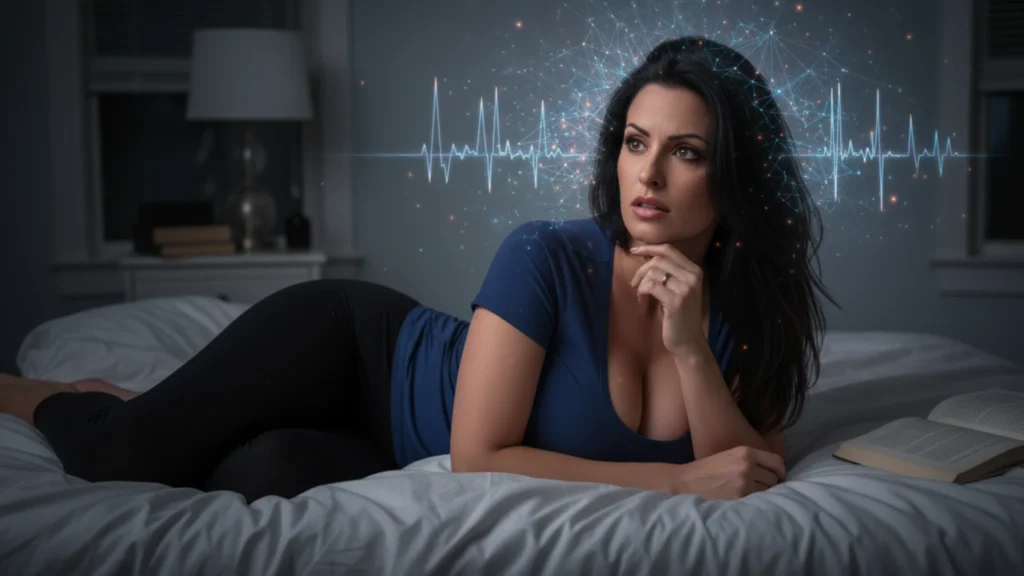
- At night
- During quiet moments
- When you’re alone
The brain fills the silence with scanning.
Why This Happens — In One Clear Explanation
Your brain overreacts to small threats because it’s designed to prioritize early warning over accuracy, using ancient survival systems that haven’t adapted to modern life.
Why This Matters Today
Understanding this changes how you interpret your reactions.
It helps you:
- Stop self-blame
- Recognize automatic responses
- Separate perception from reality
- Respond with clarity instead of fear
Awareness doesn’t switch the system off—but it changes how you relate to it.
Key Takeaways
- The brain evolved to overreact rather than miss danger
- Small threats trigger ancient survival systems
- Speed matters more than accuracy in threat detection
- Social and uncertain situations activate the same pathways
- These reactions are normal, not personal failures
Frequently Asked Questions
Why does my brain react before I can think?
Threat pathways are faster than conscious reasoning and act automatically.
Are these reactions emotional or biological?
They are biological responses that influence emotions, not the other way around.
Why do small things trigger big reactions?
Uncertainty and potential loss activate survival systems strongly.
Does everyone experience this?
Yes, though sensitivity varies between individuals.
Can logic stop the reaction?
Logic usually comes after the reaction—but it can help reframe it.
A Calm, Clear Conclusion
Your brain isn’t broken.
It’s protective.
It’s scanning, predicting, and preparing—often faster than modern life requires.
When you understand why small threats feel big, those reactions lose some of their power.
What remains is clarity—and respect for a brain that’s been keeping humans alive for thousands of years.
Disclaimer: This article explains scientific concepts for general educational purposes and is not intended as professional or medical advice.







Pingback: Why Loud Music Feels More Exciting — The Brain Science Behind the Rush