“A Familiar Cold-Weather Mystery”
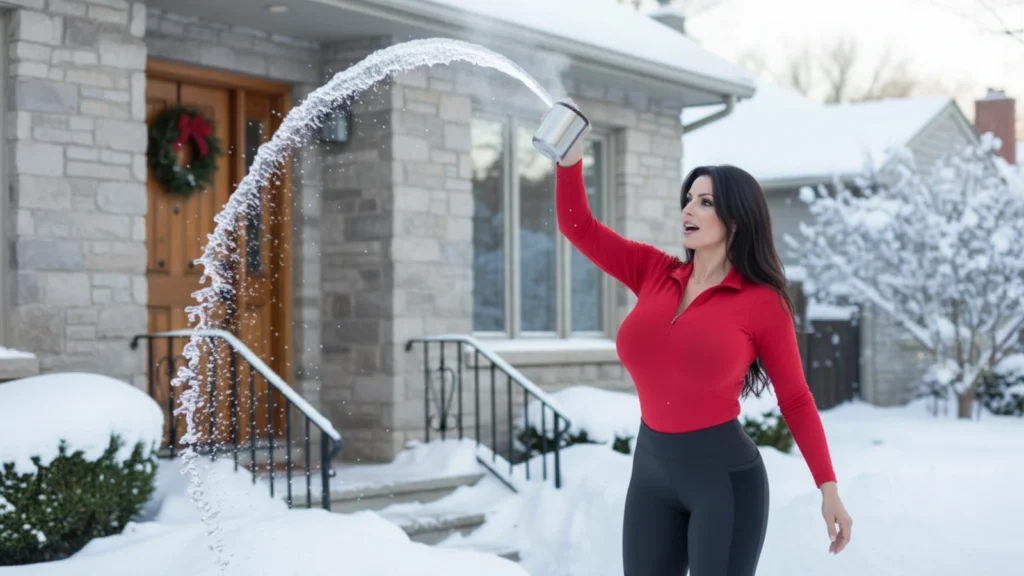
You step outside on a chilly morning.
At first, it’s just uncomfortable.
Then your teeth chatter.
Your shoulders tense.
And before you can stop it, your body starts shaking.
You’re not choosing to do this.
It happens automatically.
This strange, jittery reaction has a simple purpose:
Your body is trying to warm itself—fast.
Shivering isn’t a flaw, weakness, or loss of control.
It’s one of the most ancient and reliable survival tools humans have.
The Body’s Core Goal: Staying at the Right Temperature
Your body works constantly to keep its internal temperature within a narrow range.
Not too hot.
Not too cold.
This balance is called thermoregulation.
Even small drops in core temperature can interfere with:
- Muscle movement
- Nerve signals
- Chemical reactions inside cells
So when the environment gets cold, your body reacts quickly—often before you’re fully aware of it.
The Brain’s Temperature Control Center
Deep inside your brain is a small but powerful control hub.
It continuously monitors:
- Blood temperature
- Skin temperature
- Signals from temperature-sensitive nerves
When it detects cold, it compares your current state to your ideal internal temperature.
If heat loss is happening faster than heat production, it triggers emergency responses.
Shivering is one of the fastest.
What Shivering Actually Is (It’s Not Random)
Shivering is rapid, involuntary muscle contraction.
Your muscles tighten and relax over and over again—sometimes dozens of times per second.
Why muscles?
Because muscle activity produces heat.
Even when you exercise lightly, your body warms up.
Shivering uses the same principle—just without coordinated movement.
You’re essentially doing tiny, rapid “micro-exercises” without realizing it.
Why Muscles Are Perfect Heat Generators
Muscles generate heat because they:
- Burn energy to contract
- Release heat as a by-product
- Make up a large portion of body mass
When many muscles contract at once—even briefly—the heat adds up quickly.
That’s why shivering often starts in:
- The jaw
- The shoulders
- The torso
These areas contain large muscle groups close to vital organs.
Shivering vs Other Cold Defenses
Shivering is not the body’s first line of defense.
Before it starts, your body usually tries quieter strategies.
Early cold responses include:
- Narrowing blood vessels near the skin
- Reducing heat loss from hands and feet
- Raising body hair slightly (a leftover reflex from fur-covered ancestors)
When these aren’t enough, shivering kicks in.
It’s a backup system—effective, but energy-intensive.
A Simple Analogy: Your Body as a House
Think of your body like a house in winter.
First, you:
- Close the windows
- Insulate the walls
If that’s not enough, you turn on the heater.
Shivering is the heater.
It costs energy, but it keeps the inside livable.
Why Shivering Feels Uncontrollable
Shivering happens automatically.
You can’t “decide” to stop it—at least not easily.
That’s because:
- The signal comes from deep brain centers
- It bypasses conscious control
- It prioritizes survival over comfort
Your body doesn’t ask permission when temperature stability is at risk.
Common Misunderstanding: “Shivering Means You’re Weak”
This is a myth.
Shivering does not mean:
- Poor cold tolerance
- Low strength
- Fragility
In fact, it means your temperature-regulation system is working properly.
People who don’t shiver at all in extreme cold may actually be in danger, because their warning system is failing.
Why Some People Shiver More Than Others
You may notice that:
- Some people start shivering quickly
- Others seem unaffected in the same weather
Several factors influence this, including:
- Body size and surface area
- Clothing and insulation
- Recent activity level
- Metabolism
- Acclimatization to cold environments
This variation is normal and expected.
Shivering vs Feeling Cold: Not the Same Thing
Feeling cold is a sensory experience.
Shivering is a physiological response.
You can feel cold without shivering.
And sometimes shivering starts before you consciously feel very cold.
That’s because:
- Temperature sensors work continuously
- The body acts on internal thresholds
- Conscious awareness comes later
What Happens When Shivering Isn’t Enough
Shivering is powerful—but not unlimited.
It:
- Uses energy rapidly
- Can cause fatigue if prolonged
- Works best as a short-term solution
That’s why the body prefers:
- Insulation
- Reduced heat loss
- Environmental adjustments
Shivering buys time.
A Comparison: Shivering vs Non-Shivering Heat Production
| Feature | Shivering | Non-Shivering Heat |
|---|---|---|
| Muscle movement | Rapid, involuntary | Minimal |
| Energy use | High | Moderate |
| Speed of heat | Fast | Slower |
| Conscious control | None | None |
| Main purpose | Emergency warming | Baseline regulation |
Both systems work together to maintain stability.
Why This Happens — In Simple Terms
Cold threatens internal balance, and shivering is your body’s fastest way to generate heat using muscle activity.
It’s automatic, efficient, and deeply ingrained in human biology.
Why This Matters Today
Modern life often shields us from the cold.
But understanding shivering helps us:
- Recognize how adaptable the human body is
- Appreciate automatic survival systems we rarely notice
- Better interpret our physical sensations without fear
It replaces confusion with clarity.
Key Takeaways
- Shivering is an involuntary heat-producing response
- It happens when heat loss exceeds heat production
- Muscles generate warmth through rapid contraction
- Shivering is a backup system, not the first response
- Feeling cold and shivering are related but not identical
Frequently Asked Questions
Why do teeth chatter when shivering?
Jaw muscles contract rapidly, just like other muscles, producing heat and causing chattering.
Can you shiver even indoors?
Yes. If your body detects heat loss—due to drafts, low clothing insulation, or inactivity—shivering can occur.
Why does shivering stop once you warm up?
When internal temperature stabilizes, the brain turns the response off automatically.
Is shivering always a sign of danger?
No. It’s usually a normal, protective response to cold.
Why do babies and older adults shiver differently?
Muscle mass, body size, and heat regulation efficiency change with age.
A Calm, Clear Conclusion
Shivering may feel awkward or uncomfortable—but it’s remarkably intelligent.
It’s your body noticing a problem, responding quickly, and working to restore balance.
The next time you shiver, you’re witnessing biology in action—quietly protecting you, one tiny muscle movement at a time.
Disclaimer: This article explains scientific concepts for general educational purposes and is not intended as professional or medical advice.