A Familiar Feeling Most People Never Question
You’re lying down after a long day.
Your shoulders soften.
Your thoughts slow.
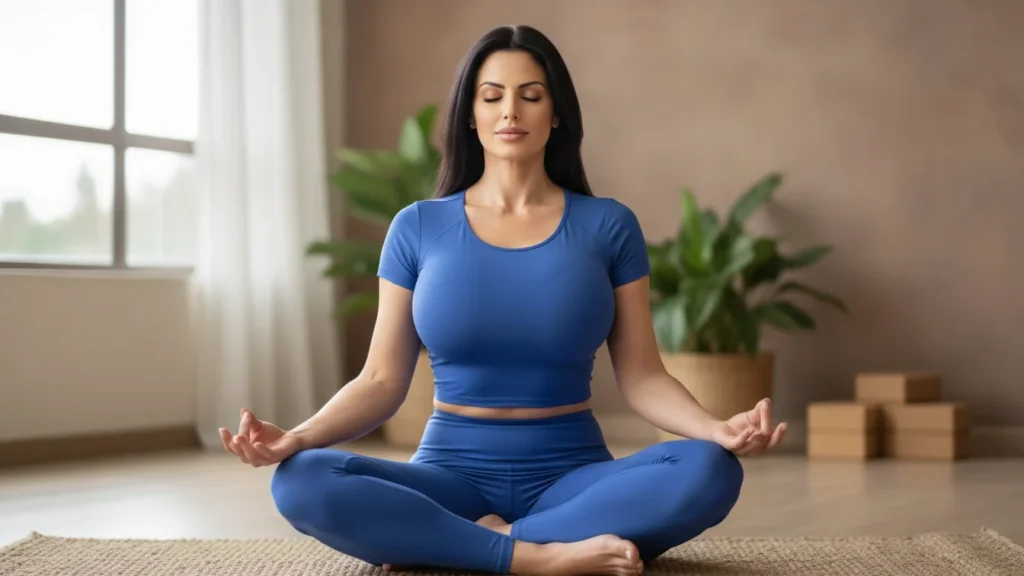
And without any effort at all, your breathing becomes deeper… quieter… slower.
Most people notice this only in passing. It feels pleasant, natural, and unremarkable. But beneath that calm moment, something remarkable is happening inside your body.
Your breathing isn’t slowing because you decide to relax.
It’s slowing because your nervous system has shifted gears.
Understanding why this happens reveals how closely breathing, emotions, and biology are woven together — and why calm feels the way it does.
Breathing Is Automatic — But Not Rigid
Breathing feels simple, but it’s one of the most flexible systems in the body.
Unlike blinking or digestion, breathing sits at an intersection between:
- Automatic control (your body handles it without thinking)
- Responsive control (it adjusts constantly to your state)
Your breathing rate changes when you:
- Walk
- Sleep
- Feel excited
- Feel anxious
- Relax deeply
This flexibility exists because breathing is tightly linked to the nervous system — especially the part that monitors safety, energy needs, and emotional state.
The Nervous System Has Two Main “Modes”
At the center of this story is the autonomic nervous system, which runs background processes without conscious effort.
It has two main branches:
1. The Alert Mode (Sympathetic System)
This mode becomes dominant when:
- You’re stressed
- You’re rushing
- You feel threatened
- You’re mentally overloaded
In this state:
- Heart rate increases
- Muscles tense
- Breathing becomes faster and shallower
The body is preparing for action.
2. The Calm Mode (Parasympathetic System)
This mode becomes dominant when:
- You feel safe
- You rest
- You relax
- You unwind emotionally
In this state:
- Heart rate slows
- Muscles soften
- Breathing naturally slows and deepens
Relaxation isn’t passive — it’s an active biological shift.
Why Relaxation Automatically Slows Breathing
When the body senses safety, it doesn’t need rapid oxygen delivery anymore.
Here’s what happens step by step:
- Muscle tension decreases
Relaxed muscles need less oxygen. - Energy demand drops
The body isn’t preparing to act or react. - Carbon dioxide levels stabilize
Slower breathing maintains an efficient gas balance. - Breathing centers in the brain adjust rhythm
The brainstem reduces the breathing rate without conscious input.
Your body is essentially saying:
“We’re okay. There’s no rush.”
Breathing as a Mirror of Internal State
Breathing doesn’t just supply oxygen.
It reflects what the nervous system believes about your environment.
- Fast breathing → perceived urgency
- Slow breathing → perceived safety
This is why:
- You breathe quickly during tense conversations
- Your breath slows when listening to calming music
- Your breathing deepens during quiet evenings
Breathing acts like a biological mood indicator.
A Simple Analogy: Driving in Traffic vs Open Roads
Imagine driving:
- In heavy city traffic, you grip the wheel, stay alert, and react constantly.
- On an open highway, your grip loosens, movements smooth out, and effort drops.
Your breathing behaves the same way.
Stress is traffic.
Relaxation is open road.
Slower breathing isn’t forced — it’s efficient.
The Brainstem: The Silent Breathing Conductor
Deep in the brainstem lies the respiratory control center. It continuously monitors:
- Oxygen levels
- Carbon dioxide levels
- Blood acidity
- Body activity
When relaxation signals arrive, this center adjusts the rhythm automatically.
You don’t need to “tell” your lungs to slow down.
The brain does it for you — quietly and precisely.
How Breathing, Heart Rate, and Calm Sync Together
Breathing doesn’t slow in isolation. It synchronizes with other calming shifts.
| Body Function | During Stress | During Relaxation |
|---|---|---|
| Breathing rate | Fast, shallow | Slow, deep |
| Heart rate | Elevated | Reduced |
| Muscle tone | Tight | Relaxed |
| Energy use | High | Low |
| Nervous system | Alert-focused | Recovery-focused |
This coordination allows the body to conserve energy and repair itself during rest.
Why You Don’t Notice the Transition
Most people don’t notice breathing slowing because:
- The change is gradual
- It happens below conscious awareness
- It feels natural, not dramatic
The nervous system prefers smooth transitions. Sudden changes would disrupt balance.
Calm is quiet by design.
Common Misunderstandings About Slow Breathing
“Slow breathing means shallow breathing”
Not true. Relaxed breathing is often deeper, not weaker.
“You have to consciously slow your breath to relax”
Actually, relaxation usually causes slower breathing — not the other way around.
“Breathing slows only during sleep”
Even quiet wakeful moments activate this response.
Understanding this prevents people from mistaking calm biological responses for something unusual.
Why This Response Evolved in Humans
From an evolutionary perspective, slowing breathing during safety makes sense:
- Conserves energy
- Reduces unnecessary alertness
- Supports digestion and recovery
- Improves long-term resilience
A body that couldn’t downshift would burn out quickly.
Relaxation is not laziness — it’s biological intelligence.
Why This Matters Today
Modern life keeps many people in a semi-alert state for hours:
- Notifications
- Noise
- Deadlines
- Constant stimulation
When relaxation finally arrives, slow breathing is one of the clearest signs that the body is reclaiming balance.
Understanding this process:
- Builds trust in bodily signals
- Reduces unnecessary worry
- Helps people recognize genuine calm
Knowledge alone can make relaxation feel safer and more natural.
Key Takeaways
- Breathing slows during relaxation because the nervous system shifts into recovery mode
- The body automatically adjusts breathing based on perceived safety
- Slower breathing reflects lower energy demand and muscle tension
- This process happens without conscious effort
- Calm breathing is a sign of efficiency, not weakness
Frequently Asked Questions
Why does breathing feel deeper when relaxed?
Because relaxed muscles allow the diaphragm to move more freely, increasing breath depth naturally.
Does slow breathing mean the body needs less oxygen?
Yes. During calm states, energy demand decreases, so oxygen requirements drop slightly.
Can emotions change breathing without noticing?
Absolutely. Emotional states directly influence breathing patterns automatically.
Why does breathing slow even when sitting still?
Mental calm alone can shift nervous system activity, even without physical movement.
Is slow breathing always linked to relaxation?
Most often, yes — though breathing can slow during other low-energy states like rest or sleep.
A Quiet Ending to a Quiet Process
Relaxation doesn’t announce itself loudly.
It shows up as softer muscles, slower thoughts, and gentler breathing.
Your body is constantly listening — adjusting — protecting balance.
When your breath slows on its own, it’s not something to control or question.
It’s simply biology doing what it has always done best.
Disclaimer: This article explains scientific concepts for general educational purposes and is not intended as professional or medical advice.