A Calm Planet With No Eruptions
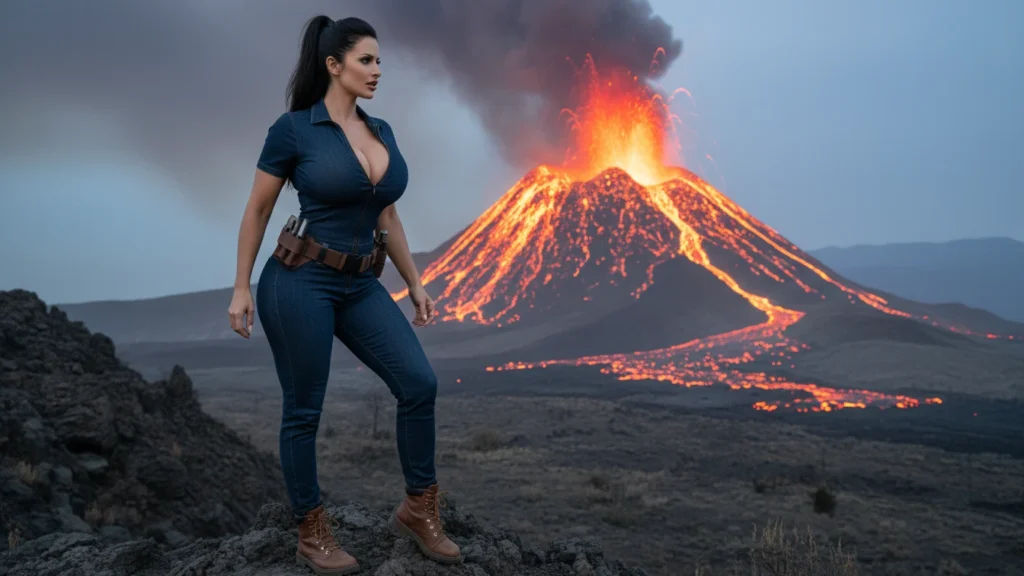
Imagine an Earth with no smoking mountains.
No lava flows.
No ash drifting across the sky.
At first, it sounds peaceful.
Volcanoes are often associated with destruction, disruption, and danger. But that dramatic image hides a deeper truth: volcanoes are not accidents. They are part of how Earth works.
Remove them completely, and the planet would not simply be calmer.
It would be fundamentally different.
Why Volcanoes Exist at All
Volcanoes are surface expressions of Earth’s internal heat.
Deep inside the planet, heat from Earth’s formation and radioactive elements keeps rock partially molten. Plate tectonics—the slow movement of Earth’s crust—creates cracks and boundaries where this molten material can rise.
Volcanoes form mainly in three places:
- Where plates move apart
- Where plates collide
- Above deep mantle “hot spots”
They are not random explosions.
They are pressure-release systems for a living planet.
Earth Without Volcanoes Would Trap Heat Inside
One of the least discussed roles of volcanoes is heat release.
Volcanic activity helps Earth gradually lose internal heat. Without volcanoes:
- Heat would remain trapped deeper underground
- Plate movement could slow or behave differently
- The crust might become thicker and less dynamic
Think of volcanoes like tiny safety valves. They don’t cool the planet quickly—but over millions of years, they matter.
A planet that cannot release energy smoothly behaves very differently over geological time.
No Volcanoes Means No New Land
Many of the world’s islands exist because of volcanoes.
Places like Hawaii, Iceland, and many Pacific islands were built layer by layer from lava reaching the surface.
Without volcanoes:
- No volcanic islands would form
- Coastlines would be simpler
- Ocean basins would dominate more of Earth
Land would still exist, but its distribution would be far more limited.
Earth might resemble a world with fewer continents and much larger oceans.
The Soil Beneath Our Feet Would Be Poorer
Volcanic ash and lava eventually break down into some of the most fertile soils on Earth.
These soils are rich in minerals that plants need to grow.
Without volcanoes:
- Fewer mineral-rich soils
- Slower nutrient replenishment
- Less productive ecosystems in many regions
This doesn’t mean plants couldn’t grow—but ecosystems would be less diverse and less resilient.
Volcanoes quietly refresh Earth’s surface chemistry.
How Volcanoes Helped Create Earth’s Atmosphere
Early Earth did not have the air we breathe today.
Volcanoes released gases such as:
- Water vapor
- Carbon dioxide
- Nitrogen
- Sulfur compounds
Over time, these gases helped form:
- Oceans (from condensed water vapor)
- A stable atmosphere
- Conditions that allowed life to emerge
Without volcanoes, Earth’s atmosphere would likely be thinner, drier, and less capable of supporting complex life.
A Common Misunderstanding: “Volcanoes Only Cause Damage”
It’s easy to think of volcanoes only in terms of eruptions.
But eruptions are rare compared to the slow, steady role volcanoes play over millions of years.
Volcanoes:
- Recycle elements from deep Earth to the surface
- Create new rock that becomes land
- Support long-term climate balance
Their benefits are invisible on human timescales—but enormous on planetary ones.
Climate Without Volcanoes: More Stable, or Less?
Volcanoes influence climate in two opposite ways:
Short term:
- Large eruptions can temporarily cool the planet by reflecting sunlight
Long term:
- Volcanic gases help regulate atmospheric carbon over millions of years
Without volcanoes:
- The long-term carbon cycle weakens
- Climate regulation becomes less flexible
- Earth could drift toward extremes over geological time
Paradoxically, removing volcanoes doesn’t guarantee stability—it reduces Earth’s ability to self-adjust.
Life Might Still Exist — But Simpler
Life would not automatically disappear on a volcano-free Earth.
But it would likely be:
- Less diverse
- Slower to evolve
- More limited in where it could thrive
Volcanic environments have supported unique ecosystems, including early microbial life that thrived on chemical energy rather than sunlight.
These environments helped life explore new survival strategies.
Without them, evolution loses important pathways.
Plate Tectonics Would Look Very Different
Volcanoes and plate tectonics are deeply linked.
If volcanoes never existed, it suggests:
- Less active plate movement
- A thicker, more rigid crust
- Fewer earthquakes and mountain-building events
Earth might resemble a geologically “quiet” planet—closer to Mars than the dynamic world we know.
A Simple Comparison
| Feature | Earth With Volcanoes | Earth Without Volcanoes |
|---|---|---|
| Land Formation | Continual renewal | Limited expansion |
| Soil Fertility | High in many regions | Lower overall |
| Atmosphere | Actively recycled | Thinner, less dynamic |
| Climate Regulation | Flexible over time | Less adaptable |
| Geological Activity | Active | Largely stagnant |
This contrast shows why volcanoes are builders, not just destroyers.
Why This Matters Today
Understanding volcanoes helps us see Earth as a system, not a stage.
They remind us that:
- Stability comes from movement
- Renewal often looks disruptive
- Long-term balance depends on slow processes
Volcanoes are part of what keeps Earth from becoming a silent, unchanging world.
Key Takeaways
- Volcanoes release Earth’s internal heat gradually
- They create new land and fertile soil
- They helped build Earth’s atmosphere
- They support long-term climate balance
- A world without volcanoes would be quieter—but less alive
Frequently Asked Questions
1. Would Earth be safer without volcanoes?
On human timescales, yes. On planetary timescales, the planet would lose important renewal processes.
2. Could life exist without volcanoes?
Yes, but it would likely be less diverse and more limited.
3. Are volcanoes connected to earthquakes?
Yes. Both are linked to plate tectonics and internal Earth movement.
4. Did volcanoes exist before life?
Yes. Volcanic activity shaped Earth long before life emerged.
5. Do volcanoes still shape Earth today?
Absolutely—most changes just happen too slowly to notice daily.
A Calm Conclusion
Volcanoes don’t exist to scare us.
They exist because Earth is active, warm, and alive beneath the surface.
A planet without volcanoes might look peaceful—but it would lack the deep recycling systems that made land, air, and life possible in the first place.
Sometimes, what feels dangerous is also what keeps the world working.
Disclaimer: This article explains scientific concepts for general educational purposes and is not intended as professional or medical advice.